Respiratory Cat Feeding: Elevation Science
By Aisha Khan • 4th Apr
Respiratory cat feeding and elevated bowls for breathing issues are more interconnected than most cat guardians realize. When a cat struggles to breathe comfortably during meals, the problem often extends beyond the respiratory system itself, it is a failure of ergonomics, reliability, and sometimes the very devices meant to help. As someone who's tested smart feeders through power outages, throttled Wi-Fi, and real apartment living, I've learned that reliable feeding design isn't luxury, it is foundational to health. This deep dive addresses the most pressing questions about elevation, respiration, and what actually works when systems fail.
How Does Bowl Elevation Affect Feline Breathing During Meals?
The Mechanics of Elevated Feeding
When cats eat from ground-level bowls, they must lower their heads and necks into a flexed position (feeding posture explained). This posture compresses the airways and reduces the efficiency of oxygen delivery to the bloodstream. The diaphragm (the primary muscle responsible for breathing) works harder when the body is bent downward, a biomechanical disadvantage most cat owners never consider.
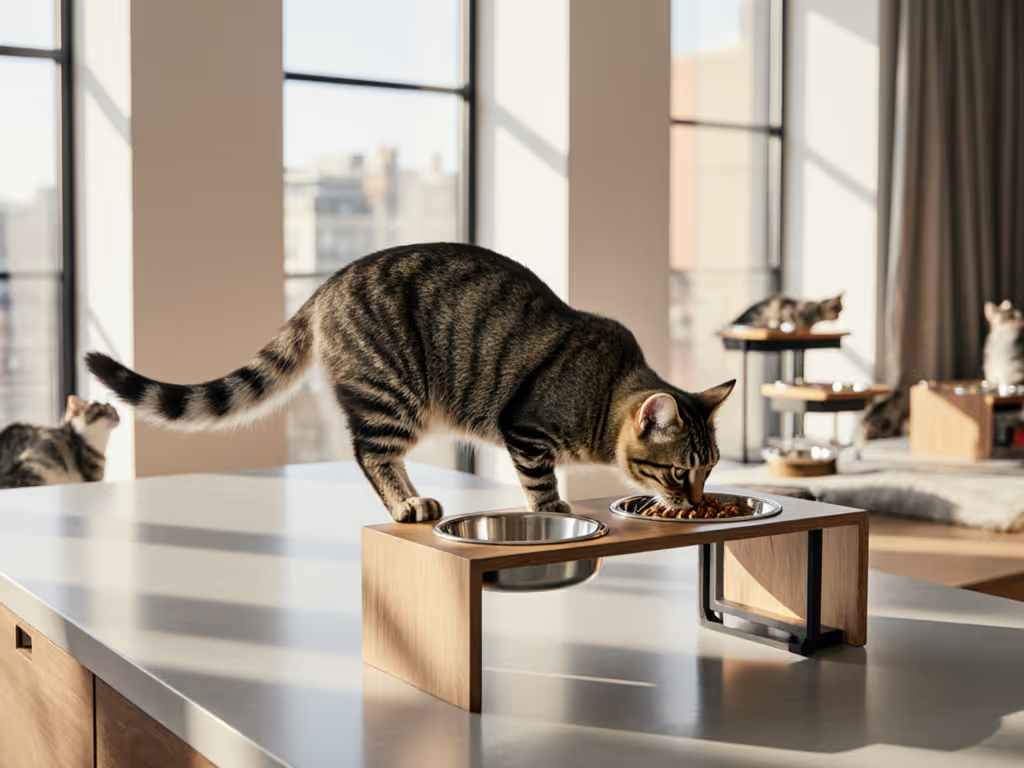
Elevated bowls raise the feeding height, allowing cats to eat with a more neutral head and neck alignment. This simple adjustment reduces airway compression and enables more efficient breathing mechanics during the meal. For cats with upper airway sensitivity, brachycephalic cat feeding challenges, or age-related respiratory decline, this geometric shift can measurably lower breathing effort.
However, and this is critical, elevation alone doesn't guarantee respiratory support. The real benefit emerges only when the feeding setup is reliable and consistent. A feeder that jams, resets schedules during a power loss, or produces unpredictable portions undermines the entire principle. Reliability first, graceful failure beats fancy features every day.
Oxygen Saturation and Meal Mechanics
Research on feeding frequency and respiratory quotients in cats shows that meal structure itself influences how the body processes oxygen. Cats eating a single, properly portioned meal show a lower fasting respiratory quotient compared to those grazing across multiple small meals. This suggests that a structured, elevated feeding routine (one that fails safely if interrupted) can support metabolic efficiency and respiratory health simultaneously.

What Role Does Nutrition Play in Supporting Feline Respiratory Health?
Core Nutrients for Respiratory Wellness
Elevation addresses mechanics, nutrition addresses the underlying system. Feline respiratory health depends on several key nutrients that many standard diets do not prioritize adequately.
Antioxidants protect lung tissue from oxidative stress. Beta-carotene and carotenoids (found in small quantities in specific cat foods and supplements) help defend the respiratory tract from damage. The challenge is that high-heat processing during food manufacturing can degrade these heat-sensitive compounds, making supplementation necessary for cats with compromised airways.
Omega-3 fatty acids support immune function and cardiovascular health, both of which influence respiratory efficiency. Cold-pressed supplements preserve these nutrients better than standard formulations, though they are often more expensive and require consistent access.
Lysine deserves particular attention. This amino acid boosts immune health and is specifically recommended to lessen breathing difficulty and symptoms such as sneezing, congestion, and runny eyes. Unlike marketing-heavy supplements, lysine has measurable research support for cats recovering from or managing upper respiratory challenges.
B vitamins and folic acid contribute to overall nervous and immune system function, supporting the respiratory muscles and the neural signals that regulate breathing.
Real-World Feeding Frequency
Feeding once daily, when portions are accurately controlled and the system does not fail, appears more beneficial for lean body mass and satiation than multiple small meals. For cats with respiratory compromise, a single well-portioned elevated meal reduces the cumulative time spent in compressed feeding postures and may lower overall respiratory strain.
How Do Feeding Systems Fail, and What Safeguards Matter?
Offline-First Design as a Respiratory Health Strategy
Here's what most people miss: a feeder dependent on cloud connectivity or battery backup without manual override is a respiratory hazard waiting to happen. When a routine firmware update silently reset my smart feeder's schedule years ago, my cat went hungry at the normal meal time. The resulting stress and compensatory behaviors took weeks to resolve. Since then, I've staged power cuts and tested recovery protocols. For proven options, see our offline smart feeders comparison that run on schedule without Wi-Fi.
For cats with respiratory challenges, feeding interruption or inconsistency triggers stress, which elevates cortisol and suppresses immune function, directly undermining respiratory health. A feeder that requires Wi-Fi to operate, lacks battery backup, or has no manual override creates a single point of failure that affects both nutrition and respiratory wellness.
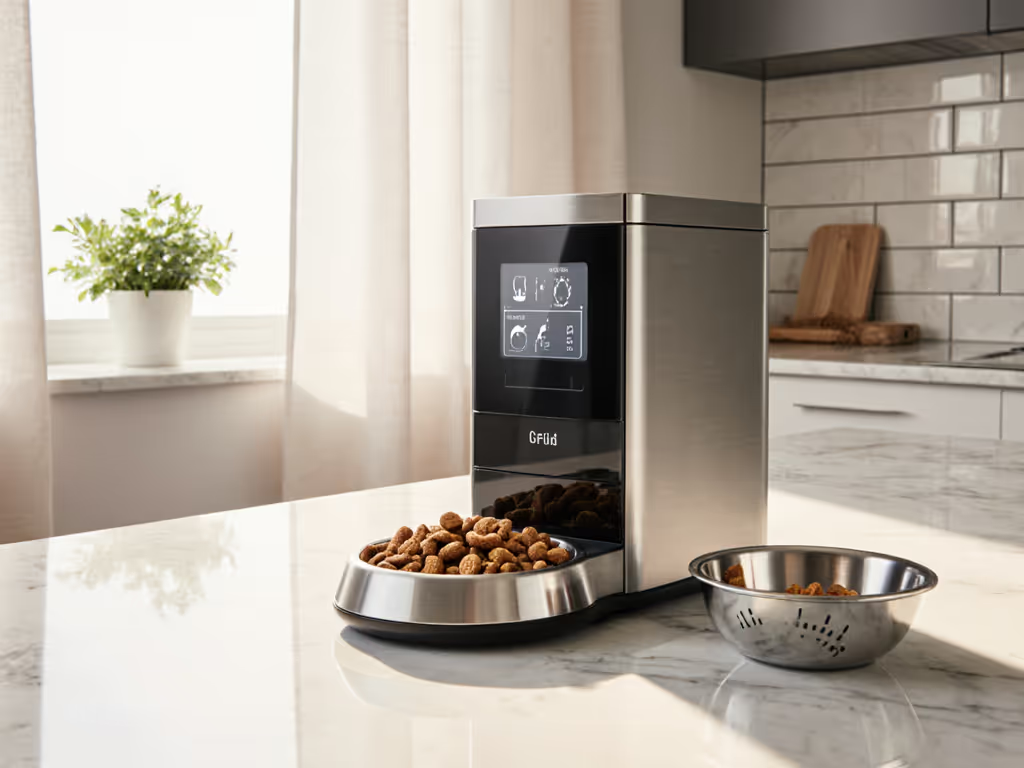
Offline-first feeders (those capable of running scheduled meals entirely independently, without cloud or app interaction) are non-negotiable for cats with special health needs. Look for:
- Local scheduling that persists through power loss
- Mechanical or battery backup that allows manual portions if electronic systems fail
- Clear error states and visible feedback (not silent failures)
- Recovery time measured in seconds, not hours
Environmental Factors in Feeding Reliability
Cats eating from elevated bowls in humid apartments face a different set of challenges. Improving air quality around the feeding station can also ease breathing; see our air purifier guide for feeding areas. Moisture accumulation in hoppers, biofilm growth in crevices, and sealed storage that's not actually sealed compromise food freshness and introduce mold toxins that inflame respiratory tissue. Stainless steel (304/316 grade) with smooth, seamless surfaces resists biofilm better than plastic alternatives.
How Should Meal Structure Support Respiratory Health?
Timing, Portion Control, and Breathing
A single daily meal at a fixed time from a reliable elevated feeder establishes predictable respiratory demand. The body adapts to consistent mealtime breathing strain more efficiently than to random or interrupted feeding. This is not intuitive, but it is supported by research on fasting respiratory quotients and metabolic adaptation. For the physiology behind optimal meal timing, read our cat feeding timing science guide.
For cats requiring dietary management (for example, lower-calorie diets to prevent fatty liver disease or reduce respiratory load from obesity), portion accuracy is non-negotiable. A feeder that portions consistently, documented and measurable, makes the difference between supported weight loss and frustrated guessing.
Foods and Supplements for Targeted Support
If your cat's vet recommends respiratory support, consider:
- Blueberries: Small quantities (two to three per day maximum) provide anthocyanin antioxidants that reduce oxidative damage
- Oily fish: Omega-3 sources that reduce lung disease risk
- Fiber-rich foods: Beans and lentils contain high fiber that reduces systemic inflammation linked to respiratory vulnerability
- Lysine supplements: Available in liquid or chew form, widely available and relatively inexpensive
None of these are magic. They work best when integrated into a reliable, elevated feeding routine that does not surprise your cat or your respiratory system with noise, disruption, or failure.
What Questions Should You Ask About Elevated Feeders?
Setup, Reliability, and Recovery
Does the feeder have an offline mode? Can it run scheduled meals without Wi-Fi or cloud connectivity? Test it: cut your Wi-Fi and power a battery-backed feeder from a portable battery for a full week. Does it feed on schedule? Does it log what happened?
What happens if the battery dies? Can you manually override it and portion food? How much time do you lose? For a cat with respiratory challenges, a two-minute manual feed is acceptable; a two-hour failure to feed is not.
How is the elevation positioned? The bowl height should allow your cat to eat with a neutral or slightly extended neck, roughly at chest height when standing. Too low reintroduces compression, too high strains the neck differently. Measure from your cat's chest to the ground and set the bowl height just below that point.
Is the bowl surface smooth and seamless? Crevices trap biofilm. Textured surfaces harbor bacteria. Smooth stainless steel with minimal seams is your baseline.
What's the noise level during operation? Test it in a quiet room at 2 a.m. Can you hear the motor or the kibble dispensing? If yes, it is disrupting your cat's sleep and yours. Whisper-quiet operation, measured in the dB range of a refrigerator hum, is feasible but often overlooked in favor of smart features.
Cost of Ownership and Failure Modes
Track not just the purchase price but the consumables: replacement desiccants, proprietary trays, batteries, filters, or app subscriptions. A feeder costing $80 upfront but requiring $15 per month in consumables over three years becomes a $620 commitment. For a five-year ROI breakdown across feeders, see our feeder cost analysis. For cats with respiratory challenges, that investment should deliver measurable reliability, not feature creep.
Document what breaks. Does the wheel jam with certain kibble sizes? Does the app lose connection during high-demand times (early morning, when you're most stressed)? Are replacement parts available and affordable? A feeder that fails loudly (a motor that won't turn, a jam you can see) is safer than one that fails silently, skipping meals without notification.
Closing: The Integration of Elevation, Nutrition, and Reliability
Respiratory health in cats is a system. Elevated feeding addresses posture, nutrition and supplements address the underlying tissues and immune function, offline-first, reliable design ensures the system does not collapse during the inevitable technical glitch or power failure. You do not need the most advanced feeder on the market. You need one that serves your cat's respiratory needs consistently, fails gracefully if it must fail, and fits your apartment without dominating it.
The best respiratory feeding setup is one you'll actually use, trust completely, and never have to troubleshoot at 3 a.m. Start there.
Related Articles