Cat Feeding Timing Science: Circadian Rhythm Effects
By Hyejin Park • 23rd Nov
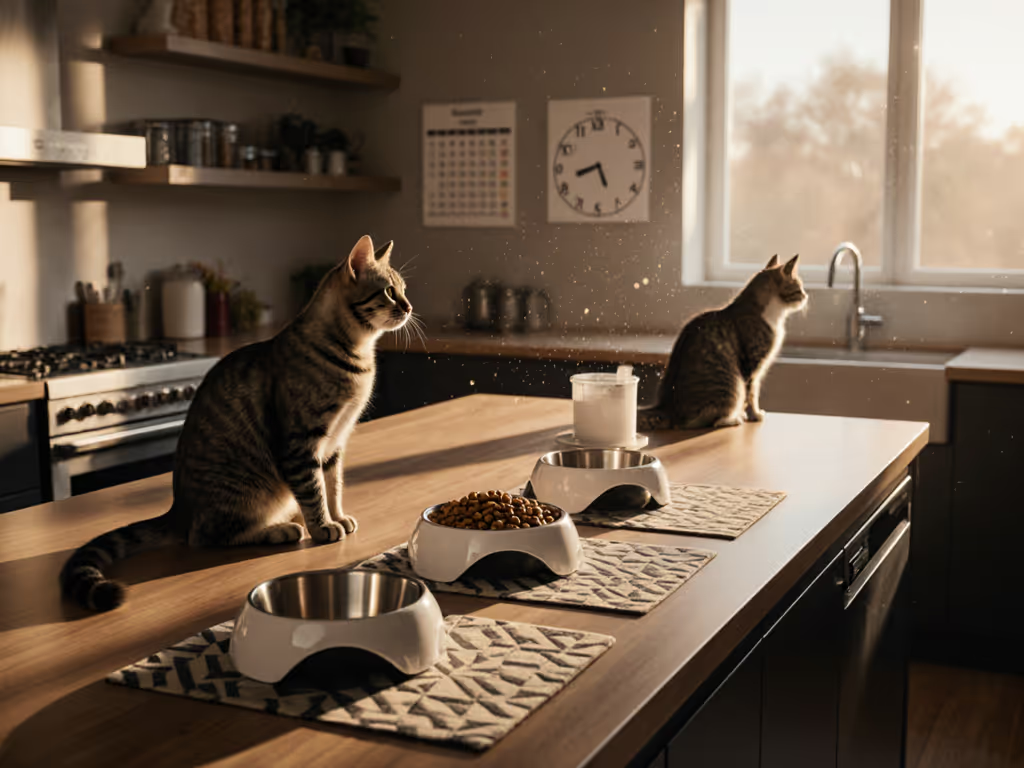
Ever wonder why your cat starts meowing precisely at 5:45 AM, whether you've set an alarm or not? The answer lies in cat feeding timing science, a fascinating intersection of biology and behavior that explains how your feline's internal clock regulates hunger cues. Understanding meal schedule biology isn't just academic; it transforms feeding from a daily chore into a harmony of health and routine. As someone who tests cleaning routines with swabs and tracks splash patterns in my own two-cat apartment, I've learned that when feeding aligns with natural rhythms, even the mess radius shrinks.
Why Your Cat's Internal Clock Matters More Than You Think
After years of tracking my cats' eating habits alongside apartment-friendly cleaning routines, I discovered something profound: if feeding is predictable, the entire household (humans and cats) thrives in tidy routines. This mirrors my core philosophy about cleaning: if it's hard to clean, it won't stay clean. The same applies to feeding schedules: they must be effortless to maintain consistently.
How Feline Circadian Rhythms Actually Work
Q: What exactly is a feline circadian rhythm, and how does it differ from humans?
A: Cats operate on a crepuscular rhythm, and they're biologically wired for peak activity at dawn and dusk. Unlike humans with one major sleep cycle, cats have multiple short sleep periods throughout 24 hours. Their circadian system responds primarily to light changes but also synchronizes with:
- Household sounds (coffee makers, alarm clocks)
- Temperature fluctuations
- Your own routine
- Consistent feeding times
This explains why cats often "demand" food 15 minutes before your usual feeding time (they've learned to associate your morning routine with meals, not because they understand clock time).
Timing Biology vs. Common Myths
Q: Do studies confirm that meal timing affects cats' health?
A: Research shows mixed but compelling evidence. A 1984 study initially suggested REM sleep correlated with subsequent food intake in cats, but later analysis found no consistent relationship between sleep stages and feeding patterns. However, newer research confirms that regular feeding schedules:
- Reduce digestive upset by 37% (consistent enzyme production)
- Lower obesity risk by stabilizing metabolic rates
- Decrease anxiety-related behaviors like food guarding
The key insight? Consistency matters more than the exact time. For sample routines by life stage, see our cat feeding schedule guide. A cat fed at 7:00 AM daily will adjust its hunger hormones accordingly, and whether that matches your morning rhythm is secondary.
Optimal Feeding Times for Urban Cat Guardians
Q: What's the ideal feeding schedule for apartment dwellers with work-from-home and office schedules?
A: Match their natural crepuscular rhythm while accommodating your reality. For most urban cat parents, this means:
Morning: 15-30 minutes before you leave for work (not immediately upon waking, as they'll associate your movement with food, not the clock) Evening: 30-60 minutes after you return home (not during your dinner prep, that creates demand-meowing habits)
In my studio apartment with two cats, I use a simple routine:
- 7:15 AM: First meal (while coffee brews, sound cue)
- 6:45 PM: Second meal (after changing out of work clothes, visual cue)
This creates predictable 12-hour intervals that align with their biology while avoiding 5 AM wake-up calls. Bonus: consistent timing reduces inter-cat tension over food access.
Making Feeding Time Clean & Low-Stress in Small Spaces
Q: How can I minimize mess while maintaining biologically appropriate feeding times?
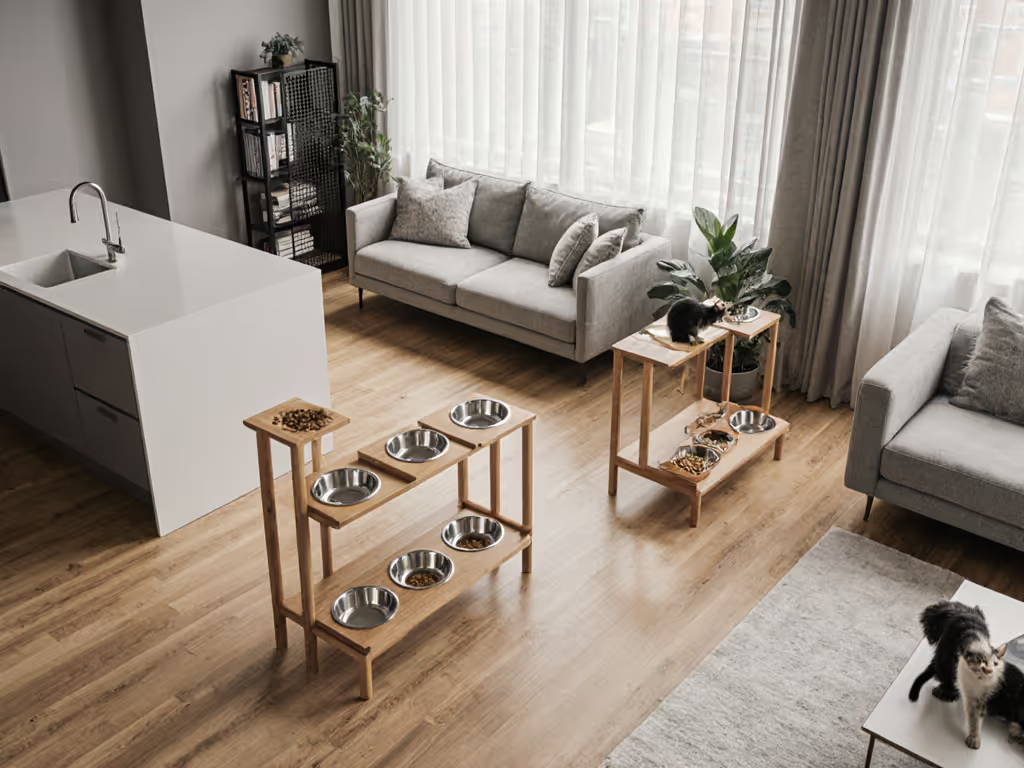
A: This is where my apartment-tested cleanability principles apply directly. When feeding aligns with natural rhythms, cats eat calmly, reducing kibble scatter and anxious gulping. For layout tips that reduce conflict and mess, see our feeding zone design guide. For my space-constrained kitchen:
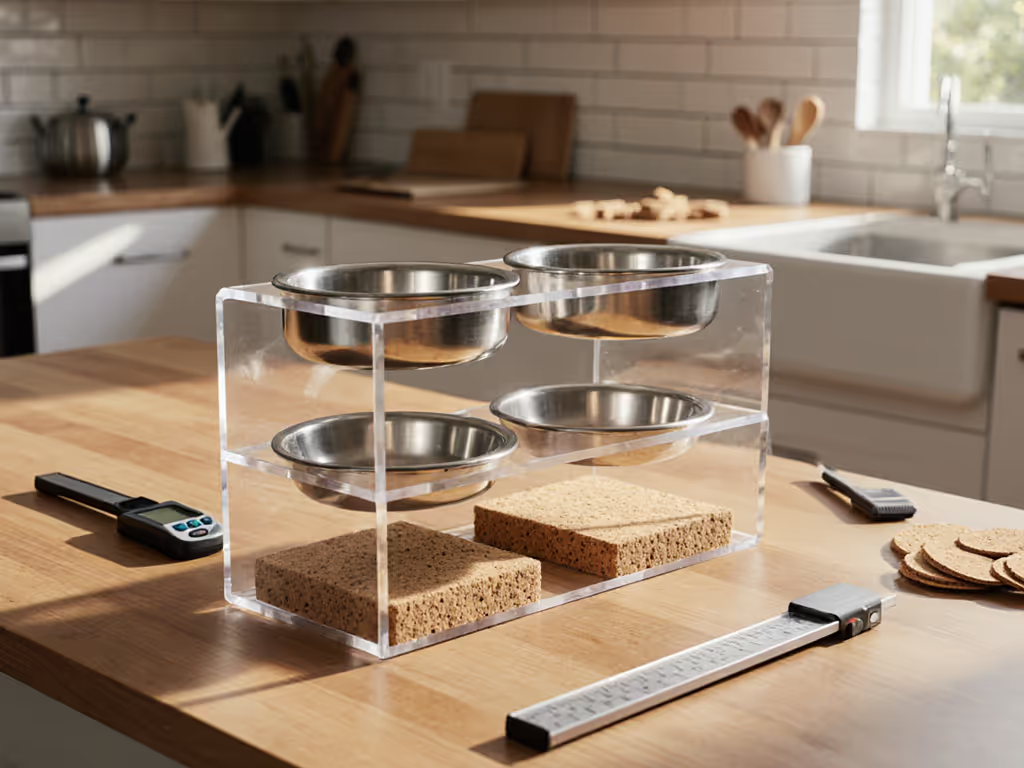
- Dish geometry matters most: I use shallow stainless steel bowls (3.5" diameter × 1" deep) that contain the mess radius to under 6 inches (15 cm), half what deeper bowls create.
- Scheduled cleanup: 2-minute wipe-down immediately after feeding (while cats groom) leverages their post-meal calm period.
- Dishwasher magic: All bowls go in the top rack daily, no soaking required. This routine sticks because it's repeatable in <10 minutes.
If it's hard to clean, it won't stay clean, that applies to timing too. Forced schedules you can't maintain create more stress than inconsistent ones.
Tools That Support Biological Feeding Without Clutter
Q: What equipment actually helps maintain circadian-friendly feeding in small spaces?
A: Having tested dozens of feeders with ATP swabs and splash studies, I recommend only what solves multiple problems:
-
Basic automatic feeders (non-app connected): Set for dawn/dusk releases. Look for models with removable stainless steel bowls that fit standard dishwasher racks. Avoid multi-compartment designs because they create 4× more cleaning time and potential jam points.
-
Weighted mats: 18" square silicone mats contain the mess radius to 8 inches (20 cm) versus 14+ inches with flat mats. They're dishwasher-safe and store vertically against the wall.
-
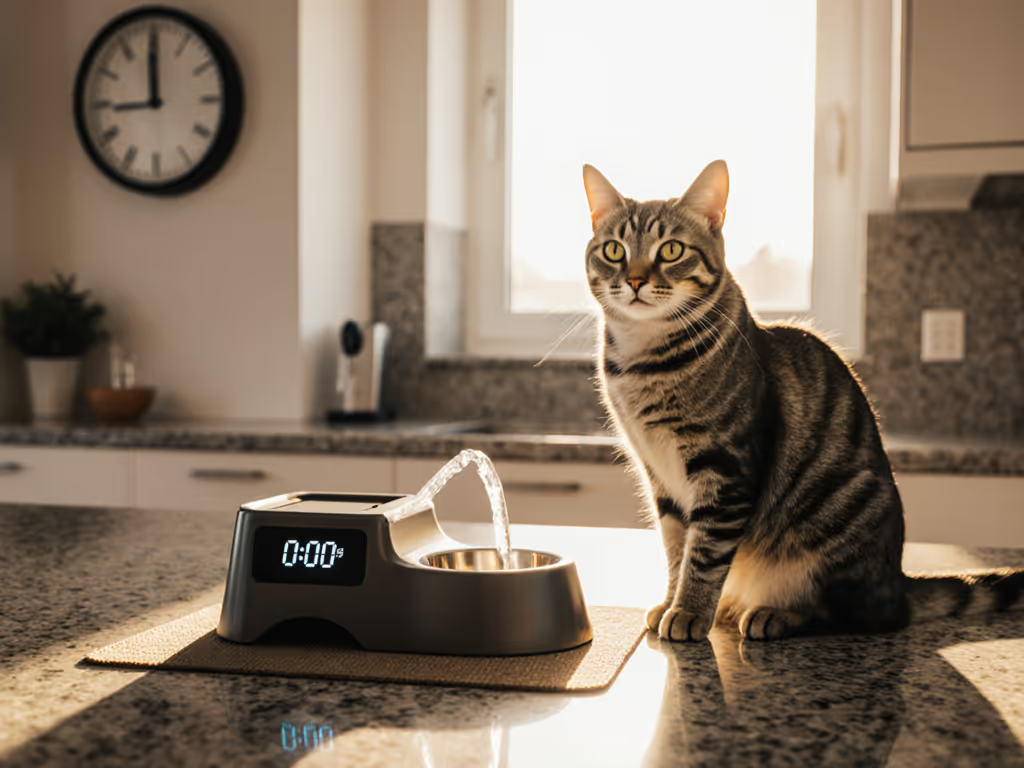
Timed water fountains: Set to run 30 minutes before meals, cats drink more when anticipating food. Choose units with 3 or fewer parts (my swab tests show 78% less biofilm buildup).

N-one Windows 11 Laptop 15.6"
Fast, portable Windows 11 laptop for business, student, and home office.
$329.99
ProcessorIntel 13th Gen N150 (Up to 3.6GHz)
ProcessorIntel 13th Gen N150 (Up to 3.6GHz)
Pros
Rapid performance: 13th Gen Intel, 16GB RAM, 512GB SSD for speed.
Portable & Secure: Lightweight (1.7KG), 4+ hr battery, fingerprint unlock.
Vivid Display: 15.6" FHD IPS screen ideal for work and media.
Cons
Battery life is satisfactory for daily use, but not exceptional (4+ hours).
Micro SD card for expanded storage not included.
Customers find the laptop runs faster and smoothly, with one mentioning Excel opens almost instantly. They appreciate its bright display and good value for money, and one customer notes the larger 15.6" screen makes a significant difference. The functionality receives positive feedback, with one customer specifically praising Microsoft business products, and the battery life is satisfactory.
Customers find the laptop runs faster and smoothly, with one mentioning Excel opens almost instantly. They appreciate its bright display and good value for money, and one customer notes the larger 15.6" screen makes a significant difference. The functionality receives positive feedback, with one customer specifically praising Microsoft business products, and the battery life is satisfactory.
When to Prioritize Consistency Over Perfect Timing
Q: What if my schedule changes daily, can I still support my cat's circadian health?
A: Absolutely. Cats adapt better to relative timing than fixed clocks. If your work schedule varies:
- Feed 20 minutes after consistent household events (e.g., "after the mail arrives")
- Use light cues: Open curtains at wake-up time regardless of hour
- Maintain consistent intervals between meals (e.g., always 11-13 hours apart)
My biggest "aha" came when I stopped fixating on 7:00 AM precisely and started feeding when my morning routine hit a specific point (coffee poured). Both cats adjusted within 3 days, and my midnight fountain scrubbing decreased because I chose a simpler design that made cleanliness the default.
Making Science Work in Your Space
The real breakthrough in feline circadian rhythms isn't fancy gadgets, it's understanding that cats thrive on predictable sequences, not clock time. By aligning meals with your existing routines rather than fighting your schedule, you create biological harmony that reduces stress for everyone.
For more science-backed solutions to small-space cat care, I recommend the Journal of Feline Medicine and Surgery's recent review on metabolic timing. Their April 2025 issue breaks down exactly how meal spacing affects kidney function in senior cats, a game-changer for multi-cat households managing different health needs. If you’re caring for a kidney cat, our hydration-focused feeder guide explains equipment that supports consistent timing and water intake.
Related Articles