Meal Timing and Feline Cognitive Function
By Sofia Rossi • 10th May
Introduction
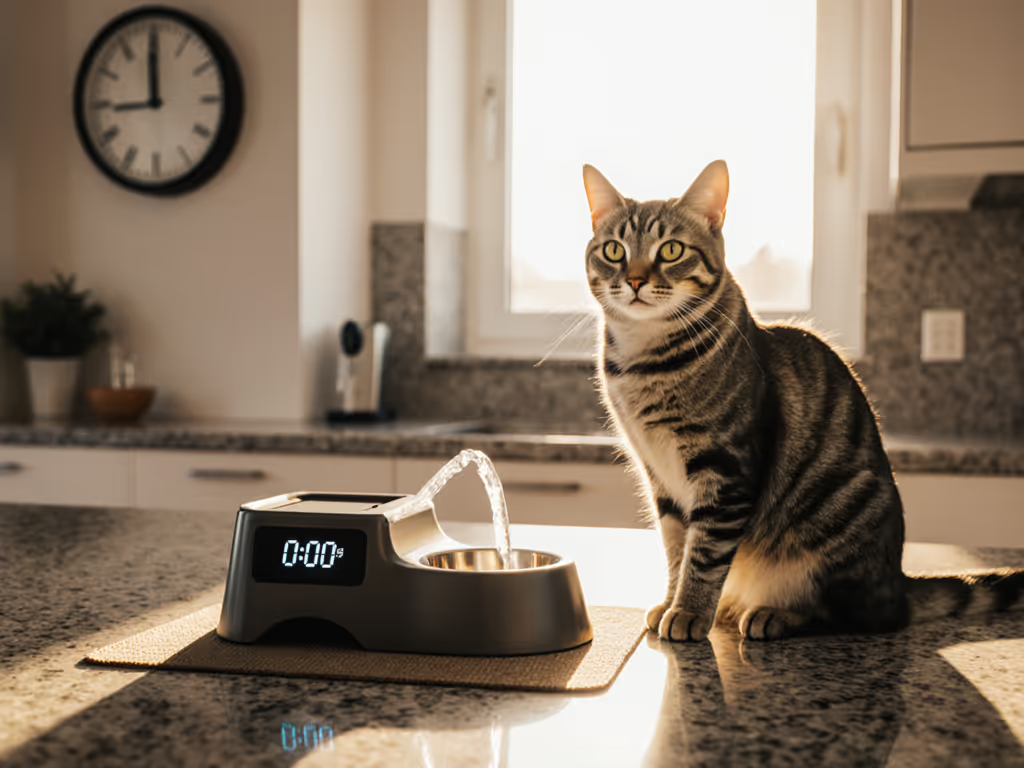
Pet nutrition marketing stretches research findings about human meal timing into claims about pet "brain health" without rigorous cat-specific evidence. Yet there is a practical truth beneath the hype: feline cognitive function improves when meal timing is stable. When feeding rhythm is predictable, stress markers drop, and your five-year veterinary and food costs plummet.
I learned this through an expensive mistake. Years ago, I invested in a "smart" feeder that promised optimized portion timing. It jammed constantly, the app crashed during iOS updates, and within six months I'd replaced the motor assembly twice and tossed more kibble than I'd saved. That feeder taught me to reverse-engineer feeding costs: wasted food, replacement parts, vet bills for stress-related digestion issues. Once I standardized meal timing with a durable, simple system, the financial picture shifted dramatically.
This article breaks down what research reveals about meal timing and feline cognition, and translates that into a financial model that matters.
What Research Shows (and What It Doesn't)
Recent research on human meal timing suggests that earlier meals and time-restricted feeding windows enhance cognitive performance. For the feline perspective on timing and circadian rhythms, see our cat feeding timing science guide. Eating after noon has different cognitive effects than morning intake; night-shift eating correlates with cognitive decline.
The leap from human studies to cats requires critical thinking.
Cats are crepuscular, metabolically tuned to small, frequent prey captures (not fixed mealtimes). Yet the principle holds: predictable feeding rhythms reduce stress hormones and support neural function. When feeding times vary randomly, cortisol spikes, appetite regulation destabilizes, and the nervous system remains in mild alert mode. Over weeks, that manifests as lower problem-solving performance, increased anxiety-driven behaviors, and digestive sluggishness.
The practical data: cats on irregular schedules show elevated stress markers and are prone to obesity and gastrointestinal upset. Cats on consistent schedules exhibit calmer baseline behavior, stable weight, and fewer vet visits.
The Hidden Cost: A Five-Year Model
Scenario A: Free-Feeding (Kibble 24/7)
- Annual kibble: 95 lbs/year × $1.20/lb = $114/year
- Five-year food cost: $570
- Vet visits for weight/digestive issues: 2/year × $150 = $300/year → $1,500 over 5 years
- Feeder/bowl replacement: $40/year → $200 over 5 years
- Five-year total: $2,270
Scenario B: Scheduled Meals (Morning + Evening, Consistent Time)
- Annual kibble (portion-controlled): 70 lbs/year × $1.20/lb = $84/year
- Five-year food cost: $420
- Vet visits: 0.5/year × $150 = $75/year → $375 over 5 years
- Quality stainless feeder (one-time $60, minimal replacements): $110 over 5 years
- Five-year total: $905
Five-year savings: $1,365 (60% reduction)
This delta comes from portion control and reduced vet visits. Buy once, run lean, and total cost beats sticker price every time.
Comparing Feeding Schedules
Free-Feeding vs. Scheduled Meals
Free-feeding generates predictable waste: over-consumption in bored or anxious cats, kibble oxidation, no intake data, and no early-warning system for illness. Scheduled meals (2 to 3 times daily) deliver portion accuracy, behavioral predictability, appetite-loss detection, and reduced inter-cat tension.
Timing: Early Morning vs. Evening
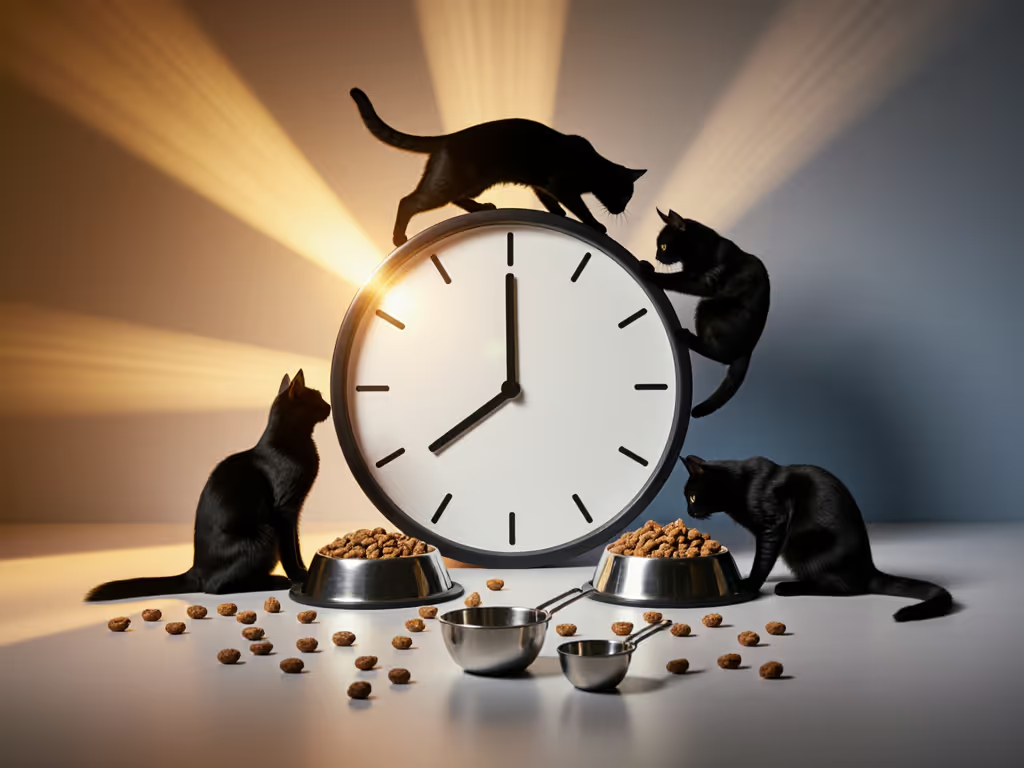
Two meals align with natural feline circadian activity: early morning (6 to 8 AM, dawn hunting) and evening (6 to 7 PM, dusk hunting). Not sure how to adapt this to your cat’s age or health? Use our cat feeding schedule guide. Cats fed exclusively at irregular times or late evening show less daytime play, more nocturnal hyperactivity, and slower cognitive response. A distributed, early-to-evening schedule supports both feline cognition and human household harmony.
Brain-Health Feeding: The Behavioral Evidence
Cognitive support through nutrition comes from metabolic stability and low stress, not proprietary kibble formulas. When meal timing is predictable:
- Memory improves: Calm, fed animals outperform stressed ones in new-environment navigation and problem-solving.
- Anxiety drops: Consistent routine reduces baseline cortisol; cats explore more, and play more.
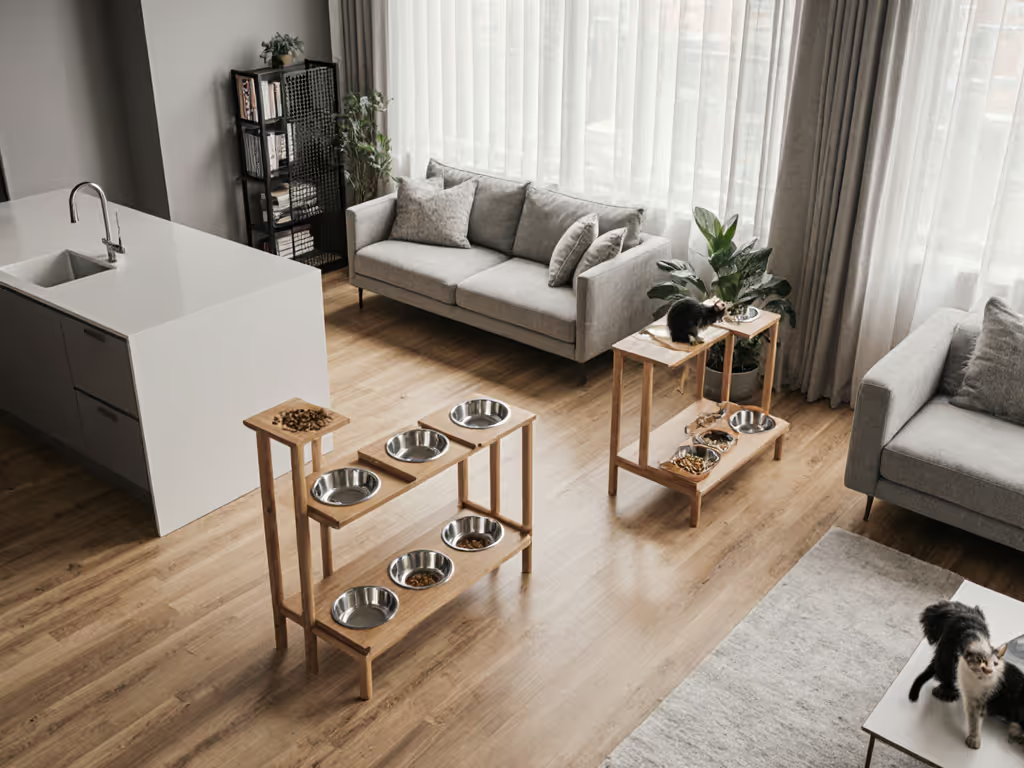
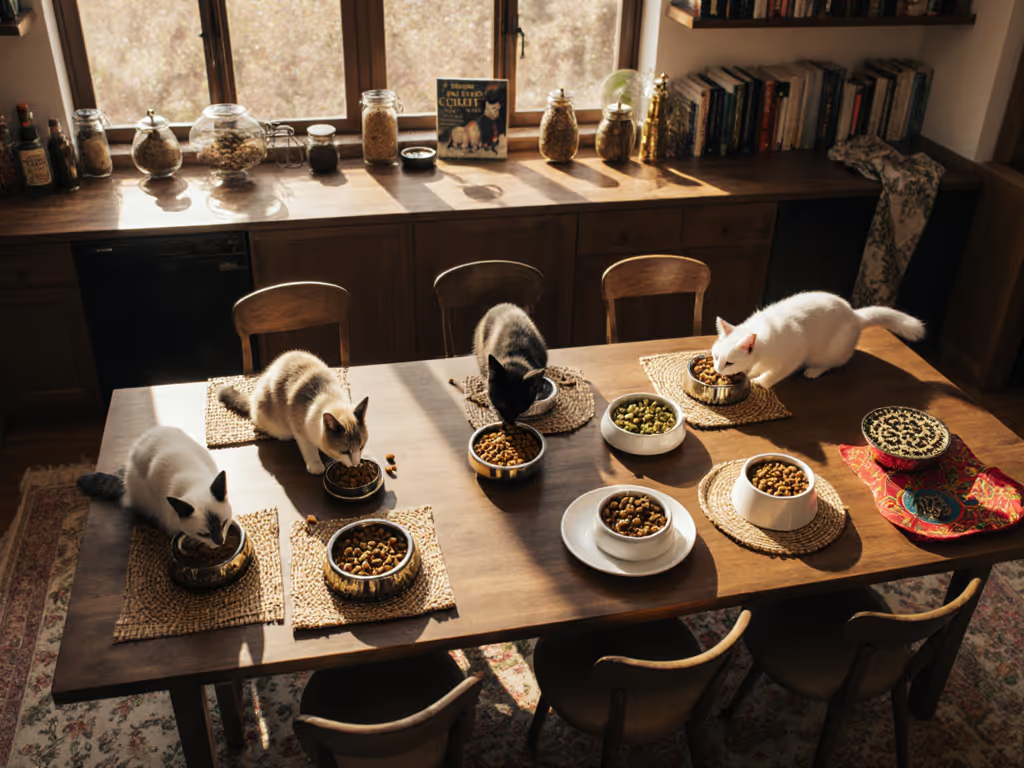
- Social cognition clarifies: In multi-cat homes, scheduled, spatially separated meals reduce resource-guarding aggression and allow natural bonding. For setup ideas that minimize food bullying, explore our multi-cat feeder solutions.
The inverse is equally true: irregular feeding creates learned stress. Cats in unpredictable environments show reduced curiosity, slower adaptation, and heightened startle responses.
Implementation: Brain-Healthy Feeding Routine
Foundation (One-Time Investment)
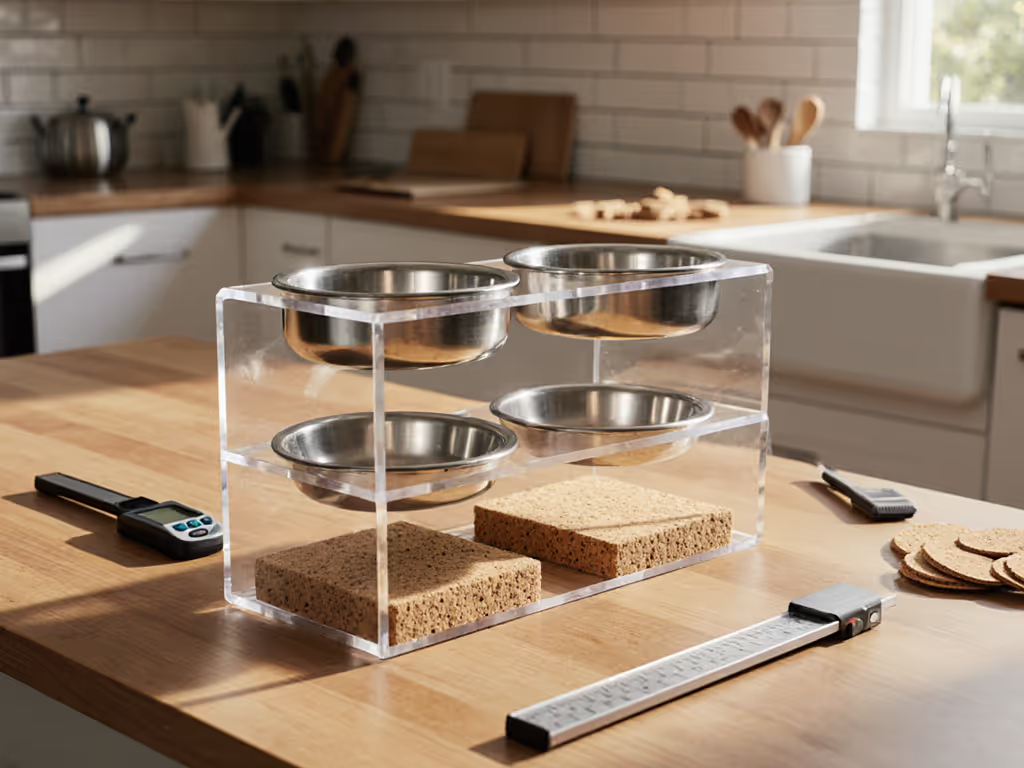
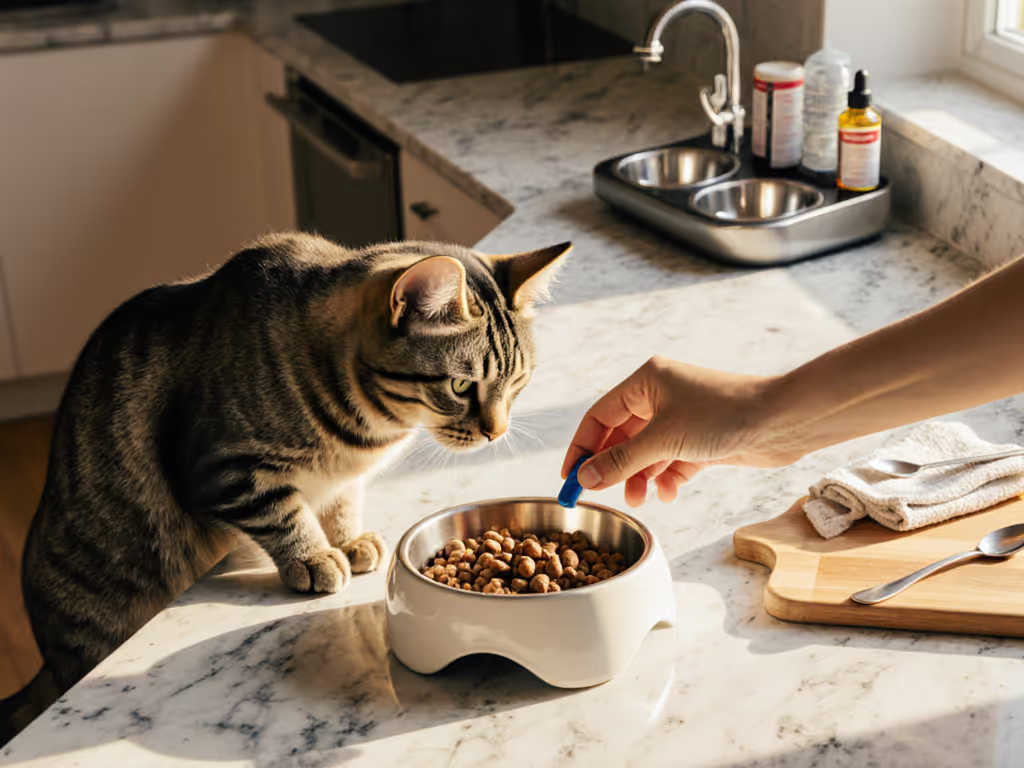
- Bowls: Stainless steel (304/316 grade), shallow whisker-friendly rim, ~$20–$40
- Feeder: If manual, an elevated stand reduces neck strain. If automated, prioritize durability: 3+ year warranty, mechanical timer, low noise, no app dependency. For reliable picks, check our offline smart feeder comparison. Budget: $80–$150. Warranty assumption: a quality feeder with a 3-year warranty and no proprietary consumables saves $200 to $400 in replacement costs versus cheap models that fail after 12 to 18 months.
- Scale: Digital kitchen scale for portion accuracy, $8–$15.
Lock in Meal Times
- Morning: 6 to 8 AM (post-wake, aligns with natural activity)
- Evening: 6 to 7 PM (aligns with dusk; 10 to 12 hours post-morning meal)
Portion by Weight
- Calculate daily kcal: [target body weight (lbs) × 20 kcal/lb] ÷ 2 meals
- Example: 10 lb cat = 100 kcal per meal
- Weigh kibble each serving; log weekly
- Adjust quarterly for seasonal weight creep
Track Intake and Behavior
- Log meal times, amounts, and cat behavior (energy, inter-cat dynamics)
- Flag appetite drops, excessive vocalization, or litter-box changes (illness indicators)
- After 4 to 6 weeks, baseline stress and cognition should stabilize
Why This Pays for Itself
Food waste in chaotic feeding runs deep:
- Free-feeding: ~20% of kibble goes stale or uneaten = $22.80/year
- Over five years: $114 in pure waste (before accounting for vet time explaining weight issues)
A durable feeder and consistent schedule eliminate that friction. The upfront investment pays for itself in three months, then runs lean for 4 to 5 years. Feline neurochemistry and feeding thrive on predictability, not chaos, and your wallet reflects that stability.
Actionable Next Steps
- Audit your current setup: Durable (stainless, sealed, long-lasting) or disposable-heavy?
- Lock in a two-meal schedule (same times, seven days a week) for four weeks. Track portions with a scale and record cat behavior weekly.
- Monitor three metrics: appetite consistency, behavioral calm, and litter-box patterns.
- Calculate your five-year cost using the framework above. Compare your current approach to scheduled feeding using the ROI assumptions stated here.
- If adding an auto-feeder, prioritize durability: mechanical timer backup, battery life >1 week, warranty >2 years. Avoid app-only or disposable-heavy designs that generate ongoing costs.
The cheapest gear is the one that wastes the least. A consistent brain-healthy feeding routine does not require expensive tech or premium kibble, just commitment to rhythm and measurement. Once you make that shift, your cat's cognition, behavior, and health stabilize, and your wallet thanks you too.
Related Articles