Tilted vs. Elevated Cat Bowls: The Spine Health Test
By Sofia Rossi • 8th Apr
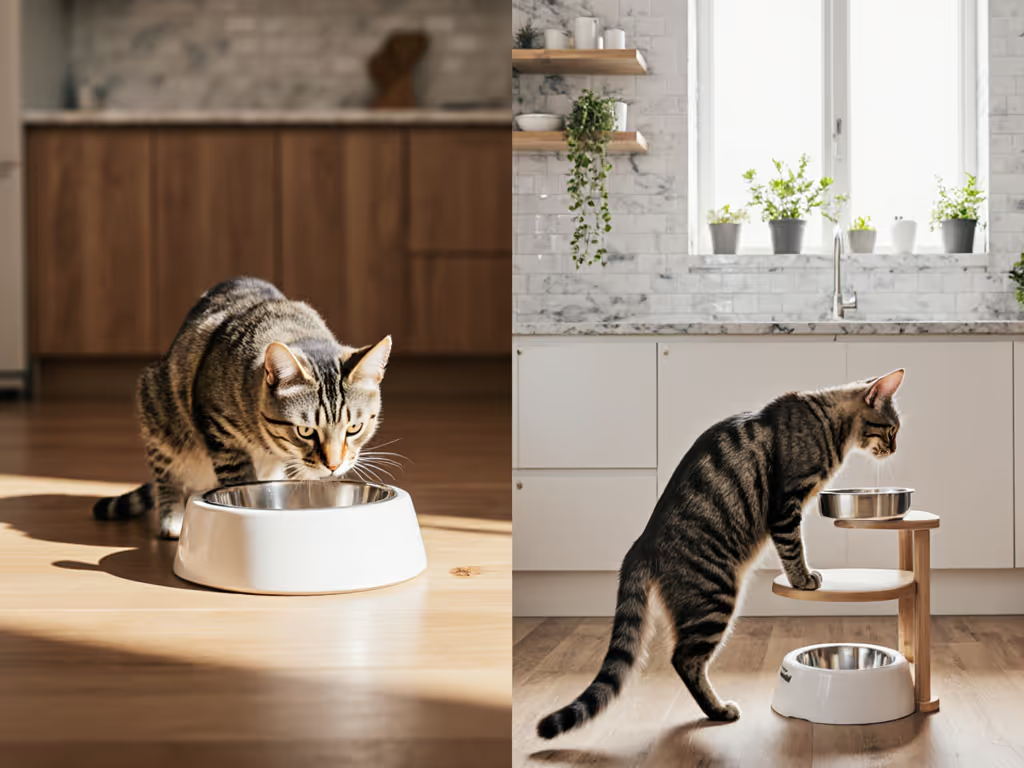
Elevated cat bowls and angled feeding solutions occupy different corners of the feeding setup conversation, yet both claim to improve your cat's mealtime comfort. The critical question: do they genuinely reduce neck strain and promote spinal alignment, or do they primarily serve as an aesthetic upgrade?
I've tracked feeding gear for years (spillage rates, vet follow-ups triggered by poor positioning, and the cost of replacing worn-out furniture from misdirected water splashes). When a setup change can ripple into five-year ownership costs, the decision demands evidence, not marketing language.
Understanding the Core Difference
Before we compare, let's clarify what we're actually talking about.
A standard flat bowl sits flush on the floor, requiring your cat to bend their neck downward at roughly 45 degrees to eat. An elevated bowl sits on a pedestal or stand, typically 4-6 inches higher, raising the eating surface closer to the cat's natural line of sight. A tilted or angled bowl (often a 15-degree incline) keeps the rim higher at one edge while the opposite end sits lower, encouraging a gentler neck angle without adding height to the entire setup. For the biomechanics behind height and angle, see our cat feeding posture guide.
Elevated systems can cost $25-$80 depending on material and stability. Tilted bowls typically run $15-$40. Both are reusable, long-term purchases with minimal ongoing consumables, which immediately positions them favorably against disposable feeders or filter-heavy systems.[1]
The Spine Health Case: What Research and Veterinarians Actually Support
Posture and Neck Strain Reduction
Cats with arthritis, hip problems, or spinal issues face genuine discomfort bending their necks repeatedly during meals.[1] Our elevated bowls for senior cats picks show designs that ease pain and improve access. An elevated bowl or angled feeding solution can reduce that strain by allowing a more neutral cervical spine position, similar to how standing desks benefit human workers. For older cats or those with documented joint pain, this translates to less grimacing, fewer interrupted meals, and potentially fewer vet visits for pain management.
The angled bowl achieves much of the same benefit with a smaller footprint (crucial for renters or small-space dwellers). A 15-degree incline mimics the natural forward tilt of a cat's feeding posture without the spatial bulk of a full elevated stand.[1]
Digestion and Swallowing Efficiency
When a cat eats from a raised bowl, their esophagus aligns more naturally with their stomach, which can make swallowing easier and reduce post-meal vomiting.[1][3] For cats prone to regurgitation, see upright feeding solutions for megaesophagus. This is especially significant for senior cats or those with histories of regurgitation. However, and this matters, some veterinarians argue that cats evolved to eat prey at ground level, and an elevated position might actually disrupt their natural digestive sequence.[1]
The honest take: the evidence is mixed. Your cat's individual health history and your veterinarian's assessment should override general claims.
Whisker Fatigue: The Overlooked Issue
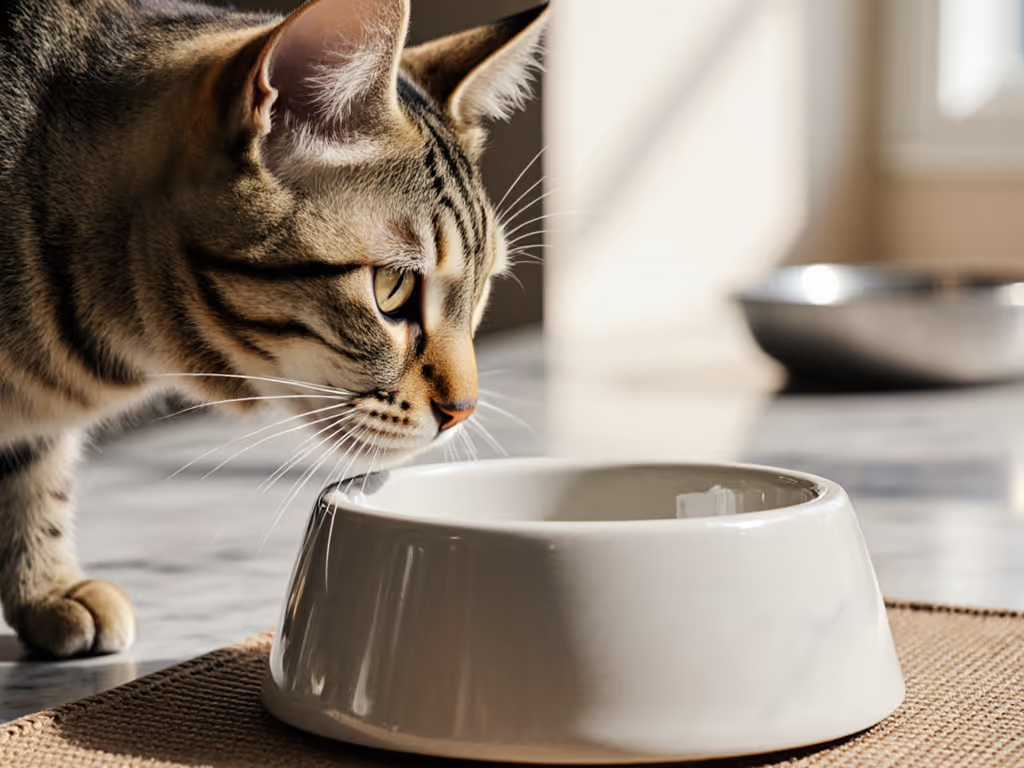
A cat's whiskers are sensory organs, not mere decorations. Repeated contact with narrow or high-sided bowl walls overstimulates them, a phenomenon called whisker fatigue.[1] An angled or shallow bowl provides more clearance, allowing your cat to eat without constant tactile pressure. This isn't dramatic, but in multi-cat households or with sensitive felines, it reduces one more daily friction point.
Practical Durability: Five-Year Cost Breakdown
Here's where persona matters: the cheapest gear is the one that wastes the least. I model five-year ownership, because that's when recurring costs and replacement frequency actually emerge.
Standard Flat Bowl (Ceramic)
- Initial cost: $8-$15
- Durability: 1.5-3 years (chips, cracks from drops, dishwasher wear)
- Replacement cycle: 2-3 bowls over five years = $20-$40
- Water spillage: uncontrolled; average household waste ≈ 2-3 gallons/week soaking into kitchen mat
- Five-year total: $40-$60 + mat replacements + kitchen damage risk
Elevated Bowl System (Stainless Steel)
- Initial cost: $35-$65
- Durability: 5-8 years (metal oxidation rare with 304/316 stainless; non-slip pads wear but are replaceable)
- Replacement parts: pads ≈ $8/set, every 2 years = $20 over five years
- Water spillage: raised height reduces scatter by ~60% per user reports; mat wear drops proportionally
- Five-year total: $65-$85 + significantly lower collateral damage
Angled/Tilted Bowl (Premium Ceramic or Stainless)
- Initial cost: $18-$40
- Durability: 3-5 years (same wear as flat ceramic if ceramic; longer if stainless)
- Replacement cycle: 1-2 bowls over five years = $35-$75
- Water spillage: reduced by ~40% due to angled tilt
- Footprint: minimal, critical in tight spaces
- Five-year total: $50-$100 + moderate mess reduction
The elevated system begins to pay for itself within 18-24 months if it prevents just one significant water damage claim or eliminates repeated bowl replacement. For renters or small-space dwellers, the angled bowl offers a practical middle ground: lower investment, lower spatial cost, meaningful spillage reduction.
Comparative Performance: The Trade-offs
| Aspect | Standard Flat | Angled Tilted | Elevated Stand |
|---|---|---|---|
| Spine alignment benefit | Minimal | Moderate | High |
| Footprint (sq. inches) | 12-16 | 12-16 | 18-24 |
| Water splash control | Poor | Moderate | Good |
| Cost to entry | Low ($8-$15) | Medium ($18-$40) | High ($35-$65) |
| Durability (years) | 2-3 | 3-5 | 5-8 |
| Replacement parts availability | High | Medium | High |
| Cleaning (dishwasher safe?) | Often yes | Often yes | Stand may not be |
| Aesthetic integration | Neutral | Low-profile | Visible |
Who Actually Needs an Upgraded Bowl - and Who Doesn't
Elevated Bowls Make Sense If:
- Your cat is 8+ years old or has documented arthritis, hip dysplasia, or spinal sensitivity
- Your vet has identified vomiting or regurgitation linked to eating posture
- You're dealing with multiple cats and can reduce resource-guarding tension by spacing feeders at different heights
- You have a larger kitchen and don't mind the footprint
- You can commit to a 5-8 year ownership cycle to recoup the cost
Angled Bowls Are the Sweet Spot If:
- Your cat is middle-aged or senior with mild joint sensitivity (not severe arthritis)
- You live in a rental or small space where a pedestal stand feels cumbersome
- Whisker fatigue or shallow-bowl aversion is an issue
- You want spillage reduction without major investment
- You prioritize easy cleaning and minimal visual clutter
Standard Flat Bowls Suffice If:
- Your cat is young and healthy with no joint or digestive complaints
- Your vet has not recommended a postural change
- You're willing to replace bowls every 2-3 years and manage water spillage
- Budget is the sole constraint
The Hidden Cost Nobody Mentions: Time and Friction
In my early days of cat care, I bought a bargain fountain because the sticker price was low. It clogged weekly, demanded three filter changes per month at $8 each, and wasted kibble into the motor. After three months, replacement parts exceeded the cost of a better-built model. I built a spreadsheet (filters, electricity, wasted kibble) and never looked at sticker price the same way again.
The same logic applies to bowls. A $12 ceramic bowl replaced every 18 months, combined with 2-3 gallons of weekly water waste on your kitchen floor, is a hidden cost of $200-$300 over five years when you factor in cleanup time, mats, and potential damage. An elevated or angled bowl, front-loaded at $35-$65, recoups that through durability and reduced mess within two years.
Material Matters: What Your Bowl Is Actually Made Of
Stainless steel (304 or 316 grade) is the long-game choice. For a health-focused comparison, read our ceramic vs stainless steel bowls guide. It doesn't retain odors, resists bacterial biofilm buildup, and survives dishwashers indefinitely. Ceramic is durable but chips; plastic harbors bacteria and can trigger chin acne in sensitive cats.[4] If you're investing in an elevated or angled bowl, upgrading to stainless steel adds $10-$20 to the initial cost but extends lifespan by 2-3 years, a calculation that favors the upgrade.
Veterinarian-Approved Feeding Angles: The Consensus
There is no single "correct" angle, but veterinarians generally agree: if your cat shows discomfort while eating, a postural change is worth testing.[1] A trial run with an angled or elevated bowl costs far less than a vet visit to address vomiting, regurgitation, or neck pain. Most vets recommend consulting before switching cats with existing digestive or orthopedic issues, but the shift is low-risk for healthy cats.
Final Verdict: Buy Once, Run Lean
The choice between tilted, elevated, and standard bowls ultimately hinges on three variables: your cat's age and health status, your space constraints, and your tolerance for ongoing spillage and replacement cycles.
Choose an elevated bowl if your cat is senior or has documented joint/digestive issues, your kitchen can accommodate the footprint, and you're comfortable with a $50-$80 upfront investment that will outlast two or three standard bowls.
Choose a tilted angled bowl if you want spine health benefits without the spatial commitment, live in a rental or tight quarters, and value a lower cost-to-entry paired with moderate spillage control.
Stick with a standard flat bowl only if your cat is young and healthy, your vet sees no reason to change, and you accept the cost of frequent replacement and water management.
In all cases, prioritize stainless steel or high-grade ceramic, track your annual spend on bowls, mats, and water damage, and don't hesitate to revisit the decision as your cat ages. The most expensive feeding setup is the one that fails to adapt to your cat's changing needs, or that demands replacement every two years because it wasn't built to last.
Buy once, run lean, total cost beats sticker price every time.
When you model five-year ownership, elevated and angled bowls aren't premium luxuries. They're cost-transparent, preventive investments that reduce waste, cut cleanup friction, and support your cat's long-term spinal health. The trick is matching the right tool to your cat's actual needs (not chasing trends).
Related Articles