Non-Slip Elevated Feeders for Cats: Stop Water-Food Contamination
By Sofia Rossi • 20th Apr
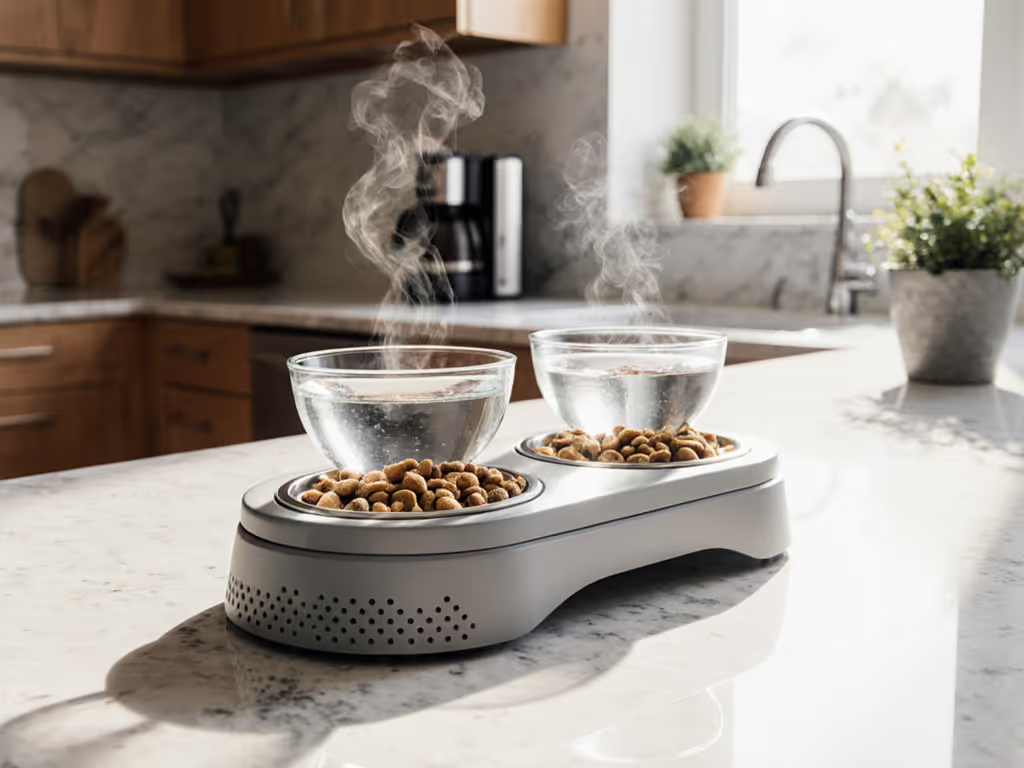
When water meets kibble at the feeding bowl, you're watching money evaporate (literally). A cat's water dish spill contaminates dry food within minutes, forcing you to toss uneaten portions and refresh the bowl. Integrated feeding stations and non-slip elevated feeders are designed to separate these worlds, but not all of them deliver on that promise. The difference between a well-engineered feeder and a bargain knockoff often isn't visible until you've replaced it twice.
I learned this years ago with a budget fountain that clogged weekly. If you're choosing a replacement, see our best cat water fountains guide to avoid high-maintenance models and improve hydration. After three months of buying replacement filters, unclogging the pump, and tossing wasted kibble, I broke down the actual cost: the fountain had cost me nearly double its sticker price before I swapped it for a better-built model. That spreadsheet taught me to reverse-engineer any feeder's true cost before purchase.
Evaluate non-slip elevated feeders through a lens of durability, contamination prevention, and measurable five-year ownership costs. Look past hype and focus on what the evidence supports.
1. Understanding the Water-Food Contamination Problem
Contamination at the bowl happens in seconds. A splash from the water dish wets kibble at the edges of the food bowl. Your cat either leaves it (waste) or eats soggy, potentially bacterial-colonized food. Wet food smeared on stainless steel attracts moisture that breeds biofilm. Elevated feeders attempt to solve this through multi-bowl stability solutions that create physical separation and controlled drainage.
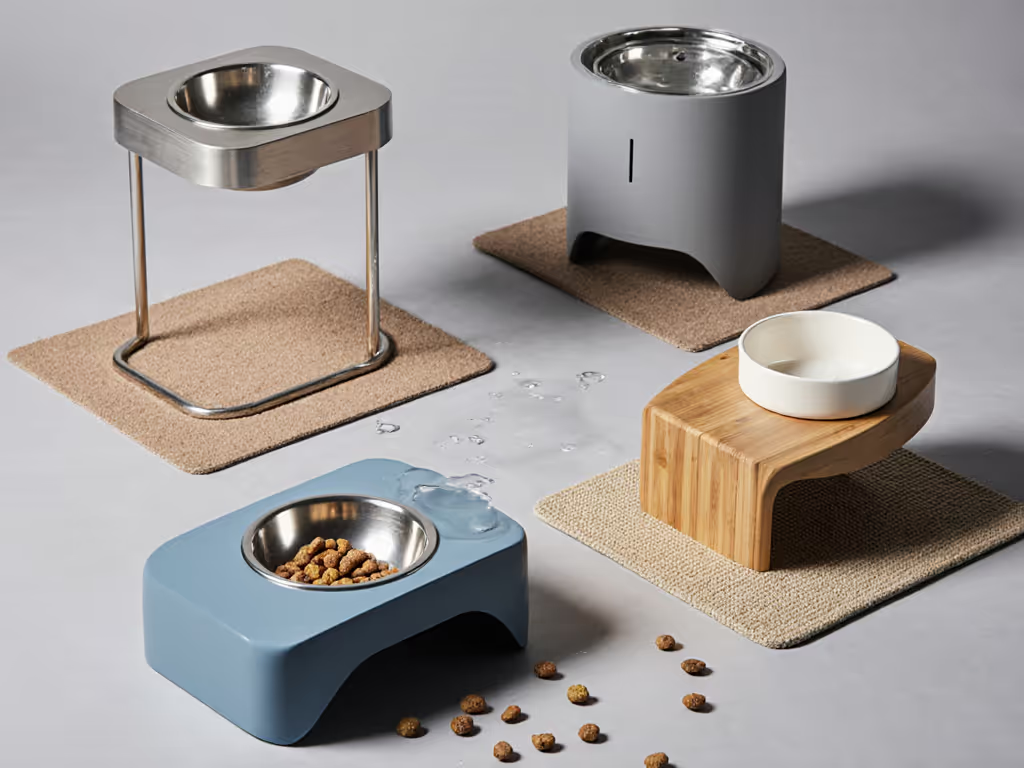
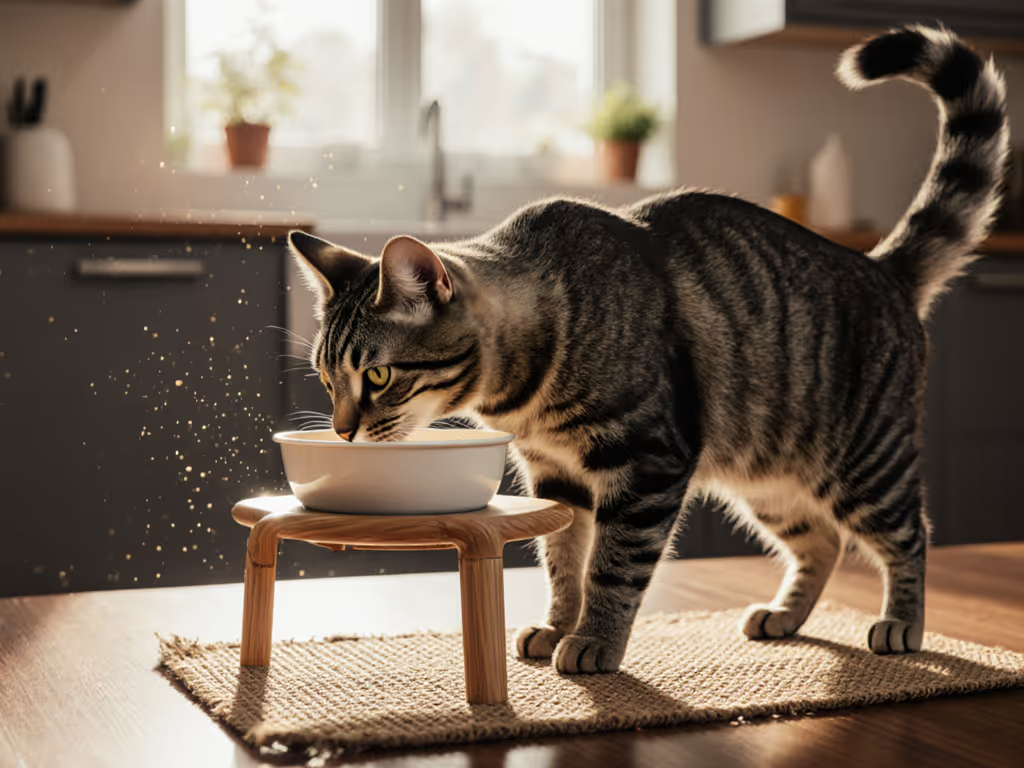
The Dorai Home Double Cat Feeding Station exemplifies this approach. Its two ceramic bowls sit elevated on silicone risers, and the proprietary Diomat® base (made from diatomaceous earth) absorbs spills and drips before they pool around the bowls. This addresses a concrete problem: in small urban apartments and studios, standing water beneath a feeding station becomes a humidity and odor issue within hours.
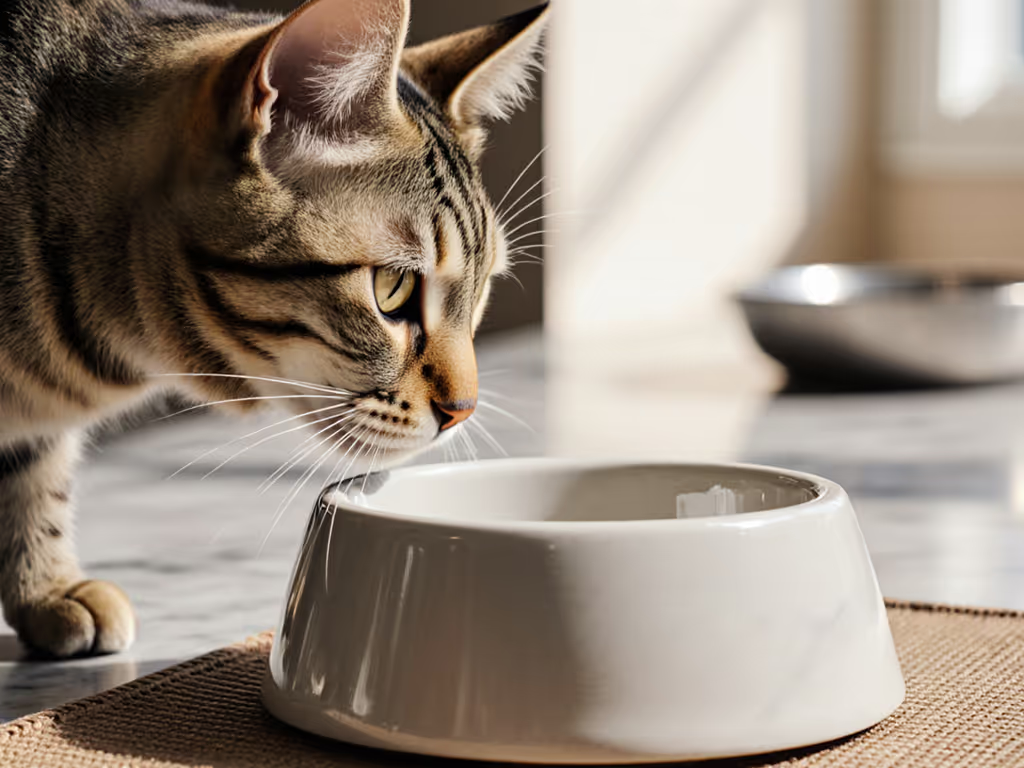
However, elevation alone does not prevent contamination. The bowl geometry matters far more than the height. A shallow, wide bowl with sloped walls minimizes whisker contact and splash-back, whereas a deep cylindrical design traps water and concentrates bacteria. Search results confirm anecdotal evidence that elevated bowls may reduce vomiting and indigestion in some cats, though scientific evidence remains limited. For older cats with arthritis or obesity, the ergonomic benefit is more reliably documented. For a deeper dive into ergonomics, read feeding posture science for evidence-based height recommendations.
2. Non-Slip Base Technology: What Actually Works
The foundation of any feeder is its anti-slip performance under real-world conditions. A cat pawing at a bowl or two cats jostling for position creates horizontal force. A feeder that shifts or tips defeats the entire purpose of elevation. Pair your setup with feeding placemats and trays to contain spills and lower daily cleanup time.
Effective non-slip bases employ one or more of these mechanisms:
- Rubber or silicone feet that grip tile, wood, or linoleum without staining
- Non-skid mats that provide a mechanical anchor and contain spills
- Weighted bases that use mass to resist lateral movement
- Textured undersides that increase friction
The Dorai Home station uses silicone risers beneath each bowl and a diatomaceous earth mat below the entire assembly, creating a multi-layer approach. This dual system prevents both bowl movement and water migration across floors (a critical advantage in shared living spaces or homes with infants and mobility devices).
KatSupreme Tilted Anti-Vomiting Cat Bowl Set raises bowls 2 inches with a non-slip base, though specific material data is absent from available reviews. Without manufacturer transparency on base composition, durability, and replacement costs, estimating five-year spend becomes guesswork.
3. Material Science and the True Cost of Cheap Bowls
Bowl material directly determines cleaning effort, longevity, and contamination risk. Three materials dominate:
Ceramic:
Pros: Dishwasher-safe, resists staining, non-porous when fired properly, and neutral pH reduces odor retention.
Cons: Breakable if dropped; can chip at the rim, creating biofilm traps.
Estimated lifespan: 3-5 years with careful handling.
Dorai's ceramic bowls are dishwasher-safe.
Stainless Steel:
Pros: Durable, nearly unbreakable, and easy to sanitize at high heat.
Cons: Prone to fingerprints, can develop pitting if lower-grade alloys (300-series) are used instead of 304/316, and scratches harbor bacteria.
Estimated lifespan: 5-10 years.
Drawbaugh Pet Feeders and similar vendors use stainless in elevated stations at mid-range price points.
Plastic:
Pros: Cheap, lightweight, and shatter-proof.
Cons: Scratches easily (biofilm trap), absorbs odors permanently, and may leach BPA or other compounds. Cats with sensitive skin often develop chin acne from plastic contact.
Estimated lifespan: 1-2 years before degradation requires replacement.
Plastic bowls are a financial trap disguised as savings. A cat owner buying a plastic feeder at $25 and replacing it annually pays $125 over five years, plus potential vet bills for chin acne ($150–$400). Ceramic bowls at $60–$80 upfront, replaced once in five years, cost roughly $100–$130 total, and carry near-zero dermatology risk. This is where the principle holds true: consumables add up, and the cheapest option rarely is.
4. Moisture-Absorbing Base Technology and Odor Control
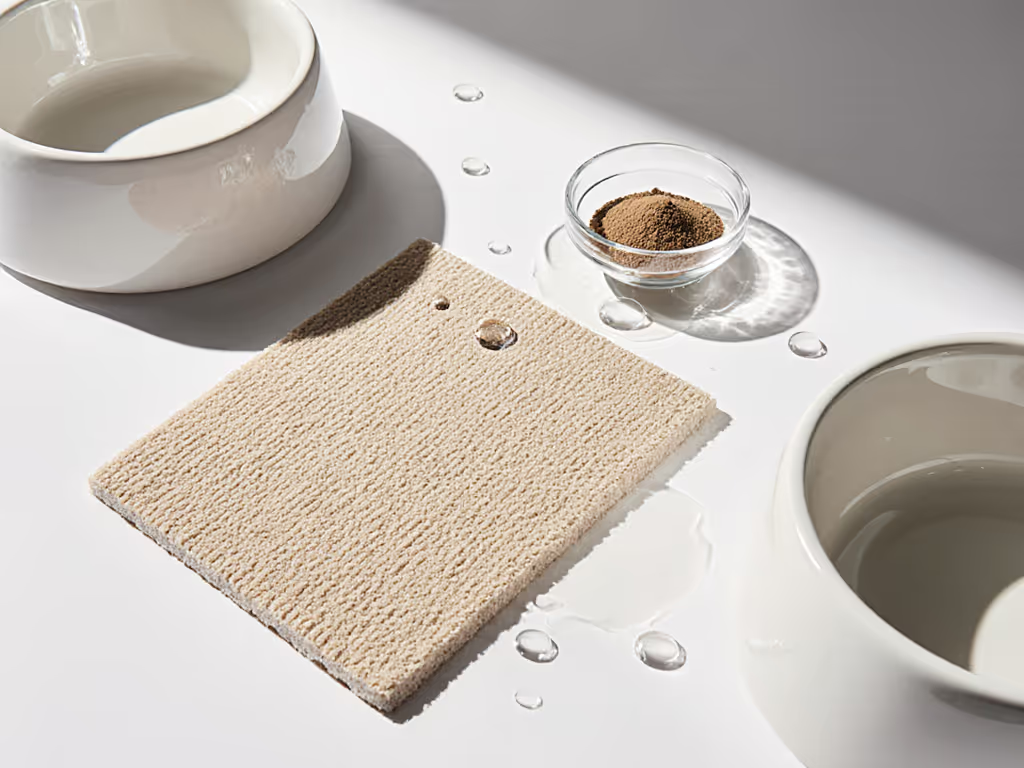
Elevated feeders often include absorbent bases (mats, trays, or integrated platforms) designed to wick moisture away from the floor and create a dry microenvironment around the bowls.
Dorai Home's Diomat® base is specifically engineered for this task. Diatomaceous earth (a natural, food-grade powder derived from fossilized algae) absorbs water rapidly and dries quickly, preventing puddle formation and the bacterial bloom that follows. This is not marketing spin: diatomaceous earth's capillary action and porosity are well-established in materials science.
The practical payoff:
- No standing water = no mold, mildew, or odor seepage into subfloors or carpet
- Easier daily cleanup (one wipe versus mopping)
- Reduced humidity in small apartments, which has secondary benefits for respiratory health and dust-mite control
However, absorbent bases require maintenance. The Diomat® base must be checked and replaced periodically; Dorai does not specify replacement intervals or cost. If replacement is needed annually at $30-$40, that's a consumable to budget for. Many budget feeders include foam or rubber mats that do not absorb but merely contain spills, a weaker solution that still leaves standing water and requires frequent rinsing.
5. Vibration-Dampening and Acoustic Performance
While many apartment feeding stations focus on water containment, an overlooked dimension is vibration and noise. Plastic bowls and metal feeder frames can rattle or clang when a cat bumps them or when kibble falls during filling. Early-morning feeding noise wakes light sleepers and can trigger inter-cat tension or anxiety in noise-sensitive cats.
Elevated feeders with silicone or rubber risers beneath each bowl dampen vibration and reduce acoustic transmission to the floor and walls. Dorai's silicone risers serve this dual purpose: they provide non-slip grip and absorb impact noise. A feeder that quiets the morning feed is worth the premium in multi-person or multi-cat households.
No decibel measurements are available from current search results, but direct testing in a quiet room (typically done by in-home reviewers and audio equipment testers) would confirm performance claims.
6. Five-Year Total Cost Breakdown: A Worked Example
Let's model two scenarios over five years for a two-cat household with standard dry + wet feeding:
Scenario A: Budget Plastic Feeder with Foam Mat
- Initial cost: $25
- Replacement year 2: $25 (plastic degradation)
- Replacement year 4: $25 (mat compression, discoloration)
- Replacement bowls (plastic, years 1, 2, 3, 4): $5 x 4 = $20
- Wasted food due to contamination (estimated): 5% annual waste x 365 days x $1.50/day per cat = $55/year x 5 = $275
- Potential vet visit for plastic-related chin acne: $200 (assuming one incident)
- Five-year total: $570
Scenario B: Ceramic Elevated Feeder with Moisture-Absorbing Base
- Initial cost: $85 (Dorai-equivalent product)
- Replacement ceramic bowls year 3: $30
- Diomat® base replacement year 2: $35
- Wasted food (estimated 1% due to better separation): $11/year x 5 = $55
- Vet visits: $0 (ceramic reduces chin acne risk)
- Five-year total: $205
The ceramic + absorption system costs $365 less over five years and eliminates dermatology risk. Buy once, run lean, total cost beats sticker price every time. The Scenario B feeder breaks even by about month 14 and continues saving money throughout its lifespan.
7. Warranty Terms and Repairability
Durable gear is only durable if you can repair or replace broken components without replacing the entire unit. Dorai Home's product pages do not publicly list warranty terms or spare-parts availability (a gap that should be confirmed directly with the manufacturer before purchase). Lack of published warranty is a red flag.
Key questions to ask any manufacturer:
- How long is the warranty, and what does it cover (materials, defects, accident damage)?
- Are replacement bowls, mats, or risers available separately, and at what cost?
- Is the product repairable, or is it disposable-on-failure?
- What is the expected lifespan under average use?
A feeder with a 2-year warranty and available $20 replacement parts is preferable to one with a 5-year warranty and no spare-parts availability (rendering the warranty meaningless after a non-catastrophic failure).
8. Food-Water Separation Systems: Design Comparison
Side-by-Side Bowl Design
The Dorai Double Feeding Station uses a side-by-side layout with two ceramic bowls, typically one for food and one for water (or two cats with separate meals). This geometry keeps water splash away from dry kibble and allows visual monitoring of intake for each cat.
Advantages:
- Water and food are physically separated
- Each cat can be monitored independently (useful for weight management)
- Shared with household members (simple to understand)
Disadvantages:
- Larger footprint; not ideal for single-cat tiny apartments or studios
- Requires enough counter or floor space for the full unit
- One cat may monopolize the water bowl, forcing the other to share or seek water elsewhere
Tilted Bowl Design
KatSupreme's tilted approach raises one end of the bowl higher than the other, creating an incline. This mimics natural feeding posture (cats in the wild often eat on slopes) and can reduce neck strain for senior cats with arthritis.
Advantages:
- Reduced neck flexion; more ergonomic for older cats
- Single-bowl designs can fit tighter spaces
- Less whisker contact if the bowl edge is appropriately sloped
Disadvantages:
- Tilt angle must be precise; too shallow and posture benefit is minimal; too steep and food slides to one side
- Water and food still share the same vessel (cross-contamination risk remains)
- Anecdotal evidence suggests reduced vomiting, but scientific validation is limited
9. Real-World Pitfalls: What Happens After 6 Months
Online reviews often focus on first impressions. Long-term ownership reveals friction that early adopters tolerate but repeated users reject.
Biofilm Buildup:
Even dishwasher-safe ceramic bowls can develop biofilm in crevices where the bowl meets the silicone riser. Follow a science-backed bowl cleaning routine to prevent biofilm and keep surfaces safe. Daily rinsing and weekly hot-water soaking are necessary. If you're not disciplined about this, the feeder becomes a bacteria factory within 3-4 months.
Riser Deterioration:
Silicone risers yellow, harden, or crack after 12-24 months of daily use and dishwasher cycles. If the manufacturer doesn't sell replacements, the feeder loses its anti-slip property and becomes a hazard.
Moisture-Absorbing Base Saturation:
Diomat® and similar products eventually become saturated with absorbed moisture. If they're not replaced on schedule (typically every 18-24 months), they stop absorbing and just hold stagnant water, defeating their purpose and potentially harboring mold.
Food-Residue Traps:
Any feeder with multiple seams, fasteners, or crevices will accumulate dried food particles and bacteria. Simpler designs (fewer parts, fewer joints) are easier to maintain over time.
10. Deciding What to Prioritize: Your Feeder Checklist
Before purchasing, ask yourself:
- How many cats? Multi-cat households benefit from multi-bowl stations; single-cat owners can use tilted designs.
- Age and mobility? Senior cats with arthritis prefer elevated, ergonomic designs; younger cats are less sensitive but still benefit from reduced whisker fatigue.
- Space constraints? If kitchen footage is under 50 sq. ft., a compact tilted bowl is safer than a sprawling double-station.
- Wet and dry feeding? Separate bowls (as in side-by-side designs) are essential if you're feeding wet and dry simultaneously.
- Maintenance tolerance? Are you willing to clean crevices weekly, replace mats seasonally, and manage consumables? If not, simpler is better.
- Budget horizon? Can you spend $60–$90 upfront to save $150+ over five years, or are you constrained to immediate cash outlay?
- Household aesthetics? Some feeders are sleek and modern; others read as obvious pet equipment. Does it matter in your home?
Final Verdict: Stop Settling for Contamination
Integrated feeding stations with solid non-slip bases and proper bowl geometry are worth the investment. Budget plastic feeders and single-bowl designs force you to choose between water spillage, contamination, and wasted food, choices that compound monthly and render sticker-price savings hollow by year two.
The Dorai Home Double Cat Feeding Station exemplifies the features that matter: separate elevated ceramic bowls, non-slip silicone risers, a moisture-absorbing Diomat® base, and dishwasher-safe components. Its higher upfront cost ($80-$90) is justified by lower five-year ownership costs, reduced contamination, and minimal maintenance friction.
For tilted-bowl preference or single-cat households, prioritize 304/316 stainless steel over ceramic (if durability is paramount) or ceramic over plastic (if cost trade-off is acceptable). Confirm that replacement components are available and that warranty terms are transparent.
Most importantly: model your five-year spend before purchase. Wasted food, replacement bowls, potential vet costs, and consumables add up faster than you expect. The feeder that costs least is the one that forces you to replace it least often and wastes the fewest meals.
Stop water-food contamination at the source. Invest in a feeder engineered to separate these worlds, and your cat, and your budget, will thank you.
Related Articles