Feeding Position Effects on Feline GI Health
By Leena Banerjee • 16th Apr
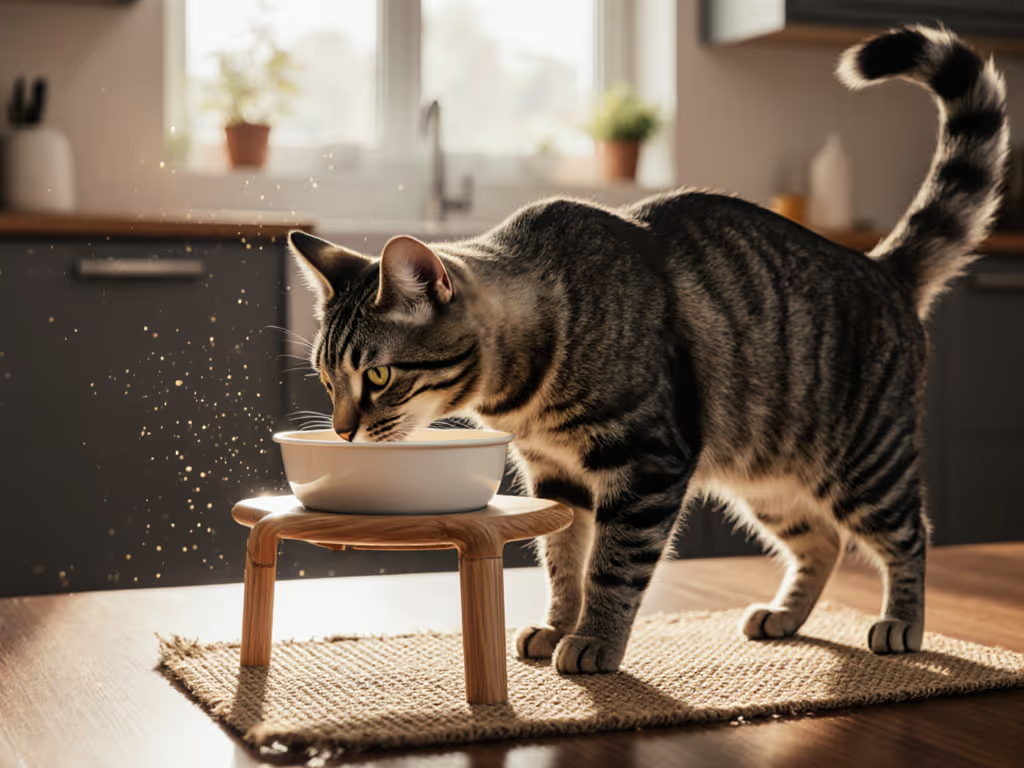
Your cat's GI health depends on far more than what's in the bowl. The where and how (measured in centimeters of elevation and angles of the head) shape whether your cat swallows safely, digests efficiently, or ends up hacking kibble onto the floor at 2 a.m. This article explores the science of digestive-friendly cat feeding positions and what you can actually measure and adjust in your own home.
Why Does Feeding Position Matter for Cat Digestion?
Research on human infants reveals that postural alignment directly influences physiological stability during feeding. Specifically, semielevated side-lying positions produce significantly higher oxygen saturation levels and lower heart rates compared to flat or supine positions during meal intake.[1] While cats are not infants, they share the same basic anatomical challenge: the esophagus, trachea, and swallowing mechanics must coordinate precisely to prevent food from entering the airway.
Head position influences the swallow reflex itself.[2] For a deeper look at posture mechanics, see our cat feeding posture guide. When the neck is flexed slightly forward (what clinicians call a "chin tuck"), the risk of aspiration (food or liquid entering the lungs) drops sharply. Conversely, when a cat eats from a bowl that forces the head into extension (chin up, neck stretched), the swallowing pathway becomes compromised.[2] Over time, this can lead to chronic coughing, regurgitation, or the kind of post-meal vomiting that sends owners scrambling.
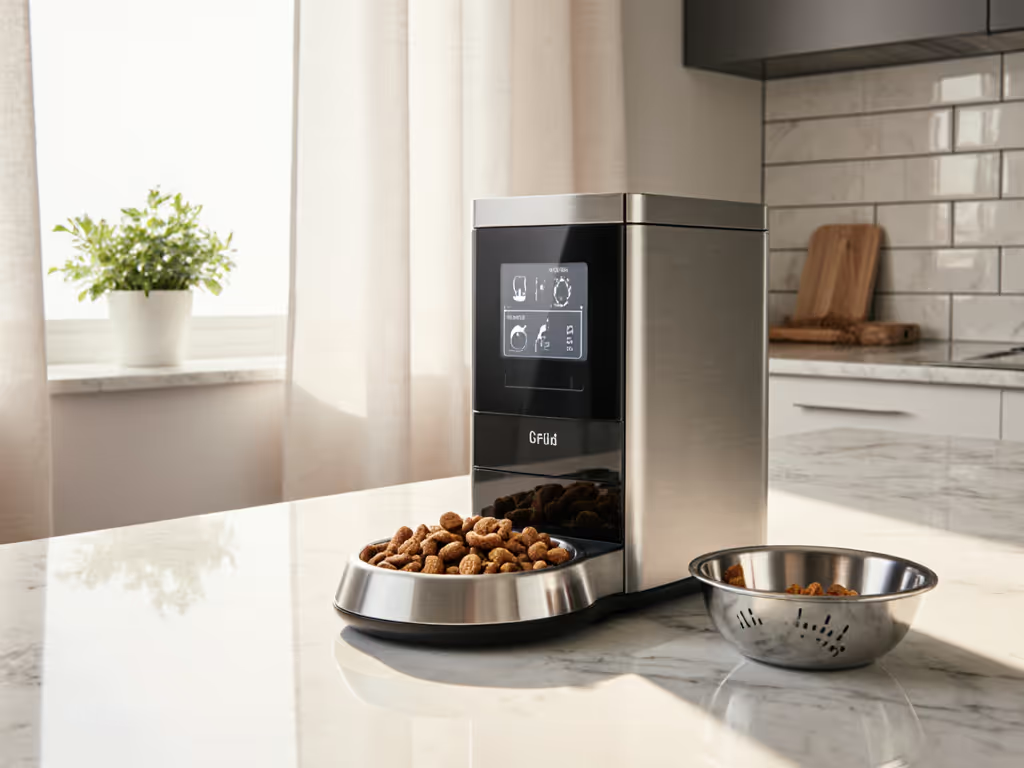
In small-space homes where feeding happens in tight quarters, poor positioning compounds the problem. At 5 a.m., a loud feeder shrieked while dispensing double portions; my cats argued over scattered kibble, and I spent twenty minutes sweeping crumbs before a client call. That week, I realized the feeder itself was only half the problem (the bowl height and angle had forced both cats to crane their necks awkwardly), making them eat too fast and regurgitate within minutes.
How Does Elevation Affect Feline Gastrointestinal Transit?
Feeding bowls positioned at chest or shoulder height (rather than on the ground) reduce the postural strain that triggers rapid, anxious eating. This matters because fast eating correlates with overfeeding, vomiting, and suboptimal digestion.[1] If speed is the issue, consider slow feeders for cats that safely reduce gulping and improve digestion. Elevated feeders allow the cat to maintain a more neutral head-to-trunk alignment, analogous to the postural control documented in human feeding studies.[2]
Elevation also affects gravity's role in gastric transit. When a cat's thorax is more upright during eating, food moves through the esophagus and into the stomach with less resistance. The margin of benefit is subtle (we're not talking medical intervention), but measurable in reduced post-meal regurgitation incidents.
What Does Feeding Position and Vomiting Prevention Actually Look Like?
The ideal setup combines three elements:
-
Bowl height: Position the bowl so the cat's eyes are level with the bowl rim or slightly above. This maintains the chin-tuck posture that safeguards the airway.[2]
-
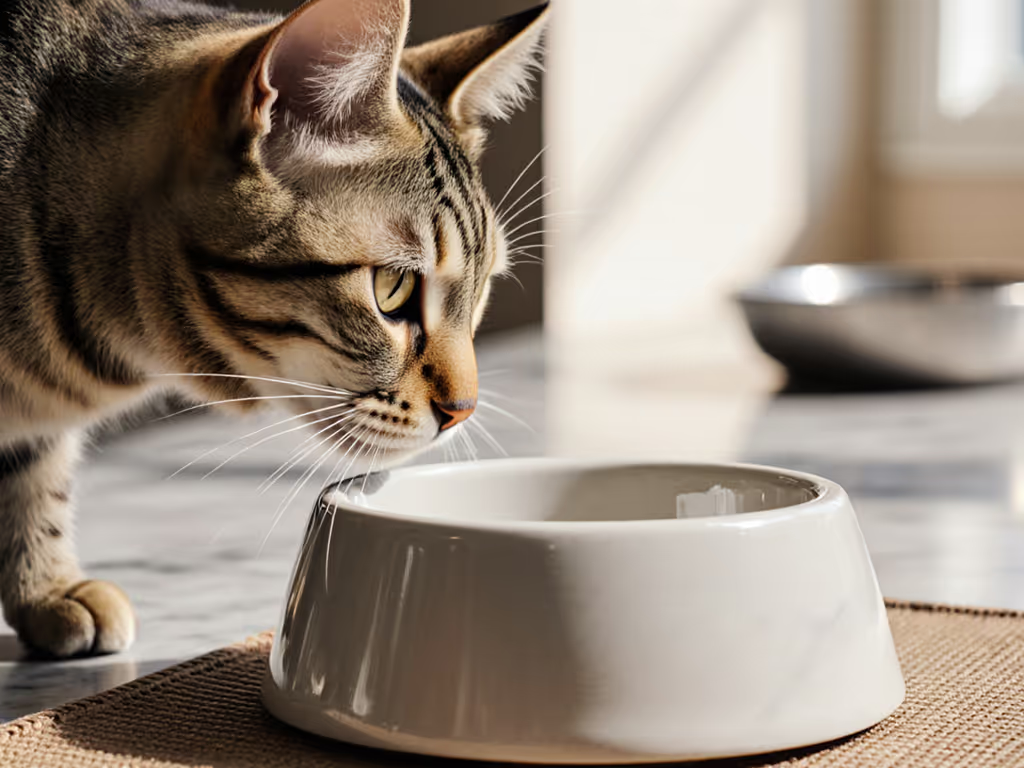
Bowl angle and geometry: Shallow, flat bowls force the cat to bend the neck downward at an extreme angle. Bowls with slightly raised edges or angled interiors encourage a more neutral head position.
-
Feeding pace: Cats eating from ground-level bowls in multi-cat households often gulp, mimicking a competitive feeding response even when no competition exists. Elevating the bowl, and ideally separating feeding stations, naturally slows intake.
In practice, this means a cat eating from a bowl at mid-shin height (roughly 4-6 inches off the ground, depending on the cat's size) will experience less esophageal reflux, simply because the esophageal-gastric pathway isn't fighting gravity. The bottom line: you're not treating a disease; you're optimizing the mechanics that the cat's body already possesses.
How Can I Test If My Cat's Current Feeding Setup Is Working?
Measure three things over a two-week baseline:
- Post-meal vomiting incidents: Log the time, whether it was undigested kibble or bile-tinged liquid, and how long after eating it occurred. Frame this data by day of week and time of day; patterns often emerge (many cats vomit more on days when feeding timing is irregular).
- Eating speed: Use a stopwatch to time how long your cat takes to consume a typical meal (from nose-in to step-away). Cats eating too quickly often finish in under two minutes, which correlates with inadequate swallowing coordination.
- Behavioral cues: Note signs of strain (gulping sounds, head-shaking mid-meal, pawing at the mouth, or immediate post-meal grooming of the face). These suggest postural or pacing discomfort.
Once you've logged baseline data, adjust the bowl height incrementally (in 1-inch steps) and re-measure the same metrics over another two weeks. Comparing incident rates will tell you whether elevation is genuinely helping or whether the problem lies elsewhere (food allergy, eating too fast due to competition, underlying reflux).
What Adjustments Can I Make Right Now?
Start with height. Many cat owners default to ground-level bowls out of habit. Raising the bowl to mid-shin height using a simple shelf, stand, or even stacked books takes zero investment and reveals immediately whether your cat tolerates the change. Some cats will self-correct their eating speed within days; others show no visible benefit and may simply be fine with their current setup.
Separate feeding stations if you have multiple cats. Resource guarding and competition drive gulping, which overrides good posture. Even in a small flat, placing one cat's bowl in the bedroom or bathroom removes the social pressure and allows a more relaxed feeding posture.
Swap the bowl geometry. Wide, shallow bowls often force whisker contact and an uncomfortably downturned head. Learn which shapes prevent fatigue in our bowl shape guide. Deeper, narrower bowls reduce that strain. Stainless steel is easier to sanitize than ceramic and won't harbor odors or biofilm that might make a cat reluctant to eat from a clean-looking but microbe-laden bowl.
Monitor and document. If you suspect your cat's vomiting is tied to feeding position, keep a simple log for four weeks before and after each change. Vets appreciate concrete data: "vomiting incidents dropped from 3 per week to 1 per week after elevating the bowl" far more than anecdotal observations.
The Bottom Line: Actionable Next Steps
Feeding position is one of the few GI health variables that cat owners can control without medication or dietary overhaul. The science is clear: postural alignment, head position, and eating pace influence swallowing safety and gastric comfort.[1][2] In small-space homes where clutter and noise already compromise feeding time, optimizing position costs nothing and often yields measurable improvement within two weeks.
Start today:
- Measure your cat's current baseline (post-meal vomiting incidents, eating duration, behavioral stress).
- Adjust the bowl height to mid-shin level and monitor the same metrics for two weeks.
- Document what changes and share the data with your vet if problems persist.
- Repeat with bowl geometry or feeding-station separation if height alone doesn't help.
You can't optimize what you don't measure. By logging position, elevation, and outcomes, you'll know whether your cat's digestive challenges stem from how they're eating or what they're eating, and that clarity drives better decisions.
Related Articles