Best IBD Cat Feeders: Precision & Hygiene
By Diego Álvarez • 6th May
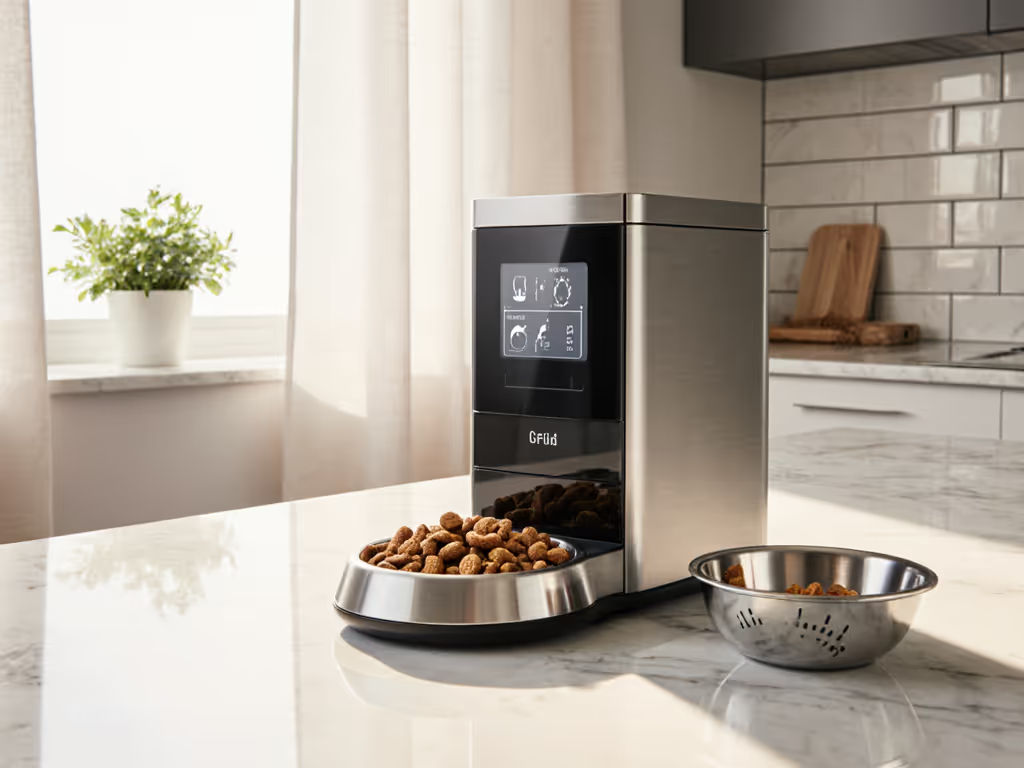
When your cat has inflammatory bowel disease, every meal becomes a small act of care. The right IBD cat feeder or inflammatory bowel disease feeder transforms feeding from a daily stress into a controlled, repeatable moment that supports digestion and reduces household tension. But here's the truth most feeder reviews miss: the equipment isn't separate from the routine. Fair feeding is behavior design, not just buying gadgets. For IBD cats (whose guts are already working harder to process food), precision in portions, quietness during dispensing, and hygiene in the bowl matter as much as the nutrition inside.
This guide walks you through how feeder design directly supports IBD cat health, how to compare options that reduce mess and cross-contamination, and how to build calm, repeatable routines that your whole household will appreciate.
Why Feeder Design Matters for IBD Cats
IBD cats have inflamed, impaired intestinal tracts. Any additional stress (loud motors, inconsistent portions, bowl placement that causes gulping) adds friction. An IBD cat that eats too fast or in a state of anxiety won't digest as efficiently as one eating in a quiet, predictable setting with the right portion size every time.
The best sensitive digestion feeders address three core challenges:
1. Portion Accuracy
When a cat's GI tract is compromised, overfeeding compounds inflammation and often triggers vomiting or diarrhea. A feeder with verified portion control, whether manual or timed, prevents the guesswork that leads to "just a little more" and creeping weight gain. Precision here is healthcare.
2. Quietness & Routine Stability
Motor noise or sudden mechanical clicks startle IBD cats and trigger the stress response that interferes with digestion. Feeders that dispense gently, with minimal sound, support the calm environment these cats need. Consistency (the same feeder, same time, same amount) anchors their digestive rhythm.
3. Hygiene & Cross-Contamination Prevention
Many IBD cats thrive on limited-ingredient or specialized wet diets. A feeder that isolates each cat's food (no mixing bowls, no shared containers) and cleans easily without food-trapping crevices prevents bacterial buildup and accidental protein exposure that could trigger flare-ups.
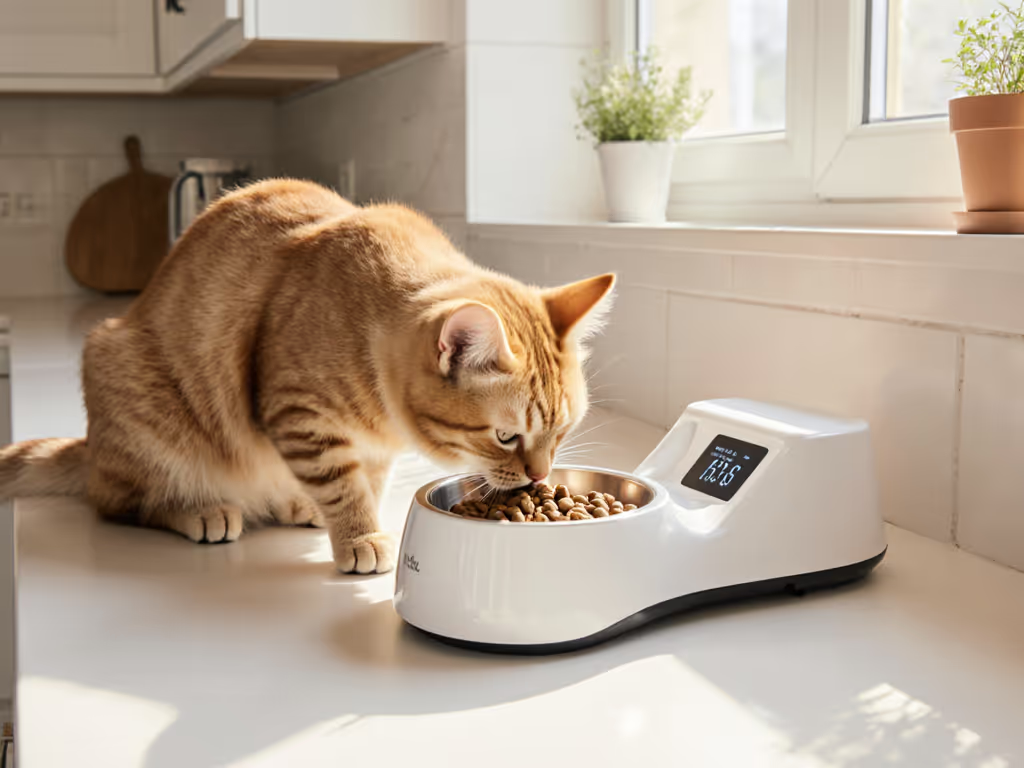
Key Feeder Features for IBD Cats
Portion Accuracy & Consistency
Look for feeders that deliver the exact amount prescribed by your vet. Timed feeders with digital displays or manual scoop-and-bowl systems are equally valid; what matters is repeatability. If your feeder has an adjustable portion dial, test it by weighing output for three consecutive days. Variance should be less than 5%. For IBD cats managed by weight, this precision reduces vet visits and flare-ups.
Quiet Operation
Motors should operate below 60 dB (roughly the sound of normal conversation). Feeders with soft-close lids, rubber dampening, and gradual dispensing mechanisms are gentler on anxious cats and multi-cat households at dawn. If the product spec doesn't list noise level, ask the manufacturer or check user reviews for reports of early-morning startles.
Easy Cleaning & Sealed Seams
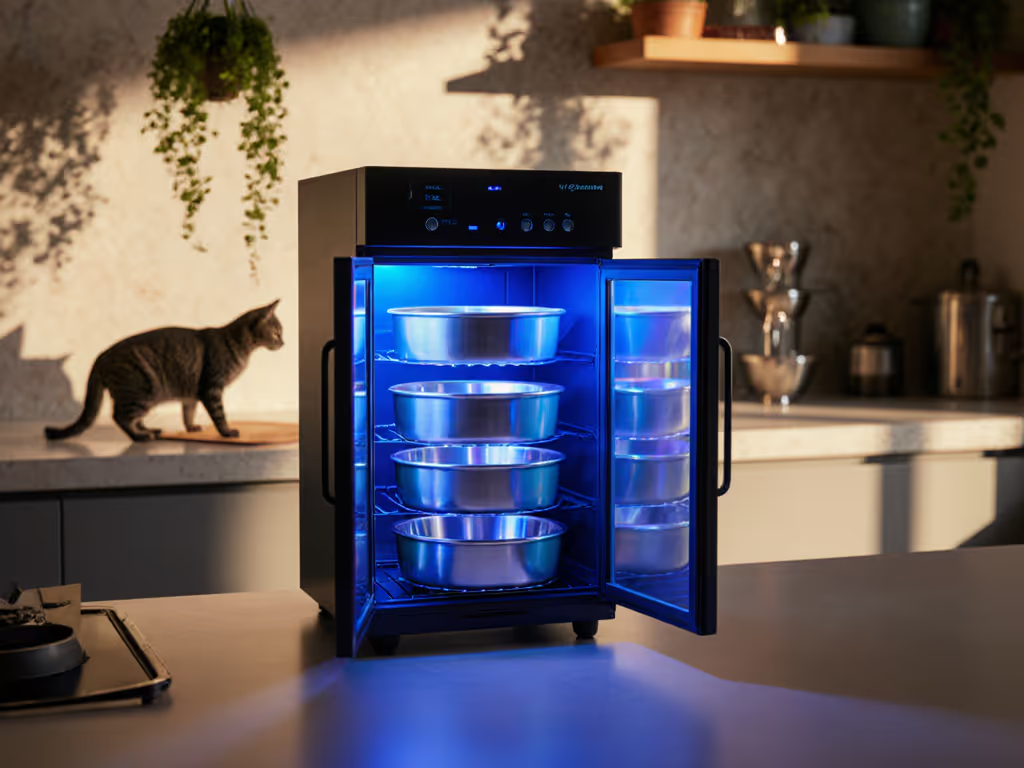
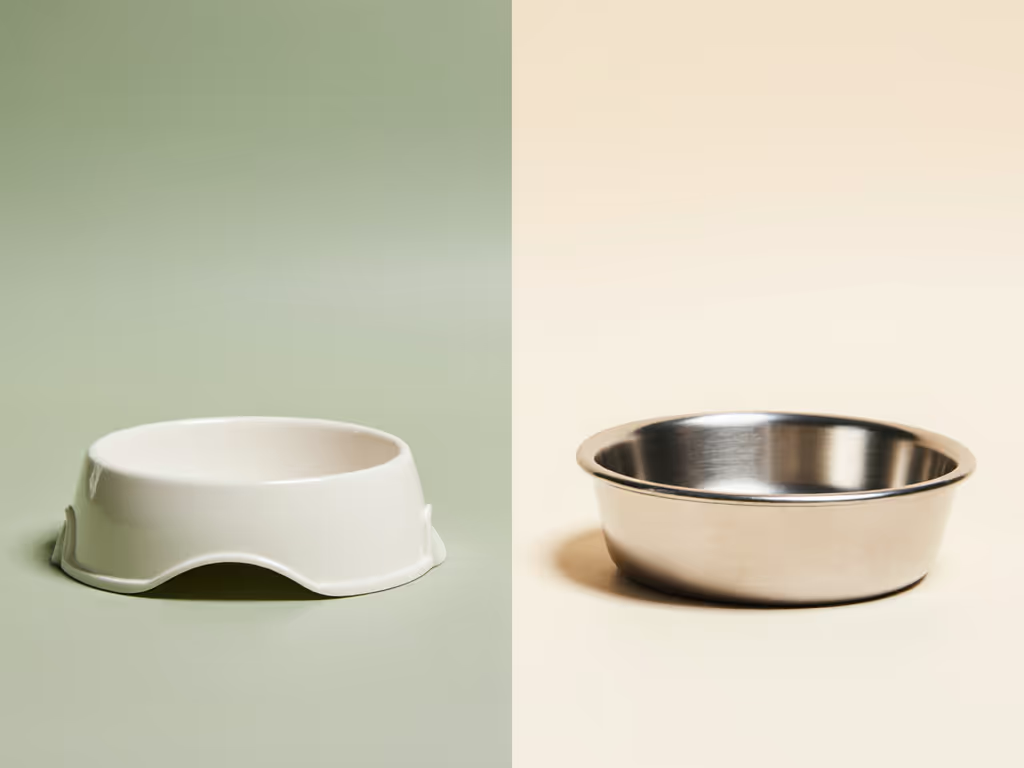
Wet food residue, kibble dust, and moisture create biofilm in crevices and under raised edges. The best feline IBD nutrition support feeders have smooth surfaces, removable bowls, and lids that detach fully for dishwasher cleaning. Stainless steel resists odor and bacteria better than plastic. Avoid feeders with screw-on bases, narrow seams, or felt-backed components that trap moisture and harbor pathogens.
Appropriate Bowl Geometry
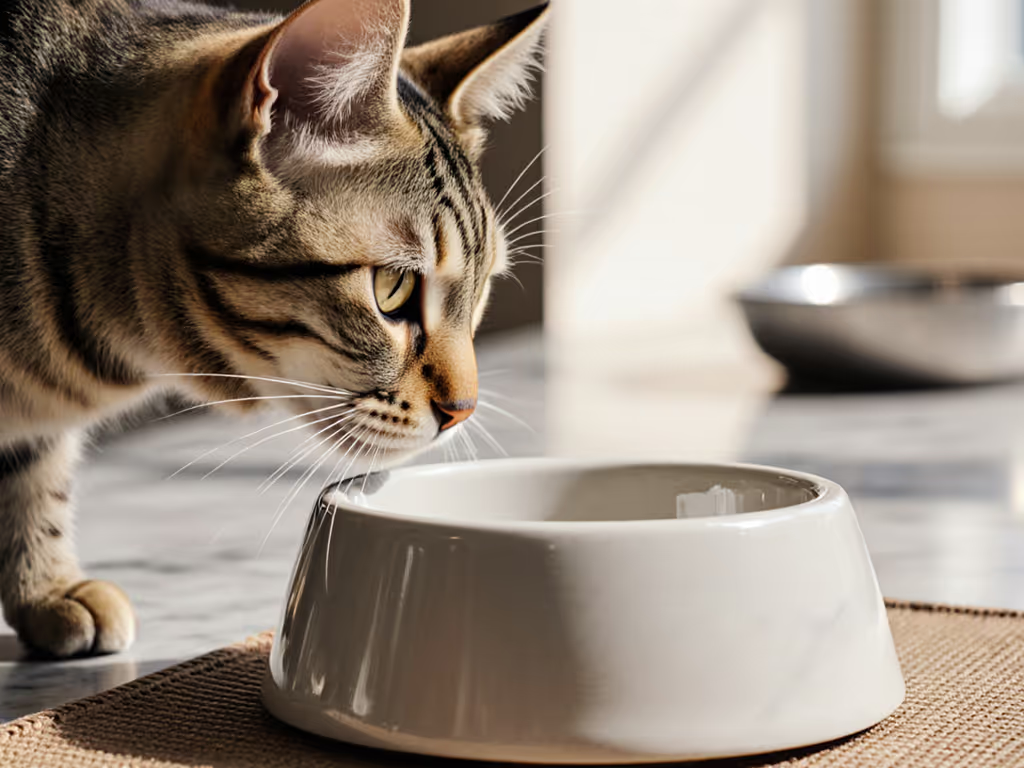
Shallow, wide bowls (at least 1.5 inches wider than your cat's face) reduce whisker contact and the stress-eating that comes with bowl aversion. For fit and comfort, see our whisker-friendly bowl shapes. Some IBD cats do better with slow-feeder or puzzle-style inserts that pace eating and ease gastric pressure. If your cat has a history of vomiting after meals, a feeder that naturally slows consumption can help.
Access Control & Fairness
In multi-cat homes, low-residue feeding systems that prevent one cat from stealing another's food, whether through timed gates, microchip recognition, or separate elevated stations, protect each cat's therapeutic diet and reduce the stress-guarding behavior that worsens IBD. I've seen a timid IBD cat's flare-ups drop noticeably once meals became predictable and protected; fairness at the bowl isn't a luxury; it is health infrastructure. For multi-cat households with medical diets, consider protected-access feeders for special diets to stop food theft.
Storage & Freshness
Wet food formulas used in IBD diets spoil faster. Avoid flare-ups from spoiled food with our opened canned food storage guide. Feeders with airtight storage, built-in humidity control, or refrigerated compartments extend freshness and reduce waste. If using a timed wet-food feeder, ensure it's designed to keep portions cool or at safe temperatures, especially in warm climates.
Types of Feeders for IBD Cats: Comparison Framework
Manual Bowl + Scoop System
Best for: Single-cat households, owners who prefer simplicity and low cost.
Pros: No batteries, no noise, no learning curve, easy to adjust portions.
Cons: Requires discipline; easy to over-fill or forget; no portion logging.
IBD suitability: Works well if your routine is solid and your cat's flare-ups aren't tied to erratic feeding.
Timed Mechanical Feeders (Portioned Compartments)
Best for: Multi-cat homes, cats on strict portion schedules.
Pros: Quiet rotation mechanism, portion pre-set by owner, no power dependency.
Cons: Limited portion sizes; can jam with certain kibble shapes or dehydrated pieces; less precise than digital.
IBD suitability: Good if you're feeding dry food only (though wet is often preferred for IBD) and need simple, predictable access control.
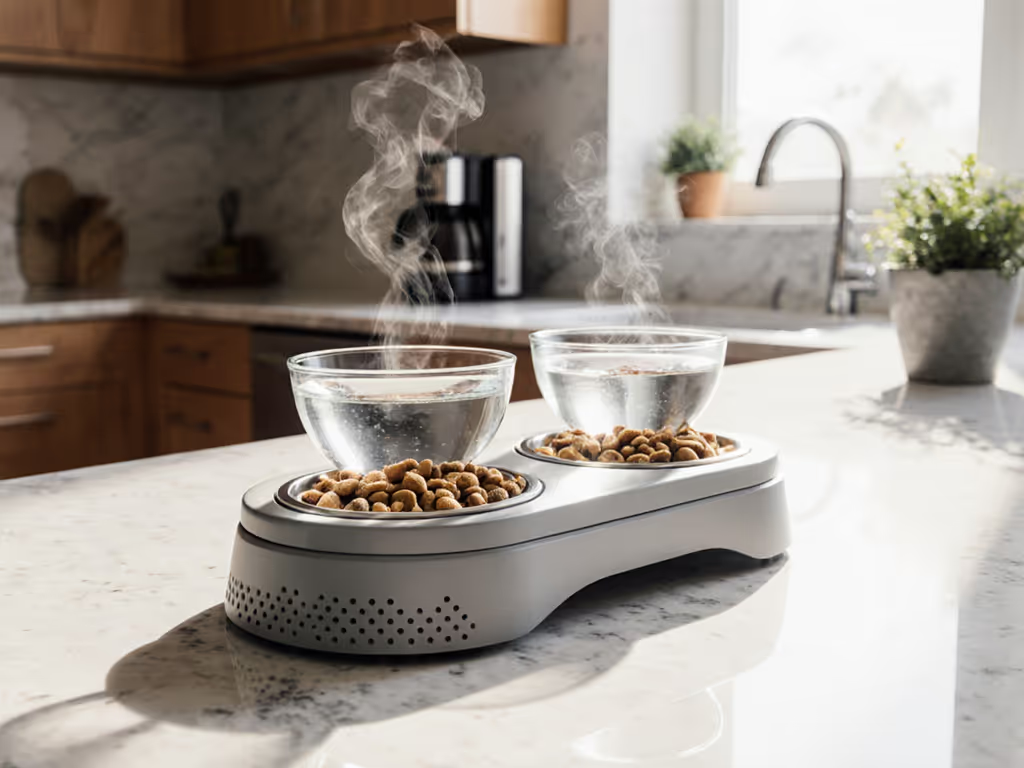
Digital Timed Feeders (Battery or USB)
Best for: Owners who value precision and want feeding logs or remote access.
Pros: Programmable portions, built-in portion tracking, quiet operation, some models offer microchip integration.
Cons: Battery life varies; app interfaces can be buggy; more parts to clean.
IBD suitability: Excellent if your cat's IBD requires strict portion tracking and your vet benefits from intake data. Microchip versions solve fairness in multi-cat homes.
Wet-Food Slow Feeders & Puzzle Bowls
Best for: IBD cats on exclusively wet or raw diets; cats that eat too fast.
Pros: Paces consumption, reduces post-meal vomiting, integrates with behavioral feeding goals.
Cons: Takes longer to eat; can be messy; some cats resist the texture disruption.
IBD suitability: Highly recommended if your cat's vomiting or regurgitation is tied to eating speed. Pair with a waterproof feeding mat.
Elevated Feeders with Gate or Timer
Best for: Multi-cat homes, cats with joint pain, preventing food theft in IBD-managed households.
Pros: Reduces neck strain, isolates one cat's meal, prevents dominant cat access.
Cons: Taller setup may not fit all spaces; can be heavy and hard to move.
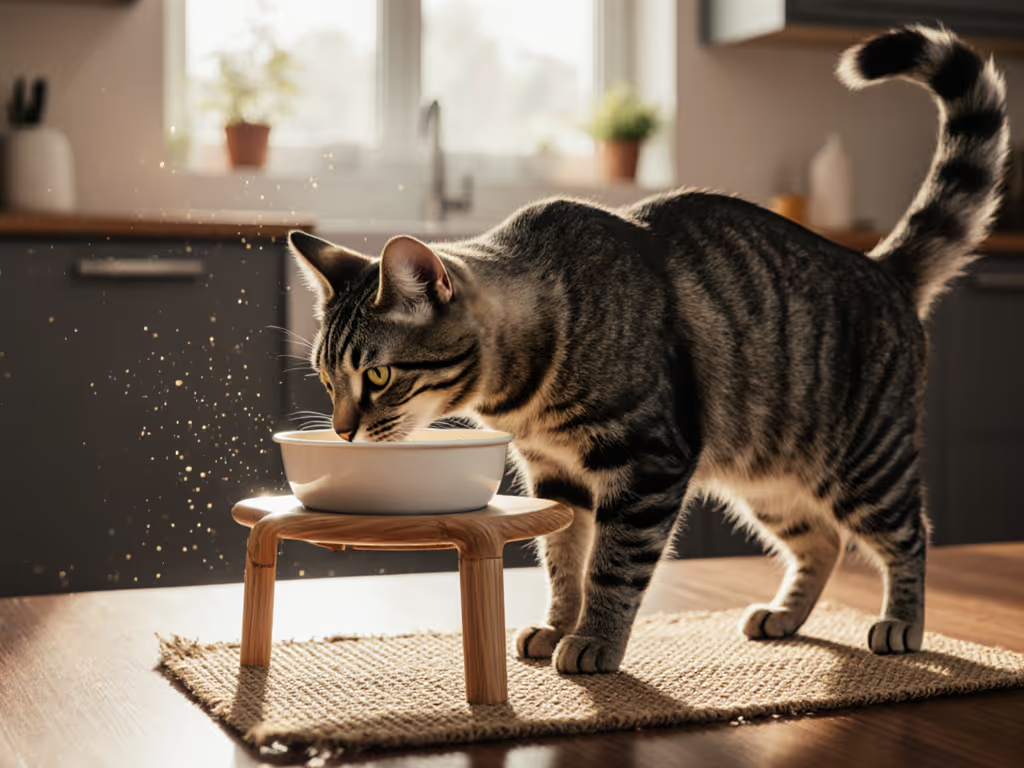
IBD suitability: Essential if your IBD cat is being bullied or crowded at meals. Elevation also aids digestion by promoting natural head-down eating position. Learn how height changes GI transit in our feeding position and GI health guide.
Building Your Feeding Routine: Time-Blocked Setup
Calm, repeatable routines reduce stress-driven flare-ups. Here's a simple framework:
Morning Meal (Time-Block: 7:00-7:30 AM)
- Prep (5 min before): Measure or load feeder to exact portion. Place feeder in designated spot (same location every day).
- Dispense: Turn on feeder or place bowl. Leave the room or stay silent.
- Monitor (quietly): Observe eating from a distance; note any signs of discomfort or unusual pace.
- Clear (immediately after): Remove uneaten food within 15 minutes. Rinse bowl. Store remainder in airtight container.
Evening Meal (Time-Block: 6:00-6:30 PM)
- Same steps, same time. Routine consistency is neurological; your cat's digestive system learns to expect and prepare for meals at fixed hours.
Multi-Cat Staggered Access (If Needed)
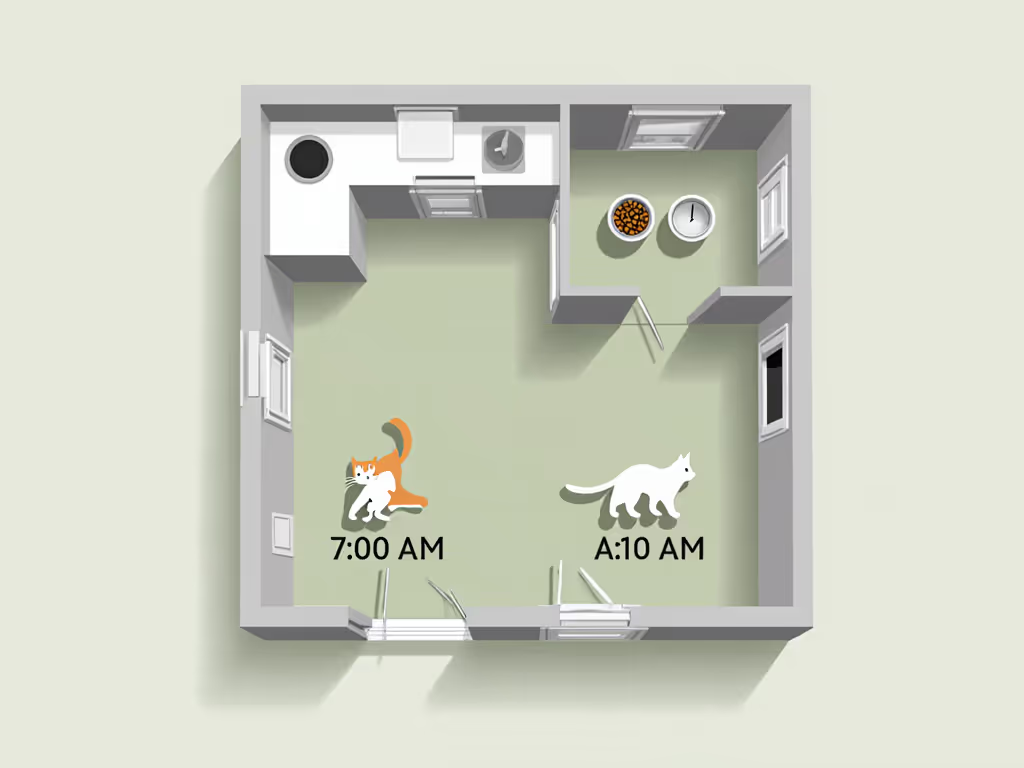
- Cat A, 7:00 AM: Feeder in kitchen nook (measured 8 feet from entry).
- Cat B, 7:10 AM: Feeder in hallway alcove (different room). Gate closes between spaces during first cat's meal.
- Result: No competition, no guarding, no stress. Both finish calmly.
This isn't just scheduling; it's architecture. Simple room maps and placements prevent conflicts that would otherwise trigger IBD symptoms.
Troubleshooting Common Feeder Issues with IBD Cats
Feeder Jam or Blockage
Symptom: Motor runs but no food dispenses; food backs up in chute.
Quick check:
- Is kibble size consistent with feeder specs? (Dehydrated or oversized pieces jam most models.)
- Is the hopper filled above the max line? (Excess weight can compress and lodge food.)
- Has the dispense mechanism been cleaned recently? (Dust and residue accumulate.)
Fix: Empty hopper, rinse all internal parts, reload with smaller portions, test with a manual hand-turn before powering on.
Cats Hacking or Dislodging the Feeder
Symptom: Lid knocked off, feeder tipped, access gained outside scheduled time.
Behavior rationale: Your cat is signaling boredom, anxiety, or portion insufficiency. The feeder isn't the problem; the routine is.
Fix: Move feeder to a corner where tipping is harder; add a weighted mat underneath; increase interaction time outside meals to reduce meal-time fixation; confirm portion size is meeting your cat's caloric needs.
Vomiting or Regurgitation After Meals
Symptom: Cat eats, walks away, returns food 10-30 minutes later.
Diagnostic questions: Is the portion too large? Is the cat eating too fast? Is there stress or noise during feeding?
Check:
- Reduce portion by 10% for 3 days; log outcomes.
- Switch to a slow-feeder bowl or puzzle insert to pace eating. Compare options in our puzzle vs slow feeders.
- Move feeder to quieter location; establish no-talking, no-movement during mealtime.
- Confirm feeder doesn't make unexpected noises (motor hesitation, lid clicks).
Meal-Related Aggression or Guarding
Symptom: One cat blocks another from eating; tension escalates at feeding time.
Behavior rationale: Without protected access, the cat with fewer resources (confidence, speed, past scarcity experience) will guard. This stress worsens IBD in both cats.
Fix: Introduce separate feeders with distance or barriers between them. Use a timer or gate to stagger access. Observe: within a week, guarding usually drops and both cats relax. Fairness, enforced by feeder design, is the antidote.
Cross-Contamination or Shared Food Concerns
Symptom: One cat eats another cat's food; your IBD cat is exposed to triggering proteins.
Quick check:
- Are feeders within jumping distance?
- Is the room layout forcing shared pathways?
- Do both cats finish at the same time, leaving opportunity for exploring the other's bowl?
Fix: Use microchip-enabled feeders if available; create separate feeding zones with closed doors or baby gates; stagger meal times by 15 minutes; confirm each bowl is cleared within 10 minutes of meal end.
Conclusion: Precision, Routine, and Health
Choosing the right gentle portion feeder or IBD cat feeder is an investment in daily wellness, not just equipment purchase. The feeder you select should align with your household's ability to maintain calm, repeatable routines and your cat's specific digestion needs. Whether you opt for a simple manual bowl, a digital timer, or a microchip-gated system depends on your setup, your cat's behavior, and your definition of "friction-free."
Start by identifying which pain point matters most: Is it portion accuracy? Quietness? Multi-cat fairness? Ease of cleaning? Once you've named that, the right feeder becomes clearer. Test your choice for at least two weeks, log your cat's eating patterns and any symptom changes, and adjust as needed. The goal isn't a perfect feeder; it's a feeder that disappears into a routine so predictable your cat's gut relaxes into it.
If you're managing an IBD cat's flare-ups or prevention, consider reaching out to your vet with feeding data (portion size, timing consistency, any behavioral changes at meals). Some cats benefit from working with a feline nutritionist who can pair feeder design with dietary adjustments. Explore resources like the IBD Kitties community, feline gastroenterology specialists, and published studies on feeding behavior and digestion stress. The more you understand your cat's individual response to routine and equipment, the better your choices become.
Related Articles