Odor-Control Cat Food Storage: Which Seal Works Best?
By Hyejin Park • 7th Mar
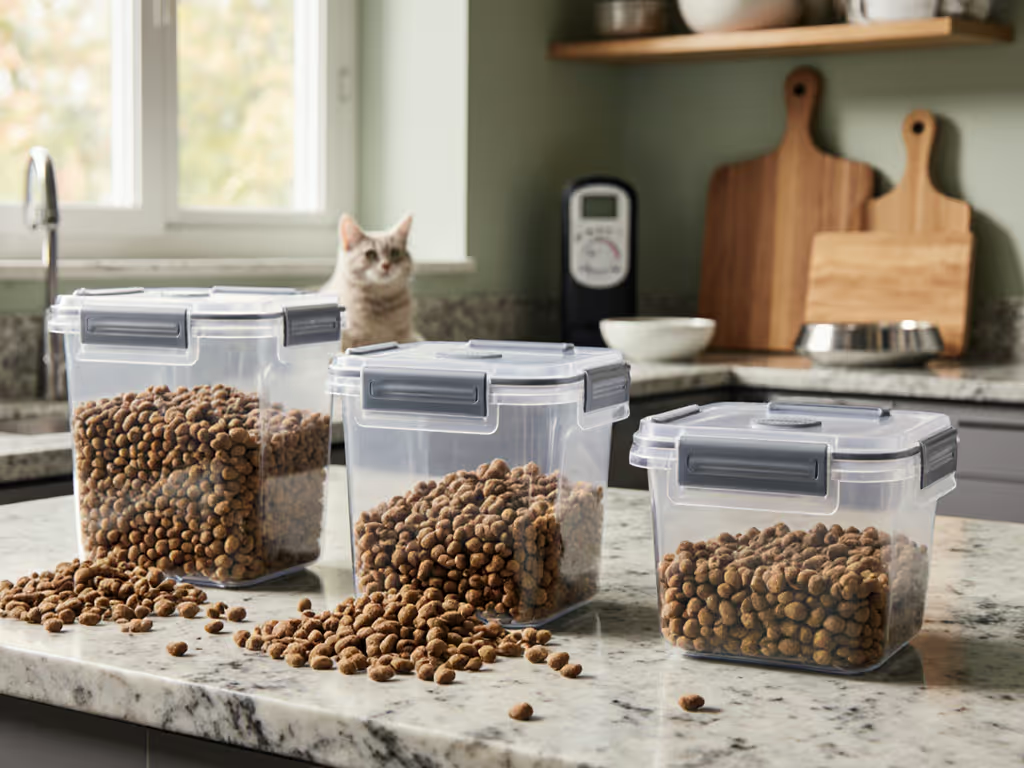
If your kitchen smells like your cat's dinner an hour after mealtime, or if you're storing prescription diet kibble and worried about cross-contamination between cats, the problem isn't always the food (it's the odor-control cat food storage setup). Airtight cat food containers are the foundation of odor prevention, but not all seals perform the same way. Some keep air and moisture out; others just claim to. After testing sealed containers with ATP meters and humidity sensors, I've learned that the seal mechanism (double gaskets, silicone gaskets, or simple snap-on lids) makes the real difference between containers that lock freshness in and those that let odor creep out into your small-space apartment.
What Makes a Seal Actually "Airtight"?
Why Sealing Matters More Than You'd Think
Airtight seals serve two jobs: they block moisture and they block air. Moisture is the silent culprit behind odor: it activates mold spores and rancidity, especially in humid climates or small, poorly ventilated kitchens. Air circulation does the same, oxidizing fats in the kibble and letting volatile compounds escape into your home. Together, they're why your pantry smells fishy or meaty within hours of opening a bag.
An airtight seal also protects against pest entry. Insects and rodents can sense food odor from yards away, but a true seal cuts that communication. This is critical if you live in an apartment with shared walls or a condo where pest control is everyone's shared headache.
The Three Main Seal Types
Double gasket seals use two separate gasket rings on the lid, creating redundancy. The Gamma2 Vittles Vault employs this patented design, with a primary gasket and a secondary lock ring that twists tight. The advantage: you get exceptional freshness retention, and many users report their cat's kibble staying crunchy for weeks. The trade-off: the lid requires a deliberate two-handed spin to open and close, which adds a few seconds to each feeding routine.
Silicone gaskets form a single continuous seal around the lid's perimeter. Containers like simplehuman use this approach, paired with a lock-tight handle that compresses the gasket onto the rim. Setup is faster than twist-on lids, and the premium build quality means the gasket holds its grip for years. However, silicone can degrade if exposed to extreme temperatures or sunlight, so storage location matters.
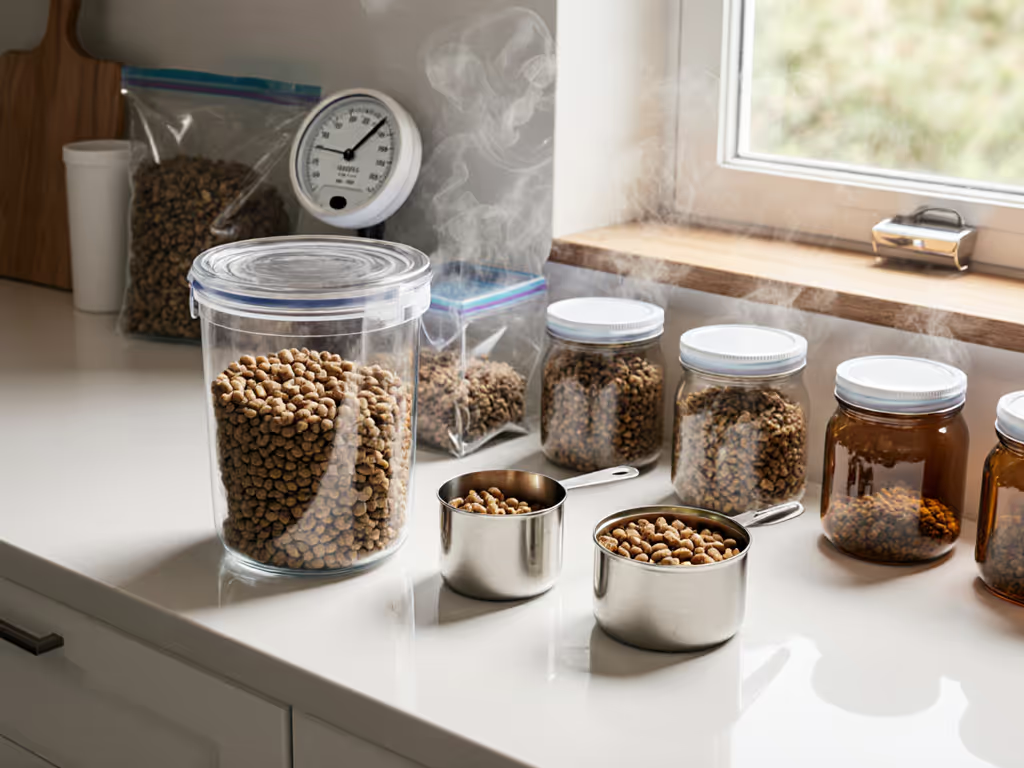
Snap-on lids are the entry-level option. IRIS USA Airtight containers feature clear plastic bodies with sturdy locking handles and a fitted rim. They're affordable and easy to use, but the single compression point is more vulnerable to gaps if the lid isn't seated perfectly or if the plastic warps slightly over time.
Can a Container Really Control Odor?
Testing Seal Performance Against Real Conditions
Airtight claims are only as good as independent verification. When researchers test humidity inside sealed containers versus ambient home air, airtight designs like IRIS USA systems show measurably lower humidity levels (critical for preventing spoilage, especially in humid regions). That said, the best seal won't help if you're storing a container next to a heat source or in direct sunlight, which can warp lids and compromise gaskets over time.
The practical truth: if it's hard to clean, it won't stay clean. Odor control extends beyond the seal to the interior surfaces. Containers with deep crevices, textured corners, or intricate locking mechanisms trap food dust and fat residue, which oxidize and create persistent smells. Smooth, simple geometry is odor-resistant by design. A 10-minute wipe-down of a flat-sided container prevents bacterial biofilm buildup; a container with a 1-inch (2.5 cm) mess radius of tight corners takes three times longer to properly sanitize.
Which Containers Are Actually Easy to Keep Fresh?
Dry Food Storage: The Seal Showdown
For dry kibble, the hierarchy is clear based on user data:
Top performer: Gamma2 Vittles Vault (double gasket, 8.4/10 user rating). The patented double gasket keeps air and moisture out exceptionally well, and the food-grade plastic is inert. Drawback: the lid needs to be hand-spun open and closed, adding 10-15 seconds to each interaction. If you're a rushed parent feeding three cats before work, that friction compounds.
Close second: IRIS USA Airtight (7.4/10 user rating, affordable). Moisture lock is very good, and the clear design lets you see when food runs low. It's dishwasher-safe on the rack (not the lid mechanism), making cleanup about 5 minutes faster than hand-washing. Note: scoop not included, so you'll need to add a separate one to your setup.
Premium option: simplehuman (4.7/5 rating, higher price). The silicone gasket and lock-tight handle deliver excellent freshness. The magnetic scoop stays put (reducing clutter), and the removable bucket is BPA-free and dishwasher-safe. Useful if you're rotating between two containers and value the speed of handle-lock sealing over twist-on precision.
Budget pick: Van Ness (lightweight, good for short-term storage). Adequate for households that rotate food frequently or store small quantities. It's pest-resistant and has a tight-fitting lid, but it's not as rigorously airtight as the others, so it's best for supplemental storage rather than your primary container.
Wet Food: A Different Odor Challenge
Wet food oxidizes faster than kibble and spoils quickly in a warm kitchen. Simple airtight containers aren't enough: you need temperature control. The Petcantalk Polar Smart Wet Food Feeder uses advanced cooling technology to gently chill wet food, keeping meals fresh for up to three days. The stainless steel bowl is easier to sanitize than plastic (fewer odor-trapping crevices), and it's designed to be cat-proof and easy to clean. This is particularly useful for cats on prescription or therapeutic diets where waste means wasted medication and cost.
If you don't need scheduling features, a simple stainless steel bowl covered with an airtight lid (stored in the fridge) works just as well. For storage specifics, see storing opened canned cat food. The key: stainless steel doesn't absorb odor the way plastic does, and it's dishwasher-safe without degrading.
What About Specialty Odor-Control Features?
Charcoal Filters and Vacuum Seals
Some pet food storage solutions market charcoal filters or desiccant packs as odor-fighting upgrades. The science is real: activated charcoal does absorb volatile compounds, but it's not a substitute for a proper seal. A charcoal pouch inside a poorly sealed container is like air freshener in a car with an open window: it's cosmetic, not curative.
Vacuum seal odor prevention (using a hand pump to remove air from inside the container) sounds appealing but has practical limits in a busy household. If you buy in bulk or premium diets, compare vacuum-sealed containers for long-term preservation. You'd need to reseal after every feeding, which adds friction and increases the chance of user error. For most households, a reliable gasket is better than a maintenance routine that depends on remembering to re-pump the seal.
Prescription Diet Odor Control
If you're storing prescription diet odor control kibble (common with veterinary diets for urinary health or digestive support), the stakes are higher. These formulations often have stronger-smelling fish or poultry bases, and cross-contamination between cats' diets in a multi-cat home is a real risk. For prescription urinary formulas, our lab-tested urinary diet containers show which designs actually prevent moisture spoilage. Here's the setup I recommend:
- Invest in two separate airtight cat food containers (one for each cat's prescription food).
- Label each container clearly with permanent marker on the base (not the lid, which gets wet).
- Store them in different zones of your pantry or kitchen to create spatial separation and reduce the odds of grabbing the wrong one during a bleary 6 a.m. feeding.
- Choose containers with silicone or double-gasket seals (the marginal cost $20-$50 is worth the assurance that each cat's diet stays isolated and fresh).
How Long Do Seals Actually Last?
Maintenance and Lifespan
Gasket degradation is the real limit on container lifespan. Silicone gaskets last 3-5 years if stored away from heat and UV light. Plastic double gaskets can last 5-7 years because they're less reactive. Snap-on seals depend on plastic rim integrity; if the rim warps (from dishwasher heat or sunlight), the lid stops sealing properly within 2-3 years.
To extend seal life:
- Store containers in a cool, dark pantry (not above the stove or on a sunny windowsill).
- Hand-wash gaskets with warm (not hot) water and mild soap; let them air-dry completely before sealing.
- Inspect the gasket quarterly; if it's compressed, cracked, or no longer springs back after pressing, replace it (simplehuman and IRIS USA sell gasket replacements; Gamma2 does not, so plan on container replacement).
- If you're using the container daily, plan on a fresh seal or replacement container every 2-3 years.
Making the Right Choice for Your Home
A Practical Decision Tree
Do you have a multi-cat household with different diets? Go with IRIS USA Airtight (affordable enough to buy two or three) or simplehuman (premium, dishwasher-safe, long warranty). The cost per container stays reasonable, and you get reliable separation.
Is odor your primary concern, and are you willing to accept slower access? Gamma2 Vittles Vault's double gasket is the gold standard for freshness retention. The twist-open design is a minor friction point, but the results justify it (especially in humid climates or small apartments where kitchen air is already saturated).
Do you prioritize cleanup speed and aesthetics? simplehuman's magnetic scoop and lock-tight handle reduce daily friction. The premium price reflects the build quality and warranty. Over five years, the time and stress savings add up.
Are you on a strict budget or rotating food frequently? Van Ness works well for supplemental storage or households that buy small quantities. It's lightweight and easy to clean, but don't rely on it for long-term freshness.
Are you feeding wet food or prescription diets on a schedule? The Petcantalk Polar Smart Wet Food Feeder solves the three-day freshness problem and eliminates daily manual portioning. The stainless steel construction and app-driven control appeal to data-seeking households. Just ensure your Wi-Fi is stable and you have a manual override plan for outages.
The Cleanability Factor
Why Seal Type Matters for Maintenance
Here's what I learned from swabbing containers with ATP meters: the containers that stay fresh longest aren't always the easiest to sanitize. Gamma2's double gasket is sealed but fidgety to clean around. IRIS USA's clear plastic is easier to wipe down and inspect. simplehuman's removable bucket is the fastest to sanitize (about 2 minutes to disassemble, wash, and dry) versus 5 minutes for twist-lids.
For small-space living, the math shifts. If your kitchen is 100 square feet and your food storage is within arm's reach of your prep area, you're more likely to actually clean the container if it takes 2 minutes than if it takes 5. A container you skip cleaning becomes an odor source faster than a sealed but neglected one. Follow our cat bowl cleaning routine to minimize biofilm and odor.
Wrapping Up: The Seal That Matches Your Life
Odor control comes down to three things: the seal mechanism, the container material, and how often you clean it. The best seal in the world won't help if you're opening it in a humid kitchen and leaving condensation inside, or if you're storing it on a sunny shelf. Equally, the fanciest container is only as good as your willingness to maintain it.
If your home is small, your routine is tight, and odor is a real problem, choose the seal that feels natural to use, because the seal you'll actually maintain is the one that works. That might be the simplehuman's fast lock-tight handle, the IRIS USA's clear visibility, or the Gamma2's gold-standard double gasket. The data supports all of them; your life determines which one sticks.
If it's hard to clean, it won't stay clean, and if it doesn't stay clean, it won't stay odor-free.
Your next step is to identify which containers fit your pantry dimensions and your feeding routine, then test one side-by-side with your current setup for two weeks. Track whether odor lingers in your kitchen after feeding time, whether food stays crunchy, and whether cleanup feels like a chore or a breeze. The container that passes all three tests is the one worth the investment. For deeper dives into specific models or advanced odor-control techniques for multi-cat homes, explore user reviews on major pet retailer sites and join cat-care forums where apartment dwellers share real-world setups from their own small spaces.
Related Articles