Stainless Steel Bowls: Whisker Relief & Heat Tested
By Sofia Rossi • 12th Apr
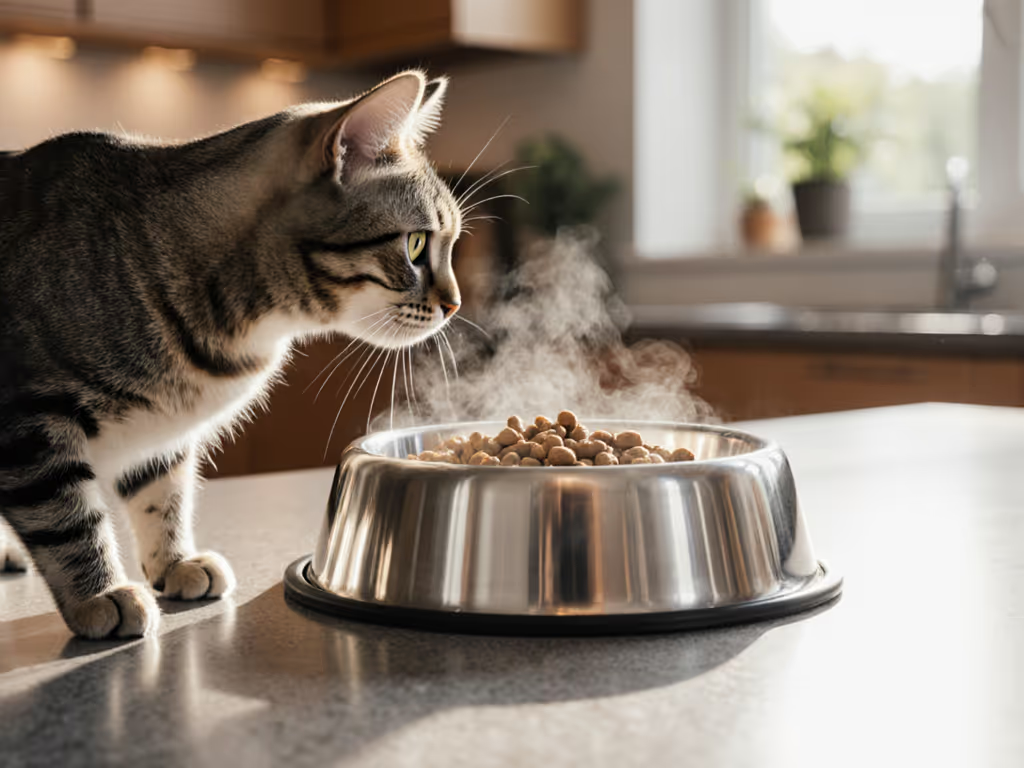
Finding the right stainless steel bowls for your cats isn't just about aesthetics, it's about engineering peace into your feeding routine. When you're juggling multiple cats, tight spaces, and the constant battle against biofilm and odor retention, whisker-friendly wet food dishes become non-negotiable infrastructure. See our stainless wet food bowl comparison for designs that minimize spills and whisker stress. The difference between a bowl that pays for itself through longevity and durability versus one that becomes a recurring expense is precisely where most cat guardians go wrong: they fixate on sticker price and ignore the true cost of waste, replacement cycles, and hidden maintenance burdens.
After years of stress-testing feeding gear across multi-cat households, I've built a simple model (the same one I once applied to filters and kibble scatter) that converts bowl performance into five-year ownership cost. Material choice, heat retention, biofilm resistance, and repairability aren't luxuries; they're the difference between a $15 bowl you replace every 18 months and a $40 investment that outlasts your lease.
1. Durability That Eliminates the Replacement Treadmill
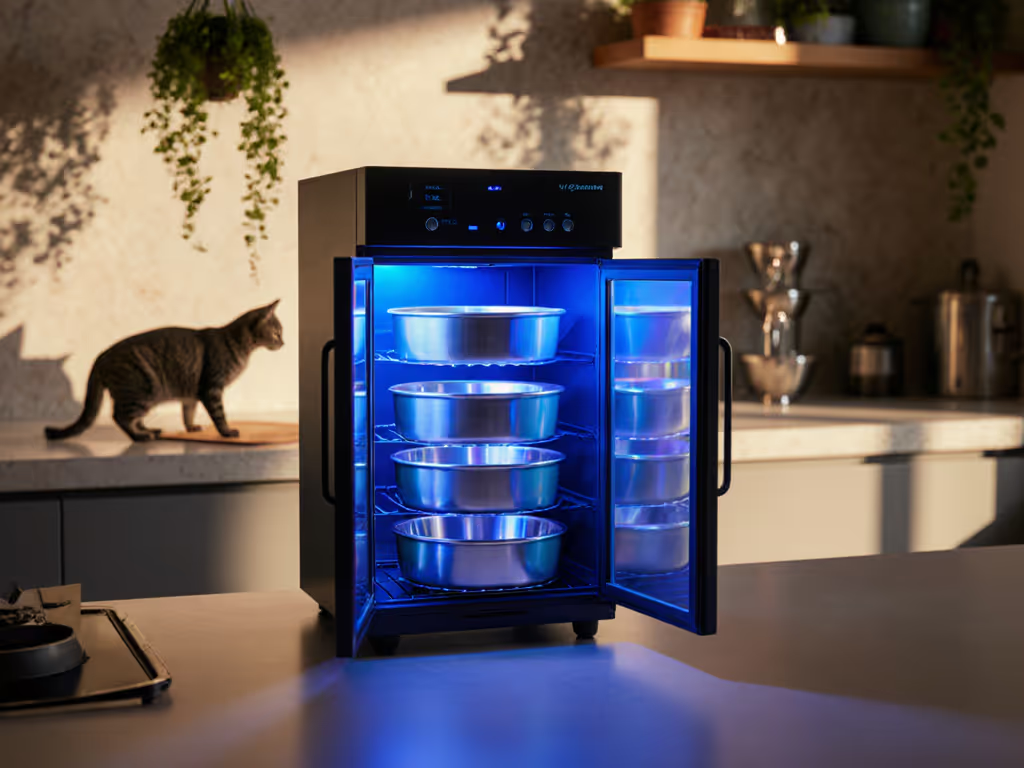
Stainless steel bowls are engineered to survive what plastic and ceramic cannot: accidental drops, aggressive dishwashing, and the constant thermal shock of moving between room temperature, the refrigerator, and hot water.[1] Unlike ceramic, which chips irreversibly, or plastic, which warps and scratches over time, stainless steel maintains structural integrity through years of daily use.[1][4]
This durability directly translates to cost avoidance. A ceramic bowl may cost $8 but requires replacement after 2-3 years of regular use (or sooner if a cat knocks it hard enough to crack the glaze). Stainless steel costs more upfront but can serve the same cats (or their successors) for a decade or longer.[4] When you model a five-year ownership horizon, the premium evaporates.
Durability factors that matter:
- Resistance to denting and warping
- Non-reactive surface for acidic or mineral-rich wet foods
- No risk of glaze chipping into food
- Ability to withstand vigorous scrubbing and abrasive tools without surface degradation
The warranty on a quality stainless steel bowl is often implicit rather than stamped. The material speaks for itself. A $35 stainless steel feeder set with a lifetime warranty against defects becomes a net-zero cost investment if it never breaks, versus a $12 plastic set replaced three times over five years ($36 total plus the cognitive load of shopping and restocking).
2. Non-Porous Surfaces That Starve Biofilm and Odor
Plastic bowls are a biofilm breeding ground. Within weeks, they develop a permanent slime coating, invisible to the eye but palpable to a cat's sensitive nose.[2] That film retains odors (especially from fish-based foods) and becomes harder to remove each wash cycle. Some cats respond by refusing the bowl entirely or eating too fast to escape the smell.
Stainless steel is non-porous, which means bacteria cannot colonize its surface the way they do in pitted plastic.[2] A study examining bacterial growth across materials found that plastic bowls accumulated the most bacteria after just 14 days, while stainless steel remained the cleanest.[2] For a temperature-retaining cat bowl that sits in your kitchen, hygiene translates directly to cat acceptance and reduced feeding stress.
Biofilm prevention in action:
- Smooth, sealed surface prevents bacterial pocket formation
- No permanent odor absorption; fish meals don't ghost future kibble portions
- Rinsed water runs off cleanly without pooling in microscopic crevices
- Material does not degrade or soften, creating new hiding spots for microbes
If your cat is prone to food aversion or has been diagnosed with a sensitive stomach, the hygiene difference between a three-year-old plastic bowl and a fresh stainless option is measurable: fewer episodes of leaving food untouched, reduced vomiting, and less guesswork about whether the bowl itself is the culprit.
3. Temperature Retention for Wet Food Integrity and Comfort
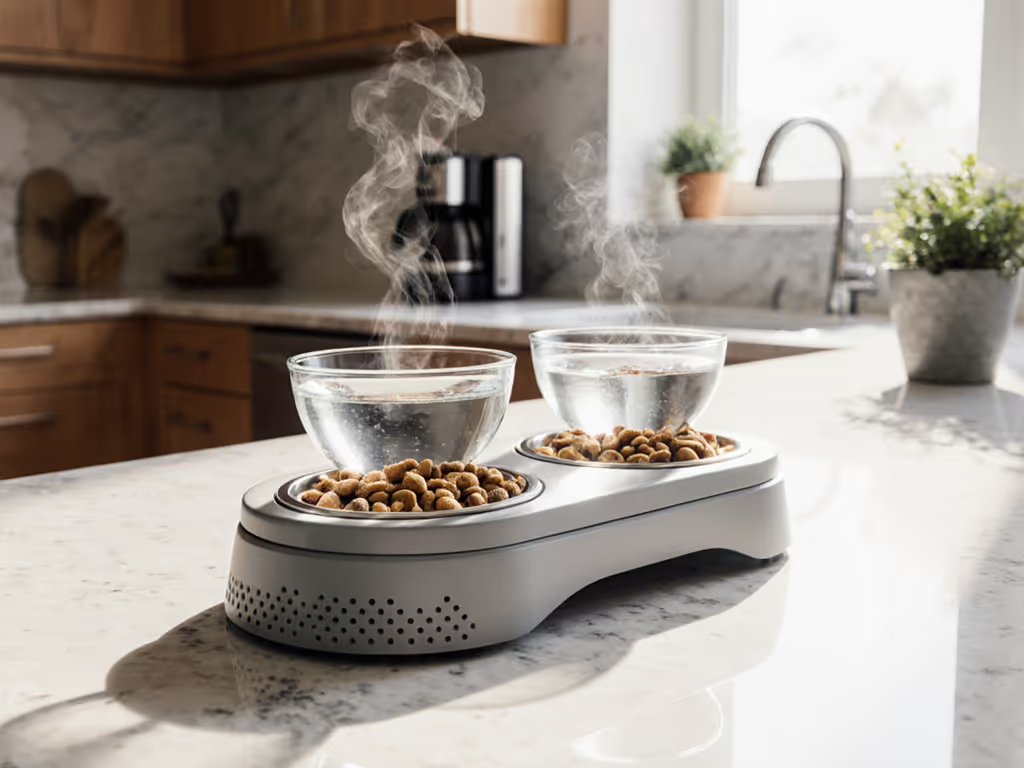
Temperature-retaining cat bowls are rarely marketed for this purpose, yet thermal performance is essential for wet food feeding. Stainless steel does not heat up as rapidly as ceramic or glass when exposed to warm environments, which means refrigerated wet food stays cooler longer, which is critical for cats on therapeutic or fresh-fed diets where food safety margins are narrow.[1] Conversely, when you serve a heated meal (warming canned food or raw portions to room temperature), stainless steel retains warmth evenly and doesn't create hot spots that can irritate sensitive mouths.
This performance becomes especially valuable in multi-cat households where feeding windows overlap. If you prep meals 10-15 minutes before feeding, a stainless steel bowl maintains the intended temperature profile without requiring a second reheat cycle. That is a small efficiency that compounds across 365 days.
Temperature management benefits:
- Refrigerated wet food remains at safe temperatures longer
- No thermal shock from direct heat exposure
- Comfortable for cats with temperature-sensitive mouths or dental issues
- Reduces need for pre-feeding reheating, saving electricity and time
From a cost standpoint, temperature stability means fewer spoiled portions and less food waste. If just one meal per week stays fresh an extra hour due to better thermal performance, that's roughly $50-$100 per year in prevented waste across a multi-cat household, enough to recoup the bowl's premium in 12-18 months.
4. Easy Cleaning and Minimal Maintenance Friction
Cleaning time is a hidden tax on any feeder. A bowl that requires 30 seconds to clean versus 3 minutes saves 20 hours per year across one household. That is time you don't have if you're working full-time and managing cats, kids, and a rented apartment.
Stainless steel bowls are dishwasher-safe and require no special treatment.[1][3] Set a safe routine with our bowl cleaning protocol based on food type and contamination risk. There's no risk of thermal shock (ceramic can crack in a hot wash cycle), no fading or scratching from detergent, and no need to hand-dry carefully to prevent water spots.[1][3] A quick rinse with soapy water removes food debris; even stubborn residues wipe clean without scrubbing.[1] For shallow stainless feeders where corners might trap food particles, a damp cloth and three seconds are sufficient.[3]
Plastic bowls demand gentler handling, fade under harsh detergents, and develop micro-scratches that harbor bacteria over time. Ceramic requires careful drying to prevent mineral buildup and eventual crazing. Stainless steel shrugs at all of it.
Maintenance reality check:
- Dishwasher-safe; no hand-washing gatekeeping
- Resistant to harsh detergents and steel wool scrubbing
- No special drying protocol required
- Maintains appearance; no fading or permanent staining
- No ongoing treatments (no ceramic sealants, no plastic conditioners)
This ease of cleaning has a ripple effect: you're more likely to wash bowls immediately after meals (not leaving food debris to harden), which means fewer odor molecules embedded in the material and a more hygienic feeding environment for your cats. The friction reduction encourages discipline, which improves outcomes.
5. Whisker Geometry and Shallow Depth for Food Acceptance
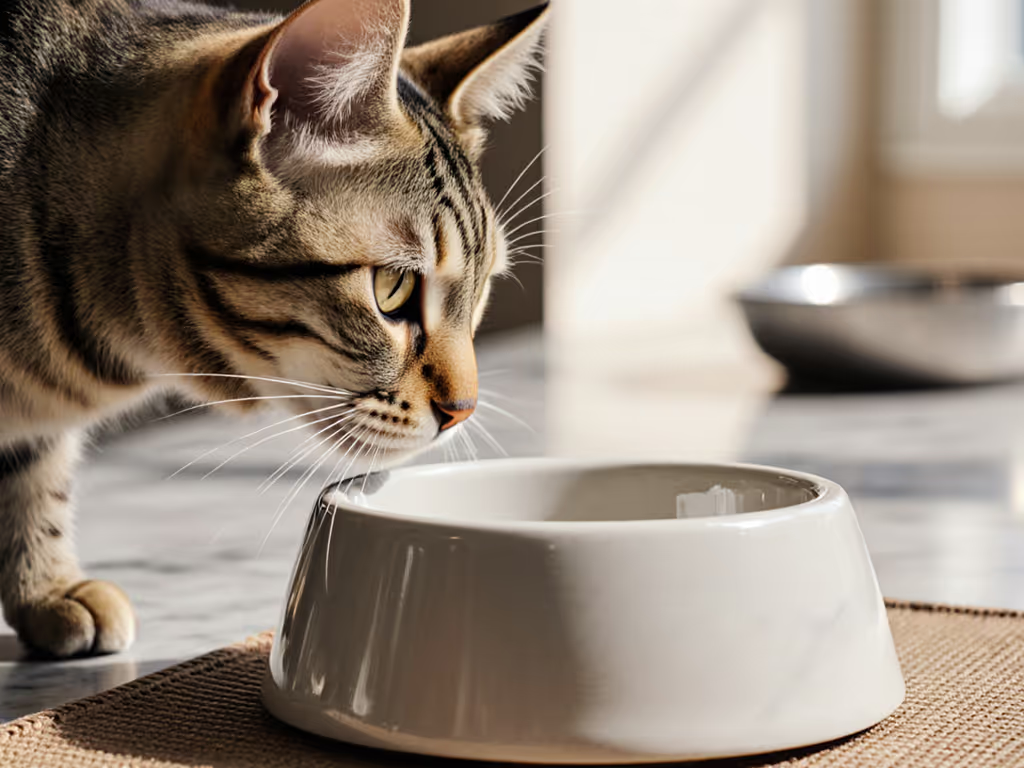
Shallow stainless feeders address a significant pain point: whisker fatigue. Learn which bowl shapes prevent whisker stress and how to size them for your cat. Cats have sensitive nerve clusters in their whiskers and on their faces; forcing them to eat from deep bowls that compress whiskers against the sides causes discomfort and aversion over time. Some cats respond by eating too quickly (gulping, which leads to vomiting), eating too slowly (undereating), or refusing meals altogether.
Stainless steel bowls are available in a range of depths and diameters, and quality manufacturers offer wide, shallow designs specifically optimized for cats. Because stainless steel is rigid and doesn't warp, these shallow profiles maintain their geometry indefinitely. Unlike plastic bowls that can sag or tilt after a few years, changing the effective depth and reintroducing whisker contact.
Whisker-friendly design principles:
- Bowl diameter wider than the cat's face
- Depth shallow enough that whiskers don't compress during eating
- Smooth, rolled edges (not sharp) to prevent lip or chin irritation
- Rigid construction that doesn't flex or sag over time
- Non-reactive surface that won't irritate sensitive skin or trigger chin acne
For cats with diagnosed whisker sensitivity or chin acne (often caused by plastic or reactive-surface irritation), a stainless bowl can resolve the symptom within 1-2 weeks. That's measurable: fewer vet visits, no antibiotics, and no behavioral feeding changes. If your cat has one $150 vet visit for chin acne per year, a $35-$50 bowl pays for itself in prevention alone.
6. Resistance to Acidic Foods and Mineral Content
Many wet cat foods are high in fish oil and moisture, which creates acidic conditions that react with reactive materials. Stainless steel does not leach metals or degrade when in contact with acidic foods for extended periods.[3][4] This is especially important if your cat is on a therapeutic diet (kidney disease, urinary issues) where food chemistry is carefully balanced. You don't want microscopic material migration from the bowl altering the food's composition.
Plastic can leach BPA or BPS when exposed to acidic or fatty foods, and ceramic glazes can break down over time, releasing trace metals. Stainless steel remains inert.[3][4]
Acid resistance matters for:
- Fish-based wet foods (sardine, salmon, tuna formulations)
- High-moisture or gravy-rich meals
- Raw or frozen diets (thawed in stainless bowls)
- Long-term storage of leftover portions
- Cats on renal, urinary, or digestive therapeutic diets
For cats with prescription diets, this inertness isn't a luxury. It is a requirement. A bowl that could subtly alter food chemistry defeats the purpose of the therapeutic diet entirely.
7. Aesthetic and Space-Saving Design
Stainless steel has a clean, professional appearance that blends into modern kitchen and living spaces without advertising itself as pet infrastructure.[4] For renters and condo owners in urban/suburban settings, this matters: a stainless steel wet food presentation bowl can sit on open shelving or a kitchen island without clashing with decor. Plastic feeders and some ceramic options read as utilitarian appliances; stainless looks like cookware.
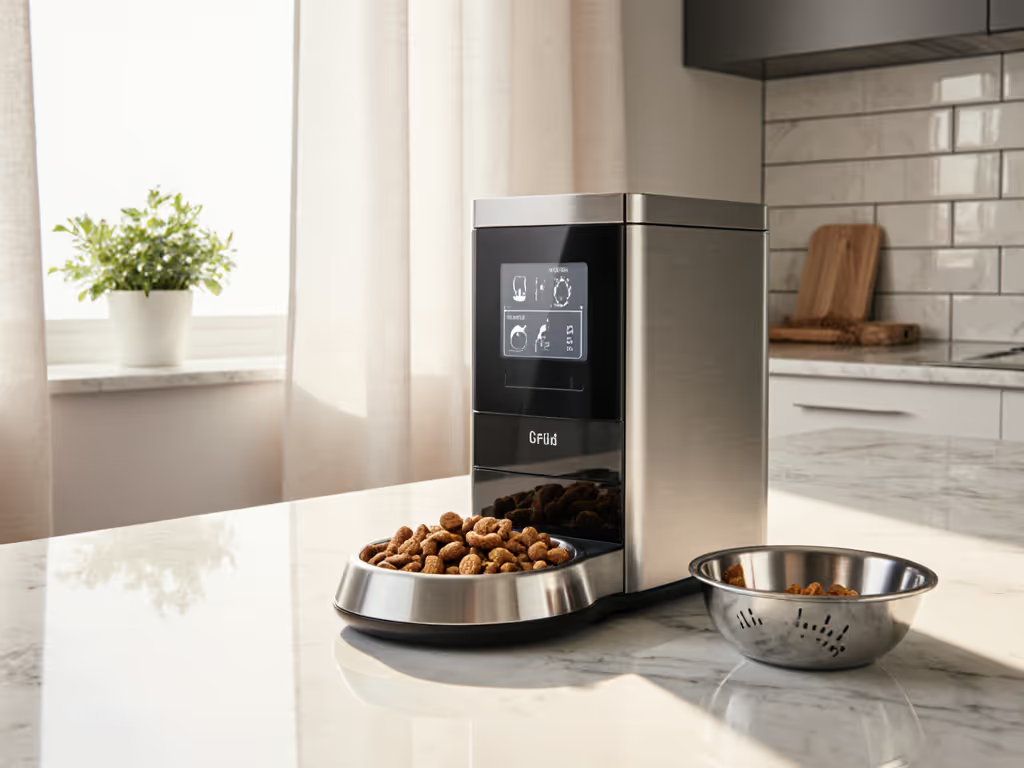
Because stainless bowls are compact and stackable, they consume minimal storage space. A set of three stainless bowls takes up less shelf real estate than a single bulky automated feeder or a tower of plastic alternatives. In a 600-square-foot apartment with multiple cats, this efficiency compounds.
8. Five-Year Total Cost of Ownership Breakdown
Here's where the true advantage crystallizes: modeling actual spend over five years of ownership, assuming one cat and two bowls (one for wet food, one for water).
Stainless Steel:
- Initial cost: $40 (two quality bowls)
- Replacement rate: 0 (no breakage or warping expected)
- Dishwasher use (amortized electricity): ~$3/year x 5 = $15
- Minimal special cleaning (generic dish soap): $0
- Five-year total: $55
Plastic (baseline competitor):
- Initial cost: $12 (two entry-level bowls)
- Replacement rate: 1 set every 18 months (warping, staining, odor retention) = 2-3 replacements x $12 = $24-$36
- Increased water use and handwashing (gentle care required): ~$5/year x 5 = $25
- Specialized cleaners to combat odor and staining: ~$2/year x 5 = $10
- Vet visits for potential chin acne or food aversion linked to biofilm: 1 visit x $150 = $150 (worst case; average $50-$100)
- Five-year total: $220-$280
The verdict: Stainless steel pays for itself, not just in durability, but in time saved, health prevented, and waste eliminated. Buy once, run lean. That's the spreadsheet talking.
9. Warranty and Repairability as Hidden Insurance
Quality stainless steel bowl manufacturers often offer lifetime warranties against defects. This is rare in the plastic and ceramic market. A warranty isn't just peace of mind; it's an acknowledgment that the manufacturer stands behind the product's longevity.
Moreover, if a bowl becomes dented (rare but possible if dropped on tile), it remains fully functional and hygienic. A ceramic bowl with a chip is a health risk. A plastic bowl that warps is compromised. A dented stainless bowl is still a dented stainless bowl. You are not forced to replace it.
Warranty terms to verify:
- Lifetime coverage against manufacturing defects
- Explicit exclusion of user abuse (important: most will replace or repair accidental damage at minimal cost)
- No requirement to register or jump through hoops
- Clear contact path for claims
This repairability and warranty coverage shift the risk calculation in your favor: you're not betting on the product lasting; you're backed by a manufacturer who has already calculated the probability that it will.
10. Multi-Cat Household Scaling and Consistency
In homes with two or more cats, standardizing on one bowl material prevents the cognitive load of managing different materials and cleaning protocols. If all bowls are stainless, you don't have to worry about which cat is eating from which surface, whether the ceramic bowl with the crack has migrated to a specific cat, or whether one cat's bowl is cleaner than another's (a source of tension in multi-cat dynamics).
Consistency also means easier tracking of food intake and health markers: if every cat eats from an identical stainless bowl, variations in appetite or eating behavior become more apparent and reliably attributable to the cat, not the equipment.
For households with three or more cats, this consistency compounds: buying a matched set of six stainless bowls upfront costs more than a mismatched collection of cheap alternatives, but five years later, you still have six identical, pristine bowls. The matching plastic and ceramic sets have been replaced twice.
Summary and Final Verdict
Stainless steel bowls aren't a trend. They are a deliberate choice to optimize for durability, hygiene, and total cost of ownership. If you're a cat guardian managing feeding complexity, cat health concerns, or limited space in an urban apartment, the case is quantifiable: stainless steel reduces waste (food, money, time), prevents recurring health issues (chin acne, whisker fatigue, food aversion), and eliminates the replacement treadmill that defines cheap alternatives.
The upfront cost difference between a $12 plastic set and a $40-$50 stainless set vanishes within 18 months when you account for replacements, vet visits, and wasted time on maintenance. Over five years, stainless steel is not more expensive. It is dramatically cheaper. Pair stainless bowls with a feeding mat to contain splashes, and you've engineered a feeding system that runs itself and respects both your cat's health and your home's peace. Use our cat feeding placemats guide to choose trays that control mess and bacteria.
Choose stainless steel if:
- You have multiple cats and need standardized, reliable equipment
- Your cat shows signs of whisker sensitivity, chin acne, or food aversion
- You're on a therapeutic feeding protocol where food chemistry matters
- You live in a rental or small space and value aesthetic neutrality
- You want to eliminate the replacement and maintenance treadmill
- You're willing to invest 40% more upfront to save 75% over five years
Measure your success by: fewer vet visits, faster cleanup times, consistent cat appetite, and no replacement bowls in your shopping cart next year. That's the win.
Related Articles