Optimal Cat Food Temperature: The Science
By Diego Álvarez • 27th Mar
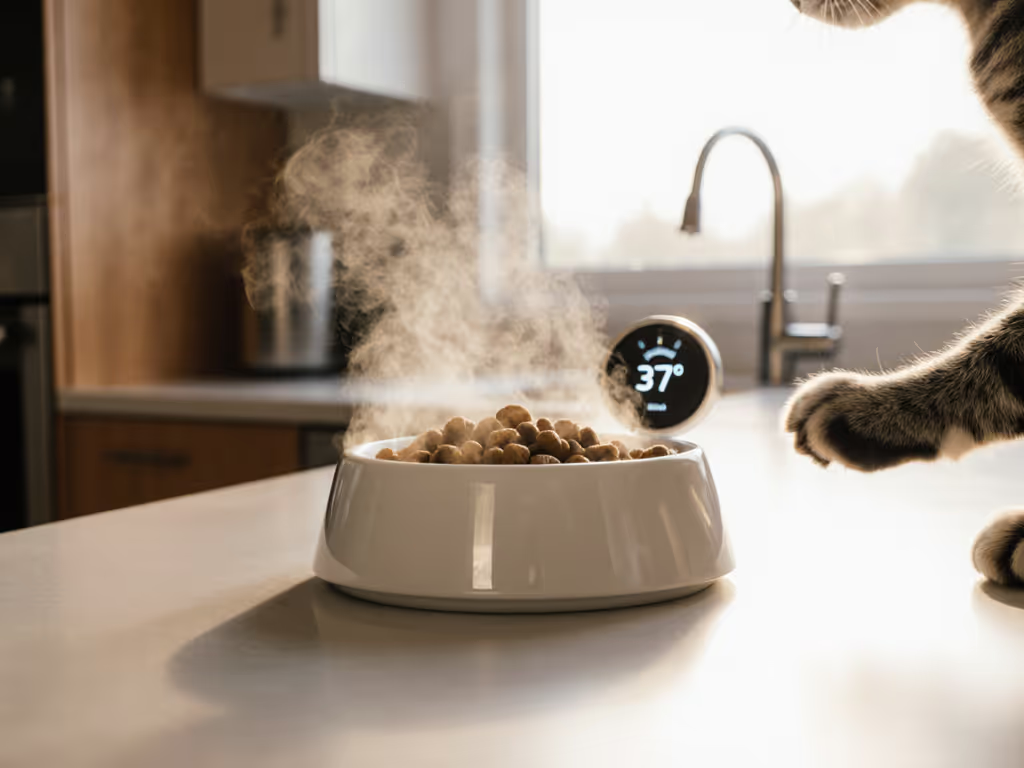
Feline food temperature science reveals a simple yet overlooked reality: the warmth of your cat's meal directly influences whether they eat with enthusiasm or indifference. Research confirms that optimal cat food temperature, particularly for aging cats, sits close to natural prey body temperature, around 37°C (98.6°F).[1][2] But beyond preference, understanding how temperature affects smell, taste, and feeding behavior unlocks a powerful tool for multi-cat harmony and nutritional compliance in tight living spaces.
Why Temperature Matters More Than Most Cat Guardians Realize
For decades, many of us simply opened a can or heated kibble without questioning whether cold or room-temperature food actually serves our cats' biology. The first rigorous study to challenge this assumption tested 32 healthy cats, all over 8 years old with an average age of 11 years.[2] Researchers served the same chunks-in-gravy food at three temperatures: 6°C (refrigerator cold), 21°C (room temperature), and 37°C (warmth).[1]
The results were unambiguous: aging cats significantly preferred warmed food in all comparisons, with 37°C being most preferred over room temperature, which in turn was preferred over cold.[1] The pattern held across the group, yet individual cats showed variation; some preferred cooler meals, reminding us that while science reveals trends, cats remain individuals.
What makes this finding actionable is why it happens. The researchers didn't find differences in gravy texture or thickness at different temperatures; thickening agents kept consistency stable.[3] Instead, they discovered that volatile compounds (the aromatic chemicals cats smell and taste) shifted significantly with heat.[1][3] Warming increased hexanoic acid, a compound linked to palatability, and released more sulfur-containing compounds associated with meat flavors, while reducing plant-related terpenes.[3] In other words, warm food smells and tastes more like what cats evolved to hunt.
Natural Food Temperature Preferences and Evolutionary Anchoring
Cats haven't lived alongside humans long enough (evolutionarily speaking) to adapt to room-temperature meals the way dogs have.[3] A freshly killed mouse or small bird registers around 100-102°F on a cat's tongue and nose.[4] That thermal signature, encoded over millennia of hunting, still resonates. Even cats bred in captivity and that have never hunted still respond to it.
This matters beyond preference. For aging cats especially (those whose appetite, smell acuity, and teeth may be declining), warmth becomes a behavioral lever. When a senior cat pushes food away at room temperature but eats eagerly once warmed, you're not witnessing pickiness; you're observing a sensory threshold being crossed. The warmer meal releases more aromatic signals that reach tired olfactory receptors and triggers the neural pathways that say this is food.
Temperature and Nutrient Absorption: The Digestive Efficiency Angle
While research specifically on temperature and nutrient absorption remains sparse, the mechanism is suggestive. Warmer food requires less metabolic energy for a cat's digestive system to bring to body temperature.[2] In younger, healthy cats, this difference is negligible. In seniors or cats recovering from illness, every caloric advantage matters. Additionally, heat can enhance the release of fats and proteins that cats need to extract from their meals, supporting better bioavailability without requiring dietary reformulation.
The real-world implication: if a senior cat eats more confidently and completely when food is warm, total nutrient intake increases, and so does the efficiency of what reaches the bloodstream.
Wet Food Warming Science and Practical Application
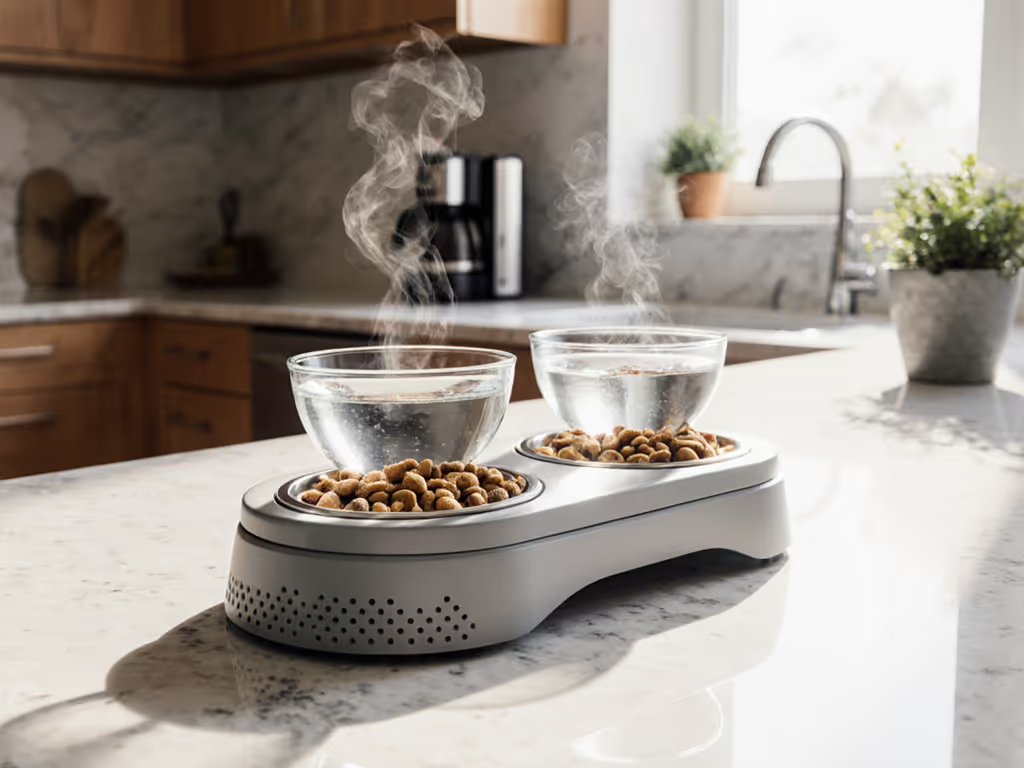
Wet food warming science is straightforward but often misapplied. Running a can under warm water for 30-60 seconds, or portioning wet food into a shallow dish and letting it sit briefly (testing temperature on your wrist first (never assume)), mimics natural conditions without degrading nutrition.[2] The goal is around 37°C, not steaming. For consistent, hands-off warming, see our cat food warmers that hold wet food near 37°C safely.
In multi-cat households, this becomes part of calm, repeatable routines. I learned this through necessity in my one-bedroom apartment: when my confident tabby would shadow the timid tuxedo at meals, tensions flared. After one stolen-breakfast scuffle, I didn't reach for punishment or separation guilt. Instead, I mapped feeding pathways, added two microchip feeders with staggered opening times, and started warming the timid cat's portion five minutes before the confident one's access opened. Within a week, resource guarding dropped, both cats finished meals calmly, and I never heard the scuffle again.
That experiment taught me something fundamental: fair feeding is behavior design, not just buying gadgets. The microchip feeders and staggered schedule mattered only because I aligned them with predictable thermal and temporal cues that each cat could trust.
Setting Up Temperature-Aware Feeding in Small Spaces
Implementing temperature control doesn't demand complicated gear. Here's a practical framework:
For wet-food feeders:
- Warm portions 1-2 minutes before serving (check with your wrist or a kitchen thermometer)
- Use shallow, wide bowls to ensure warmth distributes evenly and scent disperses
- In multi-cat homes, warm each cat's portion separately and serve with a 2-3 minute stagger; this prevents territorial crowding and lets you monitor each cat's intake
For dry kibble:
- Room temperature is acceptable for most younger cats, but seniors may benefit from a very light misting of warm water to soften kibble slightly and release aroma
- Avoid reheating kibble or leaving it in warm conditions for hours; freshness degrades faster
- Portion immediately before feeding; don't leave room-temperature kibble sitting beyond 30 minutes
For multi-cat routines:
- Create a time-blocked feeding schedule: if you have two cats, warm cat A's wet food at 7:00 AM, serve at 7:02 AM in its protected space; warm cat B's food at 7:05 AM, serve at 7:07 AM in a separate location
- Use visual cues (feeding mat placement, bowl type) so each cat knows its zone
- If one cat eats faster, its schedule can accommodate faster service; if another needs time, the stagger protects that too
This structure removes the chaos of simultaneous feeding and reduces the guarding impulse entirely. Harmony emerges from predictability, not policing.
Troubleshooting Individual Variation
Not every cat prefers warm food.[2] Some thrive on room-temperature or even cold meals, especially during hot months or if sensitive to thermal changes. The science shows the trend; your cat shows the reality.
If your cat refuses warmed food:
- Try room temperature; if that's still rejected, offer cold (straight from the fridge)
- Track intake: does the cat eat more or leave less at one temperature? Quantity consumed matters more than preference
- If your cat is senior and eating less, don't assume temperature is the cause; consult your veterinarian to rule out pain, dental issues, or underlying illness
If you serve multiple cats and they prefer different temperatures:
- Warm one, leave one at room temperature; the staggered schedule you're already using simplifies this
- Invest in simple warming tools (a microwave-safe shallow dish or a collapsible feeding bowl set) to avoid adding clutter
Bringing It Together: Why This Matters for Your Household
Understanding feline food temperature science shifts feeding from a daily chore into a data-informed routine. You're not just opening cans or scooping kibble; you're aligning meal preparation with your cats' neurobiology and household dynamics.
For aging cats, warmth can mean the difference between a slow decline in food intake and stable nutrition. For multi-cat homes, temperature control paired with staggered schedules removes the friction that triggers resource guarding. For renters or apartment dwellers with minimal kitchen space, a warm-water technique costs nothing and occupies no shelf room.
The deeper insight: harmony at the bowl is built through predictable routines and protected access. Temperature is just one lever. Combined with timing, placement, and individual pace, it becomes part of a system that runs quietly in the background, where every cat eats confidently and you start your day without conflict.
Exploring Further
If your household is still wrestling with mealtime tension, consider layering other behavior-first tools: microchip feeders for access control, room mapping to separate eating zones, or portion-tracking logs to share with your vet. You can also use health-tracking smart feeders to capture intake data and flag changes early. The science of optimal cat food temperature is solid, but it's most powerful when paired with the routines and boundaries that make fairness automatic.
Start small: warm your senior cat's next meal, observe whether intake increases, and note the shift in their eating behavior. That single experiment might reveal why your cat has seemed less enthusiastic at mealtimes. From there, calm, repeatable routines follow naturally.
Related Articles