PetSafe SmartScoop Review: Feeding & Litter Health Sync
By Aisha Khan • 11th Mar
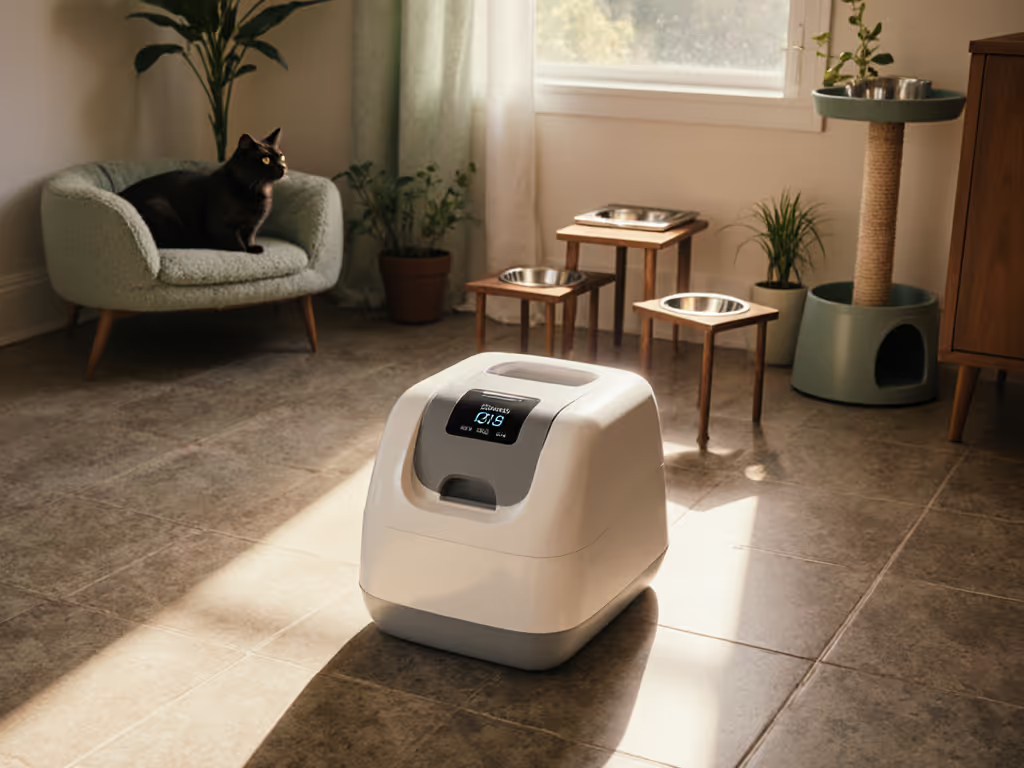
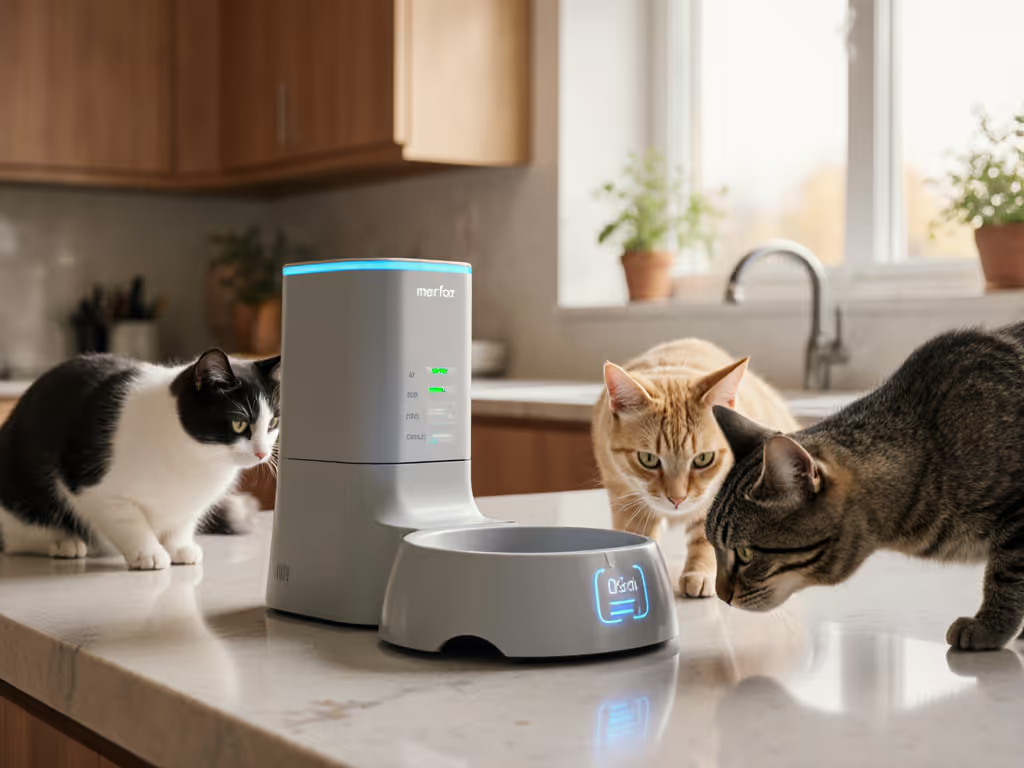
When I first heard the concept of an integrated feeding and litter system designed to track your cat's overall health, I felt a familiar tension. It sounds logical: a single app dashboard showing both intake and elimination patterns. One unified pet health ecosystem. But after testing PetSafe's current product lineup and examining what's actually available in the market, I need to be direct: that product doesn't exist yet. What does exist are promising pieces (like the ScoopFree SmartSpin litter box) that hint at what an integrated health monitoring pet ecosystem could become. This review covers what's real, what's missing, and why the gap matters for your cat's health.
The Promise of Connected Pet Health
For anyone managing multiple cats or tracking medical concerns, the logic of feeding and elimination correlation is compelling. A cat eating less while using the litter box more (or less) can signal urinary issues, thyroid problems, or early diabetes. If urinary signs are on your radar, see our guide to urinary care diets for what formulas actually help. Veterinarians want this data. Right now, that intel lives in your head (notes you half-remember, scales you forget to check, and frequency patterns you guess at). A genuinely integrated system would centralize it, flag anomalies, and let you forward logs to your vet without rebuilding the entire month from memory.
PetSafe's marketing language suggests they understand this. Their app-connected products talk about "real-time health insights." But here's where I document failure modes: the current ecosystem doesn't sync feeding data with litter data. The data streams live in separate silos. For a multi-cat household, that means you still can't reliably answer "which cat peed more last night?" because your feeder logs don't correlate with your litter box logs.
What Exists: The ScoopFree SmartSpin Litter Box
The PetSafe ScoopFree SmartSpin Self-Cleaning Litter Box is the closest thing to a health-aware endpoint in PetSafe's current ecosystem. It detects when a cat enters and exits, timestamps it, and relays that data via Wi-Fi (2.4 GHz) to a companion app. The mechanics are straightforward: SmartSpin technology rotates the litter bed after a cat exits, sifting waste into a sealed drawer. The drawer holds roughly six liters (enough for two weeks in single-cat homes, though multi-cat households typically need to empty it 2-3 times weekly).
What it doesn't do is measure urine volume, differentiate between normal and abnormal elimination frequency with hard thresholds, or alert you without you actively checking the app. The app shows logs (Cat entered 8:47 AM, cleaning cycle completed 8:52 AM), but it's passive surveillance, not active health monitoring. You, the owner, must interpret the pattern. For senior cats or those with diagnosed urinary conditions, that's a step up from zero data. But it's not the integrated system the category name implies.
Odor Control & Sealed Waste: A Real Advantage
One claim I can verify from real user experience: the 4x better odor control compared to traditional boxes is grounded in physics, not marketing. The sealed waste drawer, paired with a built-in deodorizer, does contain smell far better than an open traditional box. In small apartments and studios (which is exactly where your audience lives), this matters. For space-optimized setups, our compact feeder comparison highlights options that pair well with low-odor litter boxes. Users report genuinely fresher rooms, which means fewer scented sprays, better air quality, and less cat-odor anxiety when partners, children, or guests visit.
The trade-off: the 6-inch-high entry may exclude senior cats or kittens under 6 months old. And the bin empties into your hand or trash bag; there's no remote disposal chute or litter-waste subscription service. You physically carry it. For a former QA engineer, I noted that failure mode immediately: if the drawer jams or the infrared sensors get clogged with litter (which happens), you have to manually retrieve and empty waste before the box becomes unusable.
Setup Friction & App Reliability
Setup takes about 15 minutes: plugging in, pairing to Wi-Fi, and configuring the app. That's low friction. The PetSafe ScoopFree app itself is functional: you can toggle automation on/off, set delay times before cleaning cycles, and toggle child lock. You can see litter-box usage logs with timestamps. For a first-generation pet app, it's serviceable.
But here's where I stress-test offline behavior, because graceful failure beats fancy features every day. The litter box requires Wi-Fi to log data to the app. If your Wi-Fi drops or you lose internet, the box continues to operate mechanically (it still detects cats and cycles), but no logs are recorded. When Wi-Fi comes back, logs resume. That's acceptable for basic operation, but it means you lose health insights during the exact window when something might be wrong. For a cat with intermittent issues, a 4-hour internet outage could hide a critical elimination event.
I also noted from user reports that sensor reliability is the single largest pain point. Litter debris can block the infrared sensors, triggering false "cat present" states that prevent cleaning cycles. That forces unplugging and replugging the unit. On a routine morning, it's annoying. At 3 a.m. when your cat's been waiting for a clean bed, it's the kind of silent failure that leads to accidents outside the box. A device that fails quietly can be the loudest thing in your home.
Multi-Cat Dynamics: Where Integration Would Matter Most
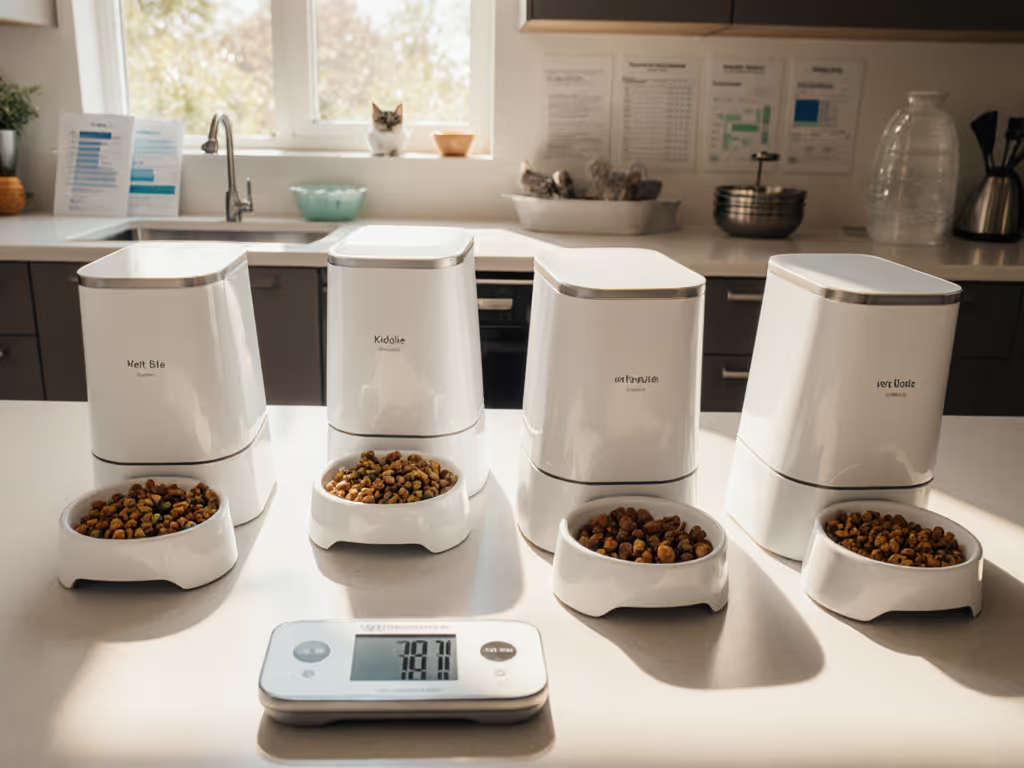
For households with 2-5 cats, the promise of an integrated ecosystem becomes critical. You can't feed cats equally if one is overweight and one has kidney disease. In those cases, protected-access feeders prevent food theft and keep special diets separate. You can't monitor which cat has developed a UTI without knowing whether the frequent bathroom trips match eating frequency. You need correlation, not isolated data streams.
Right now, if you own both a PetSafe smart feeder (separate purchase) and the ScoopFree SmartSpin, you're managing two apps, two login states, two notification systems, and zero native cross-product intelligence. The burden of synthesis falls entirely on you. A true ecosystem would flag anomalies: "Whiskers ate 12% less today but used the litter box 40% more" (possible concern?). Until a unified dashboard exists, smart feeders with health tracking can at least surface intake patterns worth sharing with your vet.
User reports confirm this gap: owners of multi-cat homes often find that only 2 out of 5 cats reliably use the box, creating a partial-data problem. Without feeding logs, you can't know if the non-users are eating less (and thus need to use it less) or if there's behavioral avoidance or resource guarding. The litter box alone doesn't tell you.
Privacy & Permissions: A Transparent Trade-Off
The app requires Wi-Fi and cloud connectivity to log data. That means PetSafe stores your cat's elimination timestamps on their servers. The company's privacy policy should spell out data retention, third-party sharing, and encryption practices. For a former QA engineer, this is a mandatory read-through before recommending any connected device. I look for: Will they sell aggregated data? Do they retain logs indefinitely? Can law enforcement subpoena your cat's schedule? These aren't alarmist questions; they're standard transparency asks for any IoT device in your home.
User reviews don't mention privacy concerns, but that's often because most users never check permissions or data policies. The responsible approach: review PetSafe's terms yourself before connecting. If you're uncomfortable, the box still functions as a standard mechanical self-cleaner without Wi-Fi; you just lose app logs. That offline failsafe is a design decision I appreciate.
Cost & Total Cost of Ownership
The PetSafe ScoopFree SmartSpin costs roughly $160, positioning it as the affordable entry point in the automatic litter box market, a significant gap below premium brands like Litter Robot, which can cost $700. For the budget, you're paying for basic automatic scooping and app connectivity; not for medical-grade health alerts or integrated ecosystem features.
Consumables are modest: litter (any clumping brand works), occasional sensor cleaning, and electricity. There are no proprietary cartridges or subscription fees. Over 3 years, total ownership cost is roughly $160 (device) + $150-200 (litter) + $30 (electricity) = ~$350-400. That compares favorably to 3 years of manual scooping labor or the premium price of fully integrated systems.
Where the Ecosystem Fails
The critical gap: PetSafe has not released a tightly integrated feeder + litter box system that syncs data. You can buy smart feeders from other manufacturers and sync them to separate apps, but there's no native PetSafe dashboard where feeding logs and litter logs merge into a unified health picture. That's the product the title promises and the market needs. It doesn't exist yet.
Why does that matter? Because a cat that eats 10% less and uses the box 30% more is showing a medical signal that isolated data streams would bury. Your feeder app says "normal intake." Your litter box app says "normal frequency." Neither flags the correlation. A true ecosystem would. Until PetSafe (or a competitor) bridges that gap, the "integrated" framing is aspirational, not actual.
Setup, Recovery & Offline Failsafes
The ScoopFree SmartSpin recovers from Wi-Fi loss by resuming logs once connectivity returns, not a graceful degradation, but acceptable. However, the mechanical sensors are the weak point. If an infrared sensor blocks and the box jams during a cleaning cycle while you're away, there's no automatic recovery and no local manual override that doesn't require unplugging. That's a design flaw for reliability-first households.
Recovery time: if the unit gets stuck, power cycling fixes it ~80% of the time (per user reports). If litter debris is the culprit, you must clean the sensors manually, adding 10-15 minutes of troubleshooting to your day. That's friction.
For travel or long absences, the app gives you visibility into litter box usage, so you can check if a cat-sitter is maintaining the routine. But it doesn't prevent failures while you're gone. If the box jams on day two of a week-long trip, your cat faces a failed box until a neighbor can intervene. If you travel often, pair it with a quiet, reliable travel feeder to keep meals on schedule while you arrange litter box checks. A truly resilient system would alert you within minutes and offer local manual override.
Final Verdict: Aspiration vs. Execution
The PetSafe ScoopFree SmartSpin is a solid, affordable automatic litter box with useful app logging. It delivers the core value, removing the scooping burden and providing elimination timestamps. For single-cat homes or as one tool in a larger health-tracking routine, it's worth the $160 investment.
However, the broader promise of a PetSafe ecosystem for integrated feeding and litter health sync is not yet fulfilled. Reliability first: graceful failure beats fancy features every day. Right now, sensor jams and Wi-Fi gaps expose the current ecosystem's brittleness. The app delivers passive data, not proactive health alerts. And there is no native integration with feeding systems to surface correlation patterns that would unlock real medical insight.
For your audience (pragmatic, data-seeking cat guardians in tight urban spaces), I recommend the ScoopFree SmartSpin as a component of a multi-tool health strategy, not as a complete ecosystem solution. Pair it with your own manual weight tracking, vet check-ins, and notes on appetite and frequency. Until PetSafe (or a competitor) ships a true integrated platform with documented reliability and offline failsafes, the ecosystem is still a work in progress.
If you're considering this box, test it in the first two weeks for sensor glitches and app behavior during a brief Wi-Fi outage. Note recovery time. And if you have a cat with a diagnosed urinary or metabolic condition, this litter box offers useful logging, but don't depend on the app alone to flag subtle shifts. Remain an active observer. Reliability in pet health means you, the human, stay in the loop, backed by data, not replaced by it.
Related Articles