CKD Cat Feeders: Hydration Impact & Portion Control
By Hyejin Park • 28th Apr
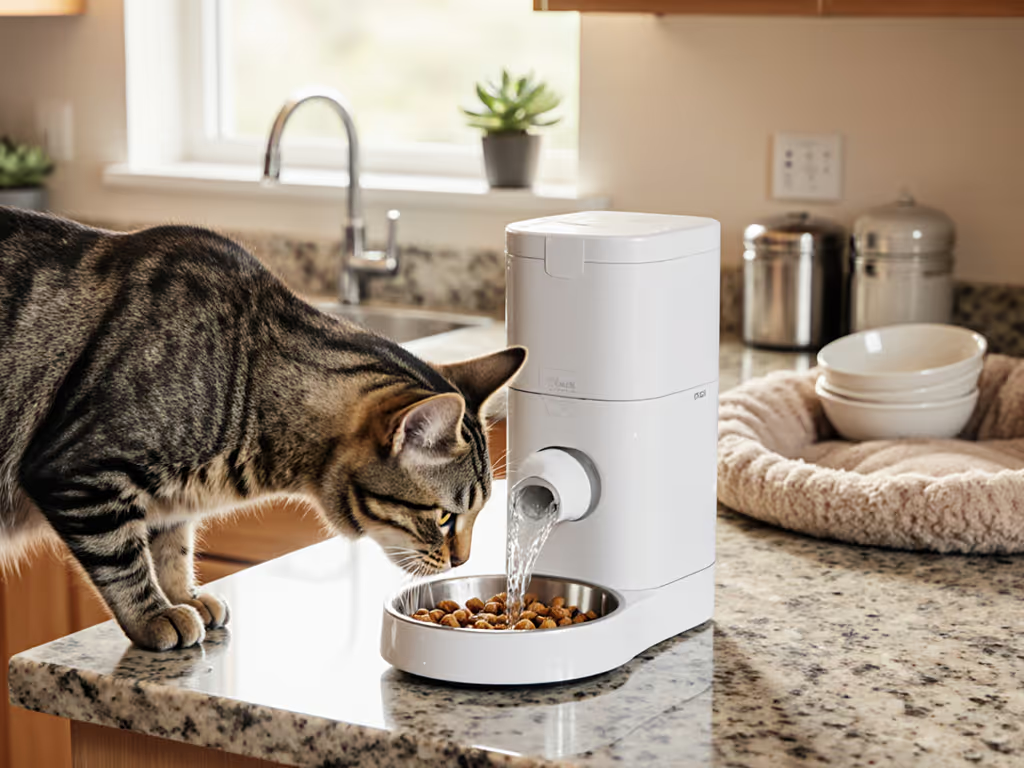
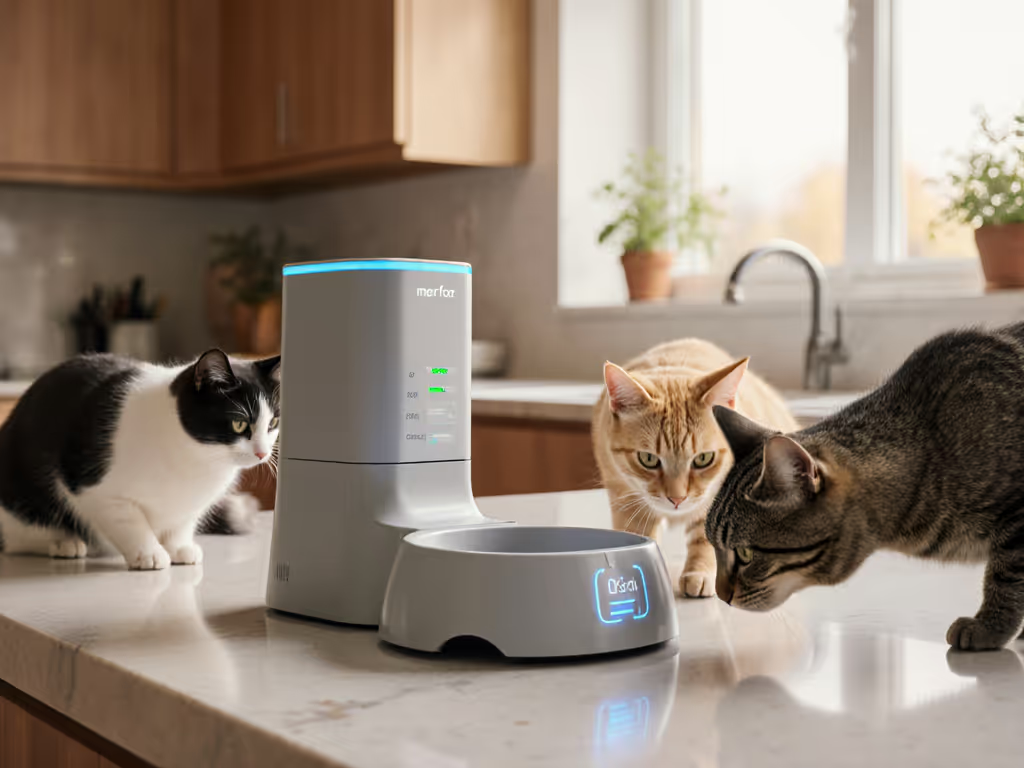
CKD cat feeders and kidney disease feeding solutions aren't just about what your cat eats. They are about how feeding systems support hydration, enforce fair portions, and stay clean enough to actually use every day. For CKD-specific equipment strategies, see our measured renal feeders guide. If you're managing a cat with chronic kidney disease, especially in a multi-cat home, the feeder you choose directly impacts both health outcomes and household friction.
Let me walk you through the questions that matter most, grounded in what the data and clinical practice actually show.
Why Does Feeder Design Matter for CKD Cats?
Cats with chronic kidney disease (CKD) experience progressive kidney damage that impairs their ability to conserve water effectively, leading to chronic dehydration[1]. This isn't a minor detail. Hydration management can significantly improve a cat's quality of life and potentially slow disease progression[1].
Yet many cat guardians approach feeders as interchangeable. They aren't. Here's why:
Hydration begins at the bowl. Wet food contains 70-80% moisture, while dry kibble contains only about 10%[3]. To increase voluntary drinking between meals, compare stainless, silent water fountains that many CKD cats prefer. For cats in early-stage CKD, a common veterinary goal is for wet food to constitute over 50% of their daily moisture intake[3]. A feeder that makes wet-food meals convenient (one that doesn't require you to wrestle with cans or hand-portion slop multiple times daily) is one you'll actually use. And if it's hard to clean, it won't stay clean[1].
Portion accuracy prevents secondary illness. Overfeeding accelerates obesity, which strains already-compromised kidneys. Underfeeding a bullied or older cat means inadequate calories and fluid intake. In multi-cat homes without access control, one cat often eats another's portion, sabotaging therapeutic diets entirely.
Mess radius directly impacts compliance. Wet food splashes. Kibble scatters. In an 800-square-foot apartment, a high-splash feeder becomes a reason to skip meals or switch to dry food (the path of least friction, which is the opposite of what a CKD cat needs).
How Do Feeders Support Hydration in CKD?
Hydration strategy splits into two camps: what you feed and how you feed it.
Water via Food
Adding water directly to wet food is one of the most evidence-backed moves[3]. Here's the practical sequence:
- Transition to canned or pouch wet food over 7-21 days, mixing increasing amounts into the old food to avoid digestive upset[3].
- Add 1-2 tablespoons of water to each serving (typically 3-5 oz portions)[3]. This simple step significantly boosts fluid consumption without altering texture[3].
- Use a wet food formulated for renal health when available; these are easier to digest and have lower phosphorus, which slows kidney damage progression[4].
Feeding a wet renal diet can reduce a cat's water requirements by up to 75%[4] (meaning the feeder itself becomes a hydration tool if designed to handle moisture without harboring biofilm).
Water via Access
Cats with CKD drink more as their kidneys lose the ability to concentrate urine, but much of that water is lost through excretion[4]. Drinking is still encouraged to replace fluid loss.
This means feeder placement matters: water bowls and food bowls should be separate, and ideally 2-3 feet apart (cats naturally prefer this). If your feeder system crowds bowls together in a 6-inch mess radius, you're working against natural preference.
What's the Connection Between Portion Control and Kidney Health?
Portion accuracy isn't glamorous, but it's quantifiable and it works.
Overweight cats are at higher risk for rapid kidney-function decline. CKD cats already struggling to maintain weight need stability, not guesswork. In households with multiple cats, portion control becomes critical: if you're feeding a 14-lb senior male with early CKD and a 7-lb young female with a healthy kidney panel, a feeder without access control almost guarantees the senior will undereat and the young cat will overeat (flipping their trajectories).
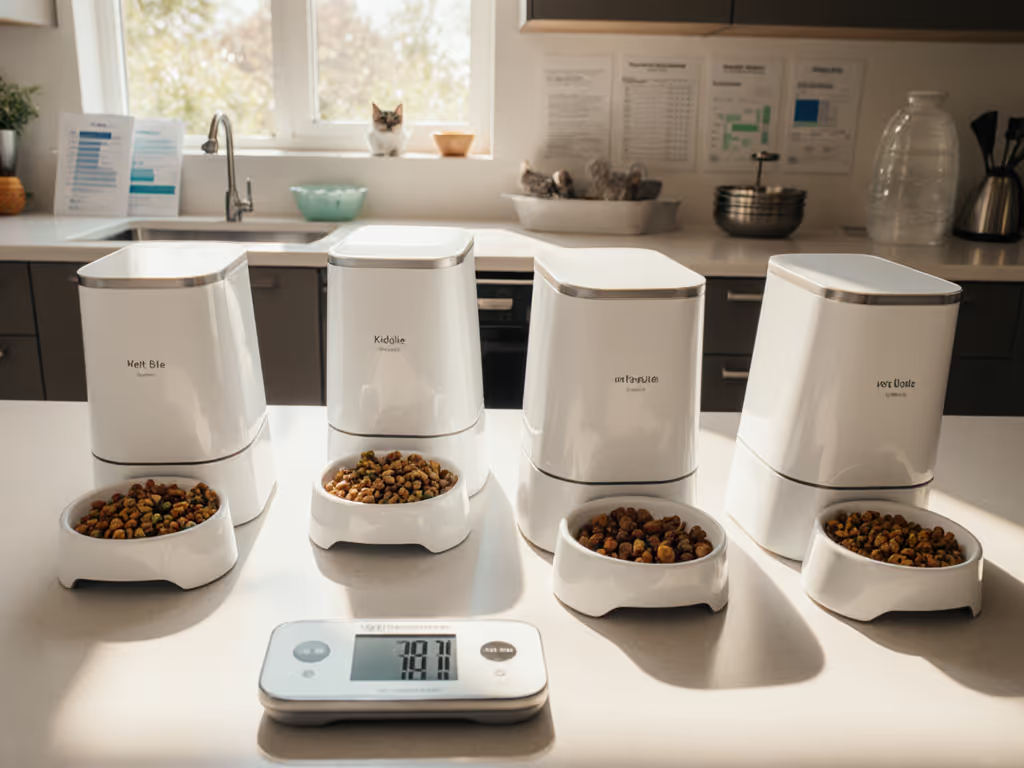
Automatic feeders with precise portion settings (measured in grams, not vague "small/medium/large" scoops) support this. For a deeper dive into tools and tactics, see our portion control guide, which also applies to CKD calorie management. Manual feeders require measurement discipline that, honestly, erodes at 6 a.m. or after a 10-hour workday.
Electrolyte balance also hinges on portion accuracy. CKD cats need moderate sodium, enough to encourage drinking, but not so much that dehydration worsens[4]. Overeating means oversodium exposure. A feeder that adheres to your vet's prescribed amounts (often 150-200 g daily) removes the mental load.
How Do I Balance Wet and Dry Food in a Feeder Setup?
This is where simplicity wins over complexity.
I tested a sculptural fountain-style feeder years ago that promised to keep food cool, separate wet and kibble, and look sleek on the counter. It had crevices, a motor, a fan, and color-coded trays. After two weeks of cleaning biofilm from every seam and watching the fan motor clog with food dust, I swabbed it with an ATP meter (the industry standard for detecting organic contamination). Then I swabbed a plain stainless steel bowl with the same water, same food residue. The simple bowl won by a mile and took two minutes to sanitize[1].
For CKD cats, I recommend:
Wet food: manually portioned or scooped into a stainless steel bowl (smooth surfaces, 304 or 316 grade for longevity) at set times. Meals feel less like "feeding a machine" and more like a 5-minute ritual.
Tools needed: gram scale, 4-oz scoop, warm soapy water.
Time per meal: 3-5 minutes (portion, clean bowl, refill water).
Mess radius: 12 inches (if water splashes while you're filling the bowl)[1].
Dry kibble (if supplementing): an automatic feeder with airtight hopper and stainless steel bowl. This separates the 24/7 access-control problem (who eats when?) from the high-moisture meal you control.
Optional for access control: microchip feeders allow only one cat to eat; this is invaluable in multi-cat homes and supports therapeutic diets.
Tools needed: microchip-capable feeder, batteries or USB power, optional outlet timer.
Time per setup: 20 minutes to program and test.
Mess radius: 18 inches around the kibble bowl; less if the feeder has sloped sides and a crumb-catching lip.
What Materials Matter for Cleanliness and Health?
Whisker sensitivity is real. Shallow or sloped bowls reduce facial contact, lowering risk of chin acne and food-related stress[1]. Stainless steel is superior to ceramic (which can chip) and plastic (which scratches and harbors odors, and some plastics leach endocrine disruptors)[1].
For CKD specifically, avoid materials with high bacterial biofilm risk. If you're asking "Is this dishwasher-safe?" that's a green flag, dishwashers reach 140-160°F and provide consistent sanitization that hand-washing doesn't always achieve[1].
Bowls should have:
- Smooth, seamless interiors (no ridges where food traps).
- Sloped sides (to reduce whisker contact and splashing).
- Dishwasher-safe construction (if your schedule depends on a dishwasher, a feeder that doesn't fit is a feeder you'll stop cleaning properly).
How Do I Choose Between Manual, Timed, and Smart Feeders for CKD?
Each has tradeoffs worth analyzing.
| Feeder Type | Hydration Support | Portion Accuracy | Multi-Cat Control | Cleanability | Reliability Risk |
|---|---|---|---|---|---|
| Manual bowl | High (ritual + wet food central) | User-dependent | None | Excellent (smooth surfaces) | User compliance |
| Timed/mechanical | Moderate (kibble only, typically) | Good (fixed portions) | None (any cat eats) | Good if stainless parts are removable | Spring/motor wear over time |
| Smart/app-based | Moderate to low (kibble-focused) | Excellent (granular logging) | High (microchip-gated options exist) | Varies (some models clog with moisture) | App bugs, Wi-Fi outages, battery drain |
For CKD cats, manual feeding of wet food + a timed kibble feeder is often the sweet spot: the wet meal supports hydration (the therapist-approved route), the timed kibble enforces fairness between cats, and neither component requires Wi-Fi or app debugging at 3 a.m. Pair the setup with an evidence-based feeding schedule guide to keep hydration-focused meals consistent.
What's the Real Cost of Feeders Over Time?
A $40 stainless steel bowl lasts 5+ years. A $200 automatic feeder with proprietary trays or filters adds $15-30 annually in consumables. A $600 smart feeder with cloud logging might fail Wi-Fi connectivity 2-3 times per year, requiring troubleshooting during your busiest weeks.
When choosing, ask:
- Are replacement parts (hoppers, motors, trays) available and affordable?
- Does the feeder work without internet connectivity (offline failsafe)?
- Are all food-contact surfaces dishwasher-safe or replaceable?
- What is the warranty, and does the manufacturer handle repairs or replacements quickly?
For CKD cats on tight management schedules, a reliable $80 timed feeder with a stainless bowl often outperforms a flashy $500 smart system that occasionally jams or requires troubleshooting.
How Do Feeders Fit Into a Tight Apartment?
Urban dwellers and renters often have 40-60 square feet of kitchen space. A feeder system shouldn't consume more than 15% of that.
Footprint checklist:
- Vertical storage: feeders that mount on walls or sit atop shelves save floor real estate.
- Power cords: long cables are clutter; USB-powered or battery-operated models reduce trip hazards.
- Mess radius: estimate spill/splash zones. A high-splashing wet feeder in a 15-inch radius means you need a mat 36 inches long and 24 inches wide (a footprint problem in a galley kitchen).
- Quiet operation: motors over 60 dB (a normal conversation) will startle cats and wake humans. Test in-home if possible; manufacturer specs often understate real-world noise.
A manual wet-food ritual + a small timed kibble feeder stacked vertically uses roughly 8 square feet (including mat and water bowl). An elaborate multi-bowl fountain system often requires 25+ square feet and draws visual clutter.
What Should I Ask My Vet About Feeder Choices for CKD?
Before investing, clarify:
- Hydration target. "Should my cat be on 80% wet food, or is 50% adequate given her kidney stage?" This determines feeder strategy.
- Portion and electrolyte balance. "How much should she eat daily, and does the brand I'm considering have the right phosphorus and sodium levels?"
- Monitoring needs. "Do you want me to track intake daily, or just body weight at checkups?" If you need data, a smart feeder with logging is worth the investment. If not, simple is safer.
- Access control. "Does my multi-cat household need separate feeders, or can cats share during supervised meals?" This determines whether a microchip feeder is essential.
- Feeding tube or fluid therapy. "At what point would subcutaneous fluids or a feeding tube be preferable to oral feeding?" Understanding the trajectory helps you choose a feeder that supports the current stage, not one you'll outgrow in 6 months.
Key Takeaways
CKD cat feeders succeed when they lower barriers to the behaviors that slow kidney disease: hydration via wet food, fair portions, and consistent cleanup. Complexity often works against these goals. A stainless steel bowl + manual wet meals + a simple timed kibble feeder accomplishes all three, with minimal noise, no Wi-Fi risk, and a mess radius you can manage in a small space.
Design matters. Cleanability is non-negotiable. And the best feeder is the one you'll actually use every day, the one that fits your life, not the other way around.
Further Exploration
If you're narrowing down feeder options for a CKD cat, consider:
- Test noise in your own kitchen. Bring a decibel meter app (many phones have one) and time the feeder's cycle. Over 65 dB is often disruptive to sensitive cats and humans.
- Request a trial or extended return window. Many retailers allow 30-day returns. Test cleanability, portion accuracy, and multi-cat dynamics before committing.
- Ask your vet for data. Some clinics log feeding patterns (via apps or notes) for cats with CKD. Seeing real intake trends may clarify whether manual or automated portions work better for your cat.
- Join CKD cat communities online. Owners often share hands-on reviews of feeders, including failure modes (jams, biofilm buildup, Wi-Fi drops) that spec sheets don't reveal.
- Measure your space. Before shopping, measure your kitchen counter, estimate splash zones, and note power outlet locations. This eliminates regret-purchases later.
Your veterinarian, combined with small-scale testing in your actual home, is the best guide. Feeders are tools in service of hydration and fairness, not ornaments. Choose accordingly.
Related Articles